Prime Rib Roast: the Reverse Sear Method
- The Ultimate Reverse-Seared Prime Rib: A Festive Centrepiece Guide
- Achieving the Perfect Rosy Interior: The Science of Low and Slow
- Sourcing Your Roast and Essential Dry Rub Ingredients
- Foolproof Method: Roasting and Searing Your Prime Rib to Perfection
- Expert Timing and Troubleshooting: Advanced Roasting Tips
- What to Serve with Your Festive Prime Rib
- Maximizing Leftovers: Storage, Reheating, and Repurposing
- Recipe FAQs
- 📝 Recipe Card
The Ultimate Reverse Seared Prime Rib: A Festive Centrepiece Guide
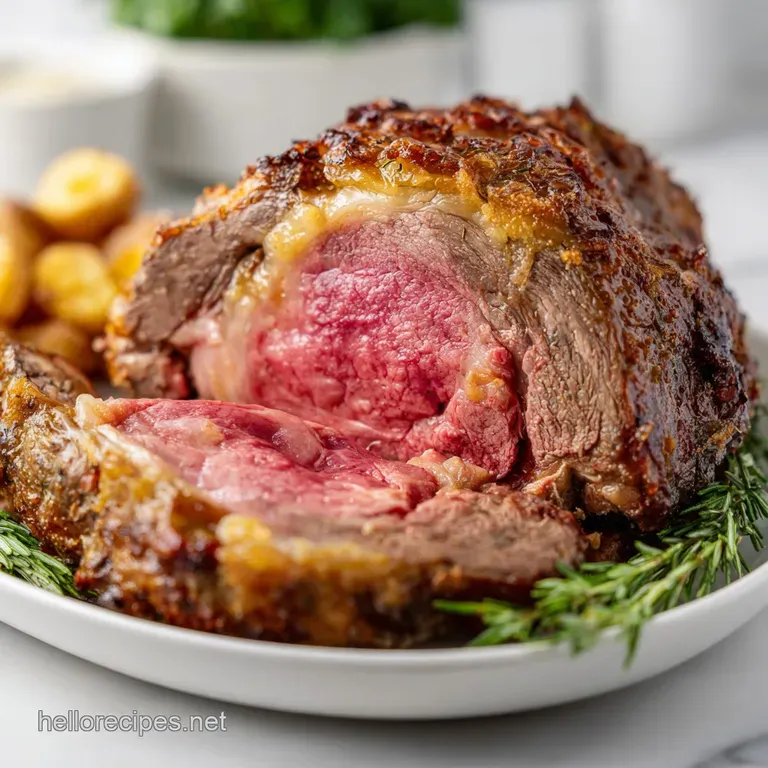
If there’s one dish that sends shivers of holiday joy and maybe a slight tremor of performance anxiety it’s the classic Prime Rib Roast . You know the moment: that deeply seasoned, crackling crust giving way to a rosy, unbelievably juicy interior.
The aroma alone is enough to stop traffic, mixing rich, slow roasted herbs with the satisfying smell of rendered fat.
For years, I followed those ancient over high heat methods, only to end up with a huge grey ring of sad, dry meat right beneath the crust. It felt like such a waste of a glorious cut.
But I promise you, once you learn the magic of the reverse sear, making Prime Rib at home stops being a terrifying challenge and starts being an absolute breeze.
This is the definitive guide to cooking the most succulent, foolproof Prime Rib Roast you will ever make. Forget the complicated math and the old-school rules; we're focusing on two things: a thermometer and patience.
Let’s get that perfect edge-to-edge medium rare result every single time.
Achieving the Perfect Rosy Interior: The Science of Low and Slow
Understanding the Appeal of the Standing Rib Roast
The Standing Rib Roast (or Prime Rib, as it's often called here) is renowned because it features incredibly flavourful marbling and is cut from the least worked muscle of the steer. It requires very little intervention to taste magnificent, relying mostly on good salt and controlled heat.
It’s rich, it’s decadent, and it’s the star of any celebratory table.
Why the Reverse Sear Technique is Superior for Large Roasts
The traditional method blasting the roast at 450°F (230°C) and then lowering the heat creates a massive temperature gradient. The outside cooks too fast, resulting in that dreaded overcooked, grey band. The reverse sear flips that script entirely.
We cook the Prime Rib Roast slowly at a very low temperature, allowing the heat to gently penetrate the meat uniformly, giving you that beautiful, rosy pink from crust to crust.
Chef’s Note: The key to success with this reverse sear technique is that initial rest period after the slow roast. It allows the surface of the meat to cool down slightly, preventing it from overcooking when you hit it with that final, blistering blast of heat for the crust.
Equipment Check: Ensuring Success Before You Begin
I made the mistake of trying to cook an expensive Rib Roast using one of those old-school dial thermometers once. Never again. A quality piece of meat deserves quality tools. You absolutely must have a reliable, leave-in digital meat thermometer.
You also need a sturdy roasting pan and a wire rack. The wire rack is crucial because it allows heat to circulate completely around the meat, ensuring even cooking and aiding in crust development.
Eliminating the Dreaded Grey Band: Temperature Control Explained
We aim for the low and slow approach to eliminate the temperature gradient that causes the grey ring. By cooking the Prime Rib Roast at just 250°F (120°C), the exterior temperature only creeps up marginally faster than the interior.
This gentle pace gives the natural juices time to settle and prevents them from rushing outward when sliced. The goal is even cooking from the edge right up to the centre.
Developing a Cracking Crust: Maillard Reaction at High Heat
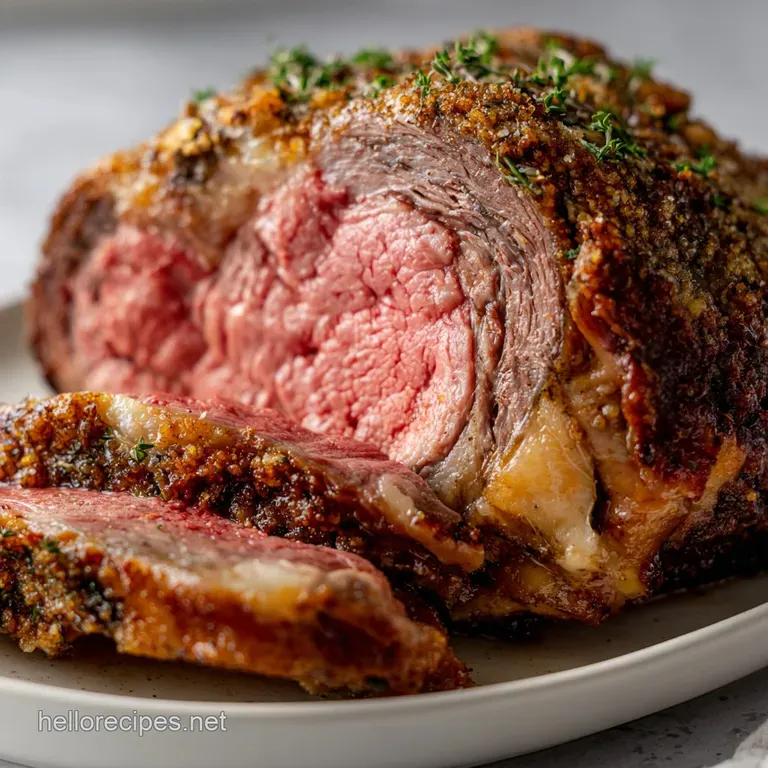
Once the interior of your Prime Rib Roast hits that perfect pre-sear temperature (120°F/49°C), the job isn't done yet! The final sear is where the magic of the Maillard reaction happens, transforming the seasoned, dried exterior into a crisp, deeply mahogany coloured bark.
We crank the oven way up I mean, way up —to create that satisfying, textural contrast between the tender meat and the crunchy crust.
The Critical Importance of the Resting Period
I know it’s torture when the house smells this incredible, but you cannot skip the final rest! When the internal temperature is reached, the muscle fibres are tight and stressed from the heat, trapping the juices in the centre.
Resting the Rib Roast —loosely tented with foil allows those fibres to relax and reabsorb the juices, ensuring that every slice is drippingly moist. Plan for a full 20 minutes of resting time. It’s non-negotiable.
Sourcing Your Roast and Essential Dry Rub Ingredients
The secret to the best Prime Rib Roast starts long before you turn on the oven. It starts with the cut of meat and the simple, yet effective, initial seasoning.
Choosing the Right Grade: Prime vs. Choice vs. Select
When buying your Standing Rib Roast, aim for Prime or Choice grade if your budget allows. Prime grade has the highest amount of marbling, which directly translates to juiciness and flavour. Choice is still fantastic, offering a great balance of quality and cost. Don't be shy; talk to your butcher!
Ask them to trim excess hard fat and tie the roast between the bones and the meat if you opted for bone-in.
Bone-In vs. Boneless: Flavor, Texture, and Carving Considerations
I am firmly in the Bone-In camp for flavour. The bones insulate the meat during cooking, leading to even more consistent internal temperature and providing spectacular flavour to the pan drippings. However, boneless is easier to carve.
If you choose a boneless Prime Rib Roast , be sure to secure it tightly with kitchen twine every two inches to help it maintain its shape during cooking.
Preparing the Roast: The Crucial Overnight Air-Dry Step
This is the single most underrated step in any prime rib roast recipe . We use a dry brine: covering the entire surface aggressively with coarse kosher salt. The salt draws moisture out, mixes with it, and then gets reabsorbed, seasoning the meat deeply.
But more importantly: leaving the roast uncovered in the fridge for 24 hours creates an incredibly dry surface. This surface dryness is what makes the final crust snap instead of steam.
Substitutions for the Herb and Salt Crust
The classic crust uses fresh herbs and butter, which is sublime, but sometimes you need to pivot.
| Ingredient | Standard Ingredient | Viable Substitution |
|---|---|---|
| Fat Binder | Softened Butter | Refined Avocado Oil or over High heat Olive Oil |
| Fresh Herbs | Rosemary and Thyme | 1 Tbsp Dried Italian Herbs + 1 tsp Dried Oregano |
| Depth/Umami | Worcestershire Sauce | Soy Sauce or Mushroom Powder (1/2 tsp) |
| Salt | Kosher Salt | Sea Salt Flakes (adjust amount carefully as sea salt is saltier) |
Foolproof Method: Roasting and Searing Your Prime Rib to Perfection
Stage 1: Seasoning and Setting the Initial Oven Temperature
Remember that low and slow mantra? After your 24 hour dry brine, bring the Prime Rib Roast out onto the counter for two hours. Allowing it to warm up slightly speeds up the cooking process and further promotes even heating. Preheat your oven to a gentle 250°F (120°C).
While the oven heats, mix your herb crust paste and slather it all over the meat. Use your hands; it’s messy and fun.
Stage 2: Monitoring the Internal Temperature for Medium Rare
Insert that leave-in probe into the absolute thickest part of the roast, being careful not to touch the bone. This is critical for getting the right prime rib roast cooking time .
We are pulling the roast early, because the searing stage will add a few degrees of carryover, and the final rest will add a few more. For medium rare perfection, you need to pull the Rib Roast when the internal temperature hits 120°F (49°C).
Cooking typically takes 3 to 4 hours, depending on the size of your roast and how often you open the oven door.
Stage 3: The over High heat Final Sear
Once you hit that internal temperature of 120°F (49°C), remove the roast and increase the oven temperature to a blazing 450°F (230°C). You might even go higher if your oven handles it well.
Allow the roast to rest on the counter uncovered while the oven preheats, which takes about 15– 20 minutes. Once the oven is ripping hot, return the roast for 10 to 15 minutes. Watch the crust closely; you want deep colour, not charcoal!
This final burst is what transforms a cooked piece of meat into a truly magnificent, reverse seared prime rib.
Carving the Roast: Techniques for Maximum Presentation
After the mandatory final rest, it’s time to carve. If you used a bone-in roast, slice the twine and run your carving knife along the curve of the bones to separate the meat. Set the bones aside (they are delicious later!).
For the boneless roast, locate the grain and slice across it this ensures the meat is tender when chewed. Aim for slices about 3/4 inch thick.
Expert Timing and Troubleshooting: Advanced Roasting Tips
Identifying and Correcting Temperature Stalls
Sometimes, large roasts hit a ‘stall’ where the internal temperature seems to plateau for an hour or more, often around 150°F (65°C). This is usually due to evaporative cooling on the surface.
Since we are cooking a Prime Rib Roast in oven at a very low temperature, a stall is possible but less frequent. If it happens, just wait it out! Patience is required. Don't increase the oven temperature, or you'll ruin that even cook.
The "Doneness" Scale: Internal Temperatures for Every Preference
Remember that these are pull temperatures before the sear. After the final rest, the meat will have increased 5 10 degrees total.
- Rare: Pull at 110°F (43°C)
- Medium Rare (Recommended): Pull at 120°F (49°C)
- Medium: Pull at 125°F (52°C)
Mistake Proofing: Avoiding a Soggy Crust
The number one mistake I used to make was covering the roast when I removed it for the initial rest. Do not cover the roast! If you cover it, you trap steam and defeat the entire purpose of the air-dry and the reverse sear. Let it sit out, uncovered, while the oven heats up for that final blast.
This guarantees the crispest crust imaginable.
I once pulled a glorious Rib Roast early because guests arrived and I panicked. The result? It ended up medium rare in the center, but the edges were mushy because the crust never got hot enough. Trust the temperature gauge, not the clock!
Traditional Gravy and Au Jus Options
Don't waste the pan drippings! After removing the roast, pour off the fat, leaving the savoury brown bits (the fond) in the pan. Deglaze the pan with a bit of red wine or stock, scrape up those bits, and you have the foundation for the most flavourful au jus imaginable.
If you want a thicker gravy, whisk in a tablespoon of flour or cornstarch mixed with water.
What to Serve with Your Festive Prime Rib
A majestic roast requires equally magnificent side dishes. It’s all about balancing the intense richness of the Prime Rib Roast with something starchy, something green, and something sharp.
Optimal Wine and Beverage Pairings
Because this cut is so rich and marbled, you need a wine with sufficient structure and tannins to cut through the fat. A bold, traditional Bordeaux or a structured Napa Valley Cabernet Sauvignon is perfect.
For those preferring beer, a smoky, dark Porter or an Imperial Stout works beautifully, contrasting the richness with bitter, roasted notes.
Complementary Side Dishes to Balance the Richness
Keep the sides simple but punchy. Creamy mashed potatoes are a must, absorbing all the au jus. A sharp, bitter green like sautéed Brussels sprouts or tender crisp asparagus provides a lovely counterpoint.
And if you're looking for something sweet and earthy, I always recommend preparing some [Cooked Turnips: Honey Glazed Roasted Turnips with Thyme]. The earthiness and sweetness are the perfect foil for the salty, herb crusted Prime Rib.
Maximizing Leftovers: Storage, Reheating, and Repurposing
Maximizing Leftovers: Storage, Reheating, and Repurposing
The mark of a truly successful Prime Rib Roast is having amazing leftovers! If you've been searching for the best way to cook prime rib just for the sandwiches, you’re not alone.
Storage and Shelf Life
Once cooled, wrap the leftover slices tightly in foil and transfer them to an airtight container. The roast will keep beautifully in the fridge for 3 to 4 days. If you need longer storage, slice the leftovers, vacuum seal them (if possible), or wrap them in freezer paper, then foil, and freeze for up to three months.
Reheating Slices for Quality
Do not, under any circumstances, microwave that beautiful Rib Roast ! To reheat without turning it into shoe leather, preheat your oven to a low 250°F (120°C).
Place the slices in an oven safe dish, add a tablespoon of reserved au jus or stock to keep them moist, cover tightly with foil, and warm for 15- 20 minutes until just heated through. They will taste almost as good as the first night!
Repurposing Ideas
Leftover Prime Rib is gold. You can use thin slices for incredible French dip sandwiches served with a side of au jus. Cube the thicker remnants for a decadent Prime Rib Roast hash with eggs in the morning, or fold them into a simple, creamy pasta dish with horseradish and fresh parsley.
Every last sliver is a treat.
Recipe FAQs
What is the difference between Prime Rib, Strip Steak, and Short Ribs?
Prime Rib, or Standing Rib Roast, comes from the primal rib section, typically cuts 6 through 12. Strip steak (New York Strip) and Short Ribs are different cuts from the loin and lower ribs, respectively, and are not suitable substitutes for a large roast format.
The Prime Rib is uniquely suited for slow roasting due to its inherent marbling, bone structure, and high fat content.
How should I choose the best Prime Rib roast at the butcher?
Look for "USDA Prime" or "Choice" grade, prioritizing a cut with excellent marbling (fat distribution) throughout the muscle. Request the first cut or small end (closer to the loin) as it typically has a more uniform shape and better meat-to-fat ratio than the chuck end.
For the best flavor and insulation during the reverse sear, a bone-in roast is generally preferred.
Does the cooking time change significantly for a small or large Prime Rib roast?
Yes, the total cooking time is entirely dependent on the weight of the roast and must be gauged by temperature, not time. A smaller roast (2 4 lbs) will cook much faster than a large one (10+ lbs), often requiring closer monitoring.
Always rely exclusively on a good leave-in meat thermometer to hit the target internal temperature (120°F/49°C for medium rare) regardless of size.
Can I use a boneless Prime Rib roast with the Reverse Sear method?
A boneless roast works perfectly well with the Reverse Sear method, but the total cooking time may be slightly reduced since the bones provide insulation. Ensure you tie the roast tightly with butcher's twine every 1.5 inches to help it maintain a uniform shape and cook evenly.
Monitor the internal temperature closely, as boneless cuts can heat up quickly.
Why is my crust not crispy after the final high heat sear?
A lack of crispiness is usually caused by residual moisture on the surface of the meat before the final sear. Ensure the roast is patted thoroughly dry after the low-temperature phase and immediately before it goes back into the super hot oven.
Also, confirm your oven has been fully preheated to the required high temperature (usually 500°F or higher) to maximize the Maillard reaction.
What is the ideal target temperature for a perfect medium rare interior?
For medium rare, you should remove the roast from the oven when the internal temperature hits 120°F (49°C). The temperature will rise by 5 10 degrees during the final high heat sear and subsequent resting period, hitting a final temperature of about 130°F (54°C).
Never skip the resting step, as this allows the juices to redistribute and remain in the meat.
How long can I safely store leftover Prime Rib, and can I freeze it?
Leftover prime rib should be stored in an airtight container and refrigerated for up to 3 to 4 days. While you can freeze leftovers, the texture may suffer upon thawing due to moisture loss, so it's not highly recommended.
For best reheating, slice the meat thinly and quickly warm it in hot au jus or beef broth to avoid overcooking the interior.
Perfect Reverse Seared Prime Rib Roast
Ingredients:
Instructions:
Nutrition Facts:
| Calories | 600 kcal |
|---|---|
| Fat | 50 g |
| Fiber | 0 g |
