25 Christmas Dinner Recipe: the Flawless Roast
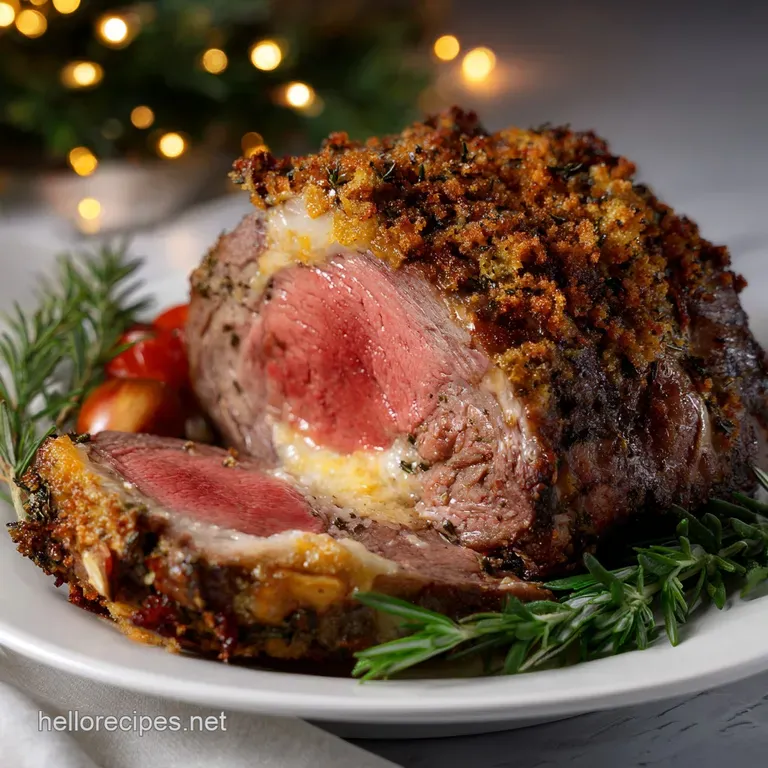
- Effort/Time: High-precision / 3 hours 50 mins
- Flavor Hook: Herb-infused butter crust with deep wood-smoke undertones
- Perfect for: High-stakes holiday gatherings and crowd-pleasing centerpieces
- Master the Ultimate 25 Christmas Dinner Recipe for a Memorable Holiday Feast
- Precision Data for Your Holiday Feast Planning
- The Alchemy of Umami: Selecting Your Elements
- Technical Instruments for Consistent Roast Results
- Precision Temperature Protocol for the Ultimate Holiday Roast
- Solving Thermal Lag and Texture Failures
- Flavor Architecture and Strategic Ingredient Swaps
- ⚗️ The Scaling Lab: The Physics of Quantity
- Thermodynamic Preservation and Reheating Strategies
- Aesthetic Presentation and Flavor Pairing Profiles
- Recipe FAQs
- 📝 Recipe Card
Discover a single, amazing recipe perfect for your Christmas dinner. There is nothing worse than pulling a $100, 10 pound standing rib roast out of the oven only to find a dry, gray ring of overcooked protein surrounding a cold, raw center.
I have lived that nightmare; I once served a roast so unevenly cooked that half the table got "shoe leather" while the other half got "sushi." It was an expensive, heartbreaking lesson in the physics of heat transfer.
The technical failure usually stems from "thermal shock" blasting cold meat with high heat, which causes the exterior fibers to contract and squeeze out moisture before the center even begins to warm.
Through years of trial and error, I learned that the secret to the perfect 25 Christmas Dinner Recipe isn't a fancier oven or more expensive salt. It is the marriage of enzymatic tenderization and the "low and slow" reverse sear.
We are going to use the science of protein denaturation to our advantage. By roasting at a low temperature, we allow the meat's natural enzymes (cathepsins) to break down tough connective tissues before they reach the temperature where they seize up.
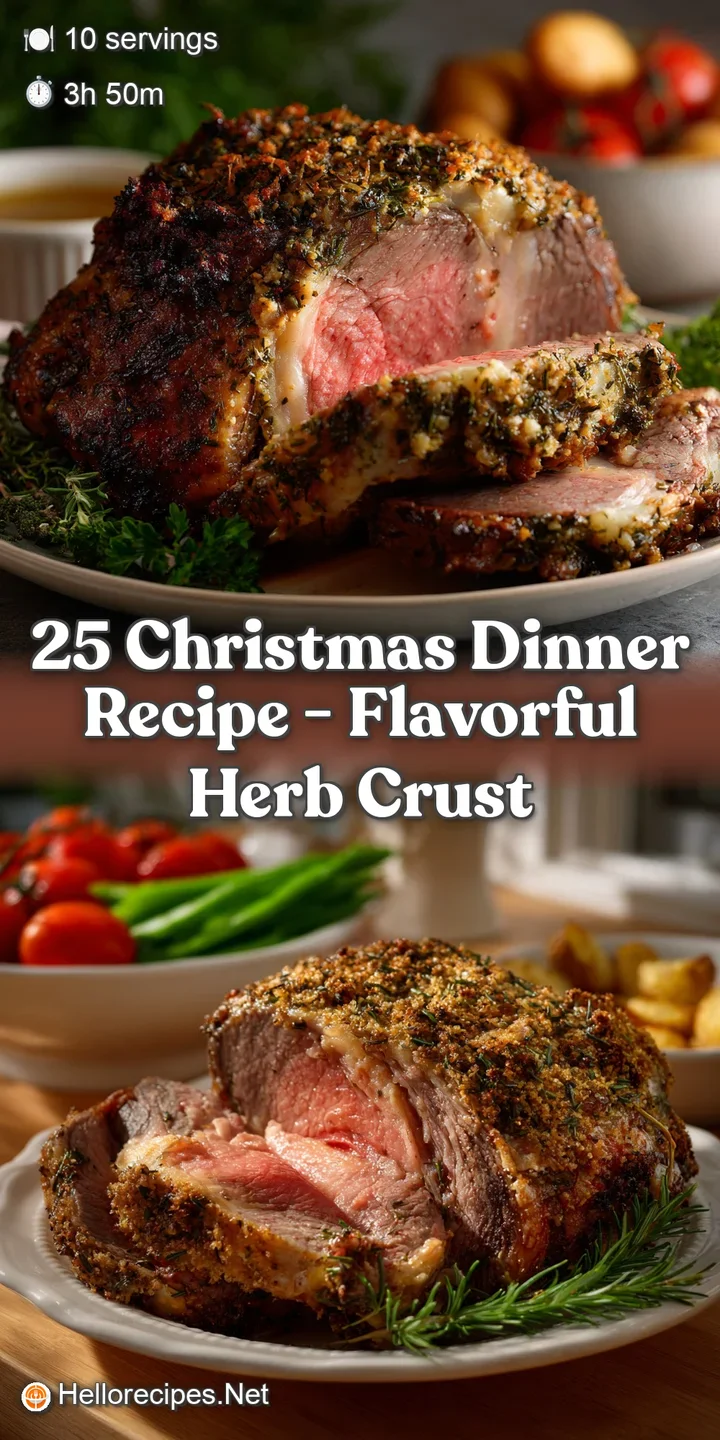
The result is a velvety, mahogany colored masterpiece that yields a shattering, savory crust and a center that cuts like butter. Let's get into the mechanics of why this works.
Master the Ultimate 25 Christmas Dinner Recipe for a Memorable Holiday Feast
To achieve professional grade results, we must understand the thermodynamic principles at play. This 25 Christmas Dinner Recipe relies on three specific scientific pillars that transform a raw hunk of beef into a culinary event.
- Thermal Equilibrium: Starting with a tempered, room temperature roast ensures that heat energy doesn't have to fight a 38°F (3°C) core, leading to more uniform energy distribution.
- Enzymatic Activity: Between 100°F and 120°F (38°C–49°C), endogenous enzymes actively tenderize the meat; a slow climb through this zone maximizes tenderness.
- The Maillard Reaction: By applying the herb butter and finishing at 500°F (260°C), we trigger a rapid chemical reaction between amino acids and reducing sugars, creating that signature savory crust.
- Salt Induced Osmosis: Applying Diamond Crystal Kosher Salt hours in advance allows the salt to dissolve into a brine, penetrate the muscle fibers, and restructure proteins to hold more moisture during the cook.
This 25 Christmas Dinner Recipe Ideas for a Memorable Holiday Feast pairs exceptionally well with a side of Cheesy Scalloped Potatoes recipe to balance the intense umami of the beef with creamy, starchy notes.
Precision Data for Your Holiday Feast Planning
When executing a 25 Christmas Dinner Recipe, precision timing is your greatest asset. Do not guestimate; use these specific metrics to plan your oven rotation.
- Prep Time: 20 minutes (excludes mandatory 2 hour tempering)
- Cook Time: 3 hours 30 minutes
- Total Time: 3 hours 50 minutes
- Yield: 10 servings (assuming approximately 1 lb / 450g per person)
- Serving Size: 1 slice (approx. 14 oz with bone)
| Metric | Value |
|---|---|
| Target Internal Temp (Pull) | 120°F (49°C) for Medium Rare |
| Final Rested Temp | 130°F - 135°F (54°C - 57°C) |
| Oven Temp (Phase 1) | 250°F (121°C) |
| Oven Temp (Phase 2) | 500°F (260°C) |
The Alchemy of Umami: Selecting Your Elements
The success of the 25 Christmas Dinner Recipe depends on the quality and chemical properties of your ingredients. Using a bone-in roast is non-negotiable; the bones act as an insulator, slowing the cook of the innermost meat and providing a reservoir of marrow flavored richness.
Ingredient Chemistry Breakdown
| Ingredient | Chemical/Physical Role (Science) | The Pro Secret (Why This Matters) |
|---|---|---|
| Standing Rib Roast | Collagen hydrolysis into gelatin | Bone-in retains shape and adds thermal mass for steadier cooking |
| Diamond Crystal Kosher Salt | Osmotic moisture retention | Larger flakes dissolve slower, preventing "salt burn" on the surface |
| Unsalted Butter | Lipid based flavor carrier | Fat conducts heat to the surface for an even, golden brown sear |
| Fresh Rosemary/Thyme | Volatile oil infusion | over High heat roasting releases polyphenols that penetrate the fat cap |
Official Ingredient List: 1 standing rib roast (approx. 4 bones, 10 lbs / 4.5 kg), bone-in and fat cap trimmed to 1/4 inch Why this? Bones insulate the meat, ensuring even heat distribution through the core. 2 tbsp (30 g) Diamond Crystal Kosher salt Why this? High solubility allows for deep penetration of the muscle fibers. 1 tbsp (15 g) Coarsely ground black pepper 1/2 cup (115 g) Unsalted butter, softened Why this? Fat acts as a medium for the Maillard reaction during the sear. 8 cloves garlic, minced 2 tbsp (6 g) fresh rosemary, finely chopped 2 tbsp (6 g) fresh thyme, finely chopped 1 tbsp (15 ml) Lea & Perrins Worcestershire sauce 1 tsp (2 g) smoked paprika
Substitution Protocols
| Original Ingredient | Substitute | Why It Works |
|---|---|---|
| Unsalted Butter | Beef Tallow | Higher smoke point and intensifies the "beefy" flavor profile |
| Rosemary/Thyme | Dried Herbes de Provence | Concentrated flavor; use 1/3 the volume of fresh herbs |
| Worcestershire Sauce | Soy Sauce | Provides the same glutamates (umami) but with a saltier finish |
Technical Instruments for Consistent Roast Results
You cannot achieve a Masterclass level 25 Christmas Dinner Recipe with guesswork. You need tools that manage thermodynamics and surface tension.
- Lodge Cast Iron Roasting Pan: Provides superior heat retention and even distribution.
- ThermoPro Digital Meat Thermometer: Must be a leave-in probe to monitor internal rise without opening the oven door.
- Kitchen twine: For tying the roast to ensure a uniform cylindrical shape.
- Fine mesh sieve: For straining the pan drippings if making a jus.
Precision Temperature Protocol for the Ultimate Holiday Roast
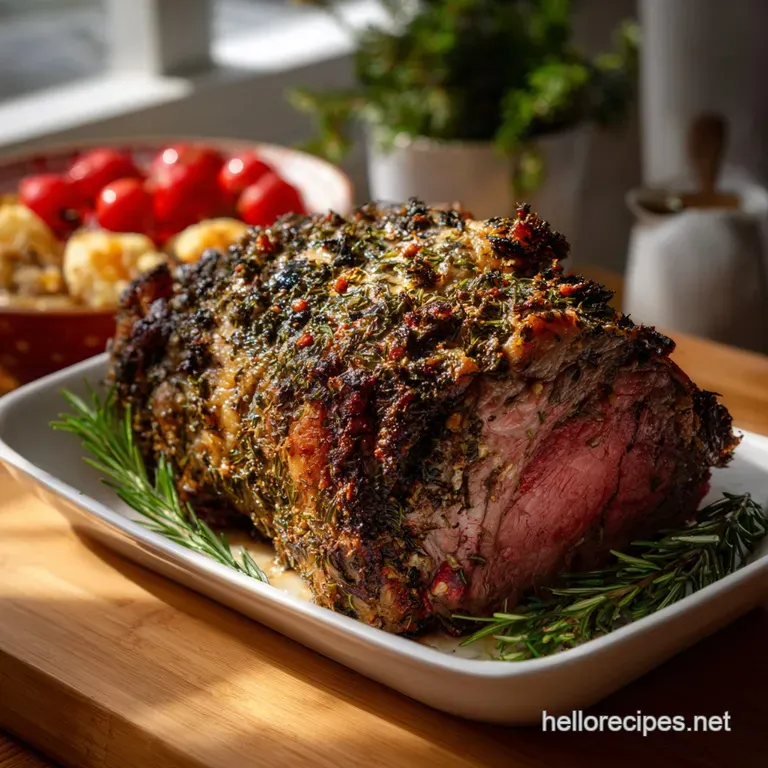
Follow these steps with surgical precision. The 25 Christmas Dinner Recipe Ideas for a Memorable Holiday Feast requires patience don't rush the rest.
- Temper the beef. Remove the 10 lb standing rib roast from the fridge 2 hours before cooking until the surface feels room temperature and loses its chill.
- Pat dry. Use paper towels to remove every trace of moisture from the surface until the meat feels tacky, not slippery. Note: Moisture causes steaming, which prevents the Maillard reaction.
- Apply the dry brine. Rub 2 tbsp Kosher salt and 1 tbsp black pepper over the entire surface until the meat is evenly coated in a fine salt crust.
- Create the compound butter. Mix 1/2 cup butter, garlic, rosemary, thyme, Worcestershire, and paprika in a small bowl until a thick, fragrant paste forms.
- Encrust the roast. Slather the herb butter over the fat cap and sides until the roast is completely shielded by a green flecked layer.
- Slow roast. Place in a 250°F (121°C) oven until the internal temperature hits exactly 120°F (49°C). This usually takes about 3 hours 15 mins.
- Rest (Phase 1). Remove from oven and tent loosely with foil for 30 minutes until the internal temperature stops rising and begins to stabilize.
- Blast sear. Crank oven to 500°F (260°C) and return roast for 10 minutes until the butter crust is sizzling, mahogany colored, and smells intensely nutty.
- Final rest. Let the meat sit for 20 minutes until the juices re-absorb into the fibers, ensuring they don't flood the cutting board.
For a refreshing palate cleanser between courses, I highly recommend serving my Vibrant Hibiscus Tea recipe, as the acidity cuts through the richness of the fat.
Solving Thermal Lag and Texture Failures
Even with the best 25 Christmas Dinner Recipe, variables like oven calibration or meat density can cause issues. Understanding the "why" helps you pivot.
Why Your Meat is Gray and Dry
When meat is cooked too fast at high heat, the exterior muscle fibers reach 160°F+ while the center is still 100°F. This creates a "bullseye" effect where most of the roast is overcooked.
This is caused by protein denaturation happening too rapidly, squeezing out all cellular moisture.
| Problem | Root Cause | The Fix | Pro Protocol |
|---|---|---|---|
| Tough Exterior | Surface moisture steamed the meat | Pat drier; use a wire rack | Salt 24 hours early (Dry Brining) |
| Bloody Juice Loss | Cutting too soon | Rest for at least 30 mins | Use a probe to track the "carryover" rise |
| Uneven Doneness | Roast was too cold | Temper for 2+ hours | Rotate the pan 180 degrees mid-way |
Flavor Architecture and Strategic Ingredient Swaps
If you want to vary the Dinner Recipe Ideas for a Memorable Holiday Feast, focus on the crust. The internal meat should always remain pure beef, but the exterior is your playground.
- Horseradish and Panko Crust: Mix 2 tbsp prepared horseradish into the butter and top with Panko breadcrumbs for a "shattering" tactile experience.
- dairy-free Adaptation: Swap the butter for 1/2 cup Beef Tallow or a high-quality Duck Fat. This actually increases the smoke point and creates a more "savory" crunch.
- Coffee Rub: Add 1 tbsp of finely ground espresso to the salt rub. The acidity in the coffee highlights the deep mineral notes of the dry-aged beef.
For a Memorable Holiday Feast, you might want to consider a different flavor profile altogether. If you're looking for something with a tangy, nostalgic kick, my Classic Coca Cola recipe makes for a surprisingly great glaze base if reduced significantly with balsamic vinegar.
⚗️ The Scaling Lab: The Physics of Quantity
When you decide to double this 25 Christmas Dinner Recipe for a massive party, you aren't just doubling the time. You are doubling the thermal mass.
- The Square Cube Law: Two 10 lb roasts in one oven have more surface area than one 20 lb roast. They will cook faster than a single 20 lb hunk.
- Airflow Interference: If the two roasts are touching, they will create a "cold zone" between them. Maintain at least 3 inches of space to allow convective heat to circulate.
- Flavor Saturation: Do not double the salt linearly if the surface area hasn't doubled. Scale salt to 1.5x for two roasts to avoid an oversalted crust.
- Carry Over Cooking: A larger mass of meat holds more energy. Pull the roast at 115°F (46°C) instead of 120°F, as the internal temp will rise more aggressively during the rest.
Thermodynamic Preservation and Reheating Strategies
The 25 Christmas Dinner Recipe is a significant investment. Proper storage ensures the leftovers aren't wasted.
- Fridge: Store in an airtight container for up to 4 days.
- Freeze: Wrap tightly in plastic wrap, then foil. It stays peak quality for 2 months.
- Reheating: NEVER use a microwave. Place slices in a pan with 2 tbsp beef broth, cover with foil, and heat at 250°F (121°C) until just warmed through. This prevents the proteins from tightening and turning into rubber.
💡 ZERO WASTE PHILOSOPHY
Don't discard the bones.Transform: Simmer the bones with celery and onions for 6 hours to create a bone broth. Science: The marrow and connective tissue undergo collagen hydrolysis, creating a gelatin rich liquid that provides a velvety mouthfeel to soups or sauces.
Aesthetic Presentation and Flavor Pairing Profiles
When serving your 25 Christmas Dinner Recipe, presentation is as important as the cook.
- The Carve: Always cut against the grain. On a rib roast, this means slicing parallel to the bones.
- The Garnish: Use fresh rosemary sprigs that have been lightly "bruised" to release their oils just before the platter hits the table.
- The Pairing: Serve with a bold Cabernet Sauvignon or a peaty Scotch. The tannins in the wine and the smoke in the whiskey bind to the beef fat, clearing the palate for the next bite.
Myth: Searing the meat first "locks in the juices." Truth: Searing creates flavor via the Maillard reaction, but it actually slightly dries out the surface.
The reverse sear method used in this 25 Christmas Dinner Recipe Ideas for a Memorable Holiday Feast is scientifically superior for moisture retention because it prevents the muscle fibers from "clenching" and expelling water.
By following this protocol, you aren't just making a meal; you're applying culinary physics to ensure the most expensive ingredient of your year is treated with the technical respect it deserves. Enjoy your for a Memorable Holiday Feast!
Recipe FAQs
What is the mandatory tempering time before cooking the roast?
2 hours. Tempering allows the core temperature to rise slowly, preventing thermal shock when the roast enters the oven. This allows heat energy to distribute more uniformly before deep protein denaturation occurs.
Should I use bone-in or boneless for the best result?
Why did my crust turn out pale and chewy instead of brown and crisp?
- Pat meat aggressively dry before seasoning
- Ensure oven hit 500°F before inserting roast
- Use a wire rack to maximize air circulation
Is it better to use unsalted butter or a flavored fat like beef tallow?
Myth: Cooking at 500°F first locks in all the juices.
Myth: Searing the meat first "locks in the juices." Truth: High initial heat causes rapid protein contraction, forcing moisture out; the reverse sear prioritizes uniform internal temperature before flavor development.
How do I adjust the cook time if I double the size of the roast?
Myth: Resting the roast for 15 minutes is sufficient for a 10lb cut.
Myth: Fifteen minutes rest is enough for a large cut. Truth: A 10lb roast requires a minimum 30-minute rest to allow pressure equalization and juice reabsorption across the muscle fibers.
Memorable Christmas Dinner Recipe
Ingredients:
Instructions:
Nutrition Facts:
| Calories | 1145 kcal |
|---|---|
| Protein | 74 g |
| Fat | 89 g |
| Carbs | 2.2 g |
| Fiber | 0.6 g |
| Sugar | 0.4 g |
| Sodium | 1280 mg |
