Leftover Prime Rib Hash Recipe: Mahogany Searing Secrets
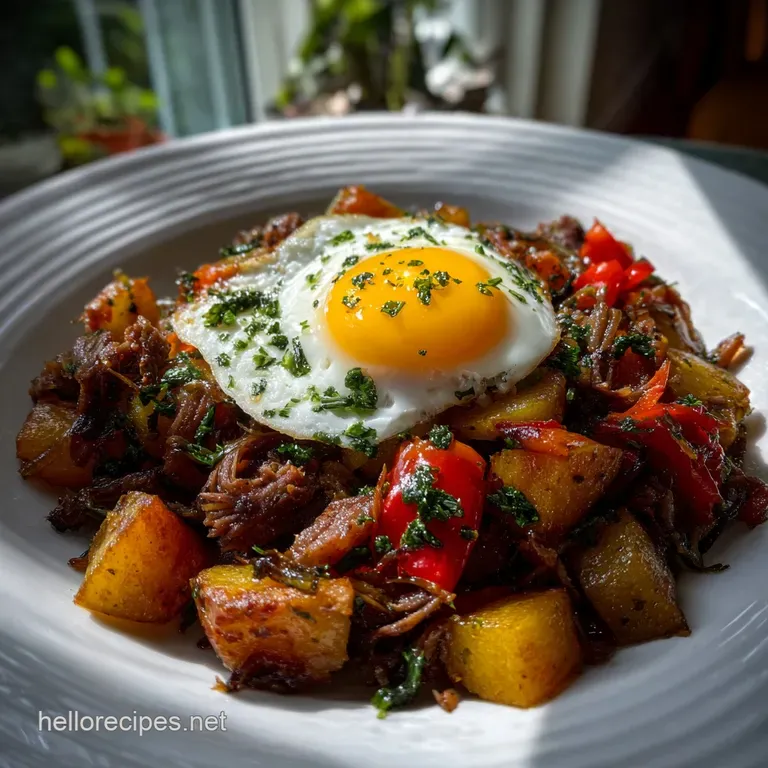
- Effort/Time: Intermediate | 35 minutes total
- Flavor Hook: Smoked-paprika-infused beef tallow meets mahogany-seared rib cap.
- Perfect for: Post-holiday brunch or high-protein recovery meals.
- Master the Ultimate Leftover Prime Rib Hash Recipe
- Precision Metrics for the Ultimate Morning Skillet
- The Alchemy of Umami: Selecting Your Elements
- Essential Hardware for over High heat Thermal Conductivity
- Atomic Sequence for Achieving the Perfect Crust
- Solving Structural Collapse and Texture Failures
- ⚗️ The Scaling Lab: The Physics of Quantity
- Common Myths Regarding the Prime Rib Hash Recipe
- Thermal Recovery and Zero Waste Protocols
- Sensory Harmonization and Finishing Touches
- Recipe FAQs
- 📝 Recipe Card
Master the Ultimate Leftover Prime Rib Hash Recipe
There is nothing more gut-wrenching than staring at $120 worth of leftover standing rib roast and realizing it has the textural appeal of a damp sponge. Most home cooks commit the cardinal sin of tossing cold, expensive beef into a lukewarm pan, resulting in a grey, rubbery mess that insults the original cut.
Wasted money is a bitter pill, but wasted potential is a culinary tragedy that ruins a perfectly good Sunday morning.
I spent years destroying potential breakfast gold by crowding the pan and using room temperature potatoes before I understood the physics of moisture migration. I once served a "hash" that was essentially a beef flavored mashed potato slurry because I didn't respect the Maillard reaction's requirement for a dry surface.
That failure taught me that this Leftover Prime Rib Hash Recipe isn't just a meal; it's a lesson in thermal mass and surface area management.
The secret to success lies in starch retrogradation using potatoes that have been cooked and chilled to reorganize their molecular structure into a shatteringly crisp exterior.
By combining these stable starches with the high smoke point of beef tallow, we trigger a rapid Maillard reaction that browns the beef without overcooking the delicate interior. The result is a Leftover Prime Rib Hash Recipe that delivers a velvety center and a mahogany colored, crunchy crust that hisses when the egg yolk finally breaks.
Precision Metrics for the Ultimate Morning Skillet
To execute this Leftover Prime Rib Hash Recipe with professional accuracy, we must adhere to specific thermal and temporal parameters. The following metrics are derived from the chemical requirements of protein searing and vegetable softening.
- Prep Time:15 minutes
- Cook Time:20 minutes
- Total Time:35 minutes
- Yield: 4 servings
- Caloric Density: 552 kcal per serving
- Macronutrient Profile: 28g Protein | 34g Fat | 37g Carbohydrates
The timeline is non-negotiable for the Leftover Prime Rib Hash Recipe. Reducing the potato searing time will result in a flaccid texture, while extending the beef's exposure to heat beyond the final three minutes will lead to irreversible protein denaturation and toughness.
The Alchemy of Umami: Selecting Your Elements
Every component in this Rib Hash Recipe serves a structural or chemical purpose. We don't just add ingredients for flavor; we add them for their contribution to the dish's final physical state.
Ingredient Chemistry Breakdown
| Ingredient | Chemical/Physical Role (Science) | The Pro Secret (Why This Matters) |
|---|---|---|
| Cold Cooked Potatoes | Amylose retrogradation for structural integrity | Prevents the hash from turning into a gummy mash during searing. |
| Beef Tallow | High smoke point and saturated fat stability | Provides the "beefier" essence and allows for a 400°F+ sear without burning. |
| Worcestershire Sauce | Enzymatic tenderization and fermented umami | The anchovies and tamarind provide a chemical bridge between beef and potato. |
| Leftover Prime Rib | Collagen rich protein with intramuscular fat | The rib cap (spinalis dorsi) provides the best texture for over high heat dicing. |
- 24 oz (680g) Cold cooked potatoes: Diced into 1/2 inch cubes. Why this? Chilled starch crystals resist breaking, ensuring individual cube definition.
- 2 cups (300g) Leftover Prime Rib: Diced into 1/2 inch cubes. Why this? This specific mass ensures even heat distribution during the final 3 minute toss.
- 1 large Yellow onion (200g): Finely diced for maximum surface area and caramelization.
- 1 large Red bell pepper (150g): Adds sweetness and Vitamin C to balance the heavy fats.
- 3 cloves Garlic: Minced fresh. Do not use jarred; the sulfur compounds are too weak.
- 2 tbsp (30ml) Beef tallow or Unsalted butter: Tallow is preferred for its high oxidative stability.
- 1 tbsp (15ml) Worcestershire sauce: Use a high-quality brand like Lea & Perrins for authentic fermentation notes.
- 1 tsp (5g) Smoked paprika: Adds a wood fired depth that mimics a charcoal grill.
- 1/2 tsp (2.5g) Dried thyme: Its oils are heat stable, unlike fresh thyme which burns.
- 1 tsp Diamond Crystal Kosher Salt: The hollow flakes offer better coverage and lower sodium by volume than table salt.
- 1/2 tsp Freshly cracked black pepper: Coarse grind provides a tactile "pop" of heat.
- 4 large Eggs: Grade A or AA for structural yolk integrity.
- 2 tbsp (10g) Fresh chives: Finely chopped for a late stage aromatic lift.
Essential Hardware for over High heat Thermal Conductivity
The equipment used for this Leftover Prime Rib Hash Recipe determines whether you sear or steam your ingredients.
- Lodge Cast Iron Skillet (12 inch): This is mandatory. The high thermal mass of cast iron prevents the temperature from plummeting when you add the cold potatoes. It acts as a heat battery, ensuring a consistent 375°F (190°C) surface.
- Fish Spatula (Metal): The thin, flexible edge allows you to get under the potato crust without shattering the cubes.
- Digital Instant Read Thermometer: Used to ensure the beef reaches 130°F (55°C) without exceeding 145°F (63°C).
- Chef’s Knife (8 inch): Sharpness is key for dicing the prime rib without squeezing out the residual juices.
If you are prepping this as a side to a larger brunch, it pairs beautifully with my Cheesy Scalloped Potatoes recipe for a double dose of potato heaven.
Atomic Sequence for Achieving the Perfect Crust
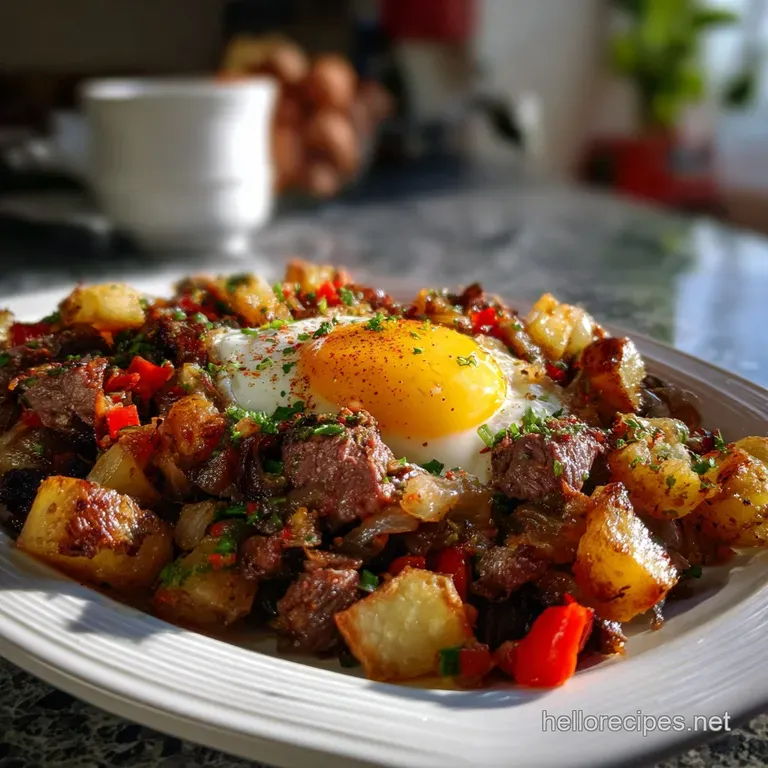
Executing this Leftover Prime Rib Hash Recipe requires a specific order of operations to manage moisture levels.
- Heat the Skillet: Place your Lodge Cast Iron Skillet over medium high heat for 5 minutes until a drop of water flicked onto the surface dances and evaporates instantly.
- Render the Fat: Add 2 tbsp Beef tallow to the pan until it shimmers and wisps of smoke begin to rise.
- Searing Potatoes: Add 24 oz diced potatoes in a single layer until the bottom edges turn a deep mahogany brown (approx. 8 minutes). Do not stir for the first 4 minutes.
- Aromatic Integration: Toss the potatoes and add 1 diced yellow onion and 1 diced red bell pepperuntil the onion edges turn translucent and slightly charred.
- Spice Infusion: Stir in 1 tsp smoked paprika, 1/2 tsp dried thyme, 1 tsp Kosher salt, and 1/2 tsp black pepperuntil the aroma becomes toasted and pungent.
- Garlic Bloom: Add 3 cloves minced garlicuntil fragrant (about 45 seconds) do not let it turn black.
- Prime Rib Addition: Fold in 2 cups diced Leftover Prime Rib and 1 tbsp Worcestershire sauceuntil the beef is heated through and the sauce has glazed the cubes (approx. 3 4 minutes).
- Create Egg Wells: Use your spatula to create 4 small wells in the hash until the bottom of the skillet is visible.
- The Egg Finish: Crack 1 egg into each well, cover the pan with a lid for 3 minutes until the whites are set firm but the yolks remain jiggly and liquid.
- Final Garnish: Remove from heat and sprinkle with 2 tbsp chopped chivesuntil the green herbs wilt slightly from the residual steam.
Solving Structural Collapse and Texture Failures
Why Your Hash Turns Into Mush
When potatoes are agitated too early, the starch granules rupture, releasing amylopectin which acts as a glue. This turns your Leftover Prime Rib Hash Recipe into a sticky paste.
| Problem | Root Cause | The Fix | Pro Protocol |
|---|---|---|---|
| Soggy Potatoes | Surface moisture / Pan crowding | Use cold potatoes; cook in batches | Pat potatoes dry with paper towels before dicing. |
| Tough Beef | Over denatured proteins | Add beef at the very end | Keep beef cubes larger (1/2 inch) to shield the center from heat. |
| Sticking to Pan | Carbon buildup or low temp | Pre-heat cast iron longer | Use the "Leidenfrost point" test (water bead test) before adding fat. |
Why Your Eggs Stick
If the eggs stick to the bottom of the wells, it’s usually due to a lack of fat in that specific spot. Before cracking the egg, add a tiny sliver of butter or a drop of tallow into the well. This creates a non-stick barrier between the egg proteins and the cast iron.
⚗️ The Scaling Lab: The Physics of Quantity
When you decide to double this Rib Hash Recipe for a larger crowd, the thermodynamics change significantly.
- The Evaporation Paradox: If you double the ingredients in the same 12 inch skillet, the surface area remains the same while the moisture volume doubles. This will steam your hash instead of frying it. Mandatory Instruction: Use two separate skillets or cook the potatoes in two distinct batches to maintain the 375°F (190°C) searing threshold.
- Flavor Saturation: When doubling, only scale the Smoked Paprika and Thyme to 1.5x. These spices are highly volatile and can become bitter if scaled linearly to 2x.
- Thermal Mass Recovery: Adding 48 oz of cold potatoes to one pan will drop the temperature below the Maillard zone (300°F). You must increase the initial pre-heat time by 3 minutes to store more thermal energy in the cast iron.
- Carry Over Heat: A larger mass of hash will retain heat longer. Pull the eggs when they look slightly underdone, as the residual thermal energy in the potatoes will continue to cook the yolks for 2 minutes after the heat is off.
Common Myths Regarding the Prime Rib Hash Recipe
Myth: You must boil the potatoes immediately before making hash. Truth: Boiling right before frying is a recipe for disaster. Freshly boiled potatoes are full of steam and loose starch.
For a Leftover Prime Rib Hash Recipe, you need retrograded starch, which only happens after the potatoes have been chilled for at least 4 hours. This process aligns the starch molecules into a crystalline structure that crisps beautifully.
Myth: The beef should be browned as long as the potatoes. Truth: Leftover prime rib is already a "cooked" product. Re-browning it for 10 minutes will result in "gray band" meat that is dry and stringy.
You only want to hit the beef with enough heat to liquefy the intramuscular fats and create a light surface sear.
For a unique flavor variation, you could even top this with a drizzle of a spicy aioli, similar to the flavor profile found in my In N Out recipe spread.
Thermal Recovery and Zero Waste Protocols
Storage and Reheating
- Fridge: Store in an airtight container for up to 3 days. Note that the potatoes will lose their "shatter" and become soft.
- Reheating: Do not use a microwave. This will turn the beef into rubber. Reheat in a dry skillet over medium heat for 5 minutes to re-crisp the potato skins.
- Freezing: I do not recommend freezing this completed Leftover Prime Rib Hash Recipe. The cell walls of the potatoes will collapse upon thawing, resulting in a grainy texture.
💡 ZERO WASTE PHILOSOPHY
Don't discard the Prime Rib Fat Trimmings. Transform: Melt them down in a small saucepan over low heat to make your own beef tallow. Science: This fat contains the highest concentration of beef flavor (lipids) and has a higher smoke point than butter, making it the perfect medium for this Prime Rib Hash.
If you find yourself with leftover herbs, you can use the chive stems in a compound butter for future steaks. After a heavy savory meal like this, I always crave something sweet, like a slice of my Classic Coca Cola recipe cake to balance the palate.
Sensory Harmonization and Finishing Touches
The final assembly of this Leftover Prime Rib Hash Recipe is about contrast. You have the heavy, umami rich beef, the salty crisp potatoes, and the rich, velvety egg yolk. To balance this, you need acid and brightness.
- The Acid Hit: A dash of hot sauce or a squeeze of fresh lemon juice right before serving breaks through the tallow's richness.
- Texture Play: Add a handful of toasted breadcrumbs on top if your potatoes didn't get as crisp as you'd like.
- Aromatic Finish: Always add the chives at the very last second. The heat from the hash will activate the volatile oils in the chives, sending a fresh, onion like aroma to the table without cooking the life out of them.
Serving this Leftover Prime Rib Hash Recipe directly in the cast iron skillet not only looks rustic and authentic, but it also keeps the meal at the optimal consumption temperature (approx. 140°F) for much longer than a ceramic plate would.
Enjoy the sizzle, the crack of the crust, and the revitalization of your holiday roast.
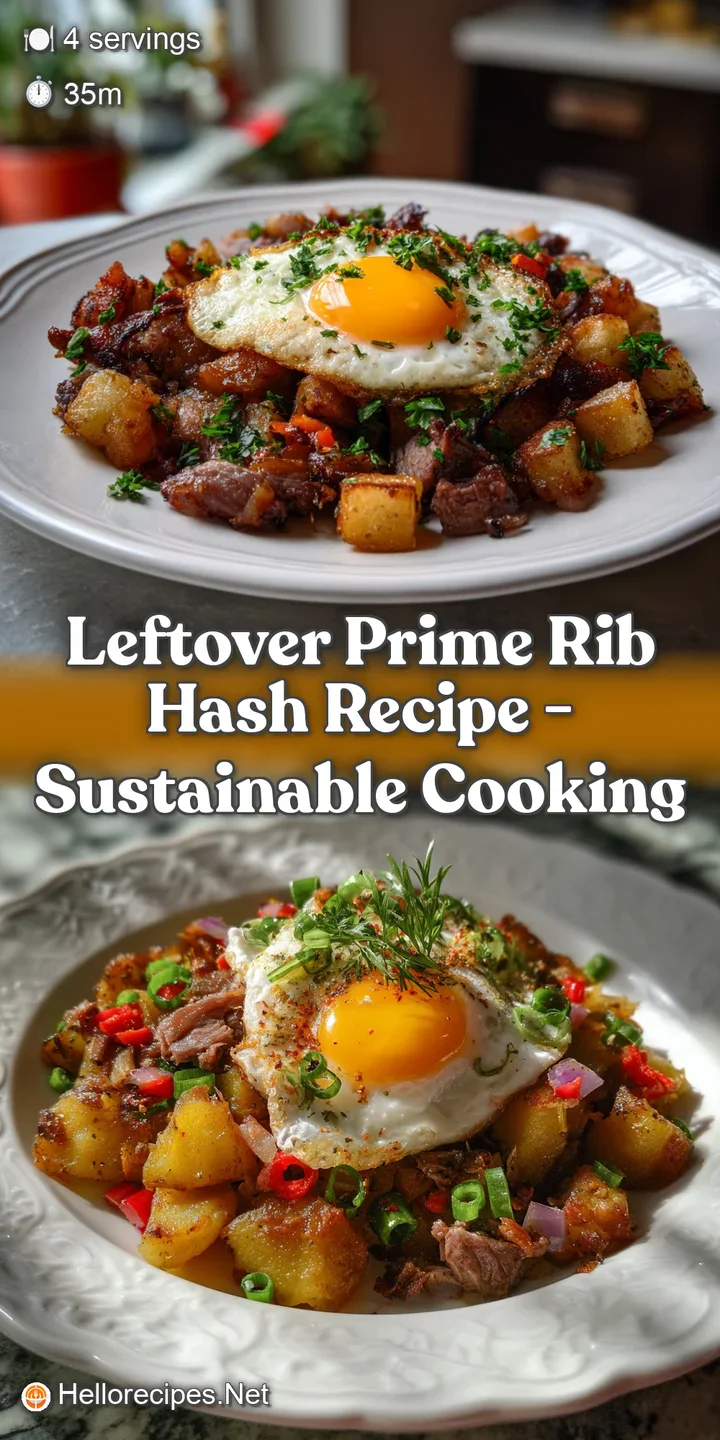
Recipe FAQs
how to make hash from leftover prime rib?
Dice the beef and potatoes small, then sear potatoes first in hot tallow. Introduce the chilled, diced beef cubes last, heating only briefly to avoid protein hardening. If you enjoyed mastering thermal control here, see how the same temperature precision is vital for stable texture in our Eggnog: Best Homemade Eggnog Recipe (Cooked).
what do with leftover prime rib?
Turn it into high flavor hash, French dip sandwiches, or slicing thin for tacos. Prime rib fat retains flavor exceptionally well, making it ideal for rendering into beef tallow for subsequent cooking applications.
how to cook leftover prime rib?
Add meat just before serving; heat gently until warmed through. Overcooking denatures the connective tissue and drives out internal moisture, leading to chewiness. Keep the final internal temperature below 145°F (63°C).
- Dice beef uniformly for even heating
- Add only during the final 3-4 minutes of cooking
- Use residual heat to finish warming
how to make leftover corned beef hash?
Substitute corned beef, but use less added salt initially. Corned beef is already cured and significantly saltier than residual prime rib roast. The technique remains identical: dry, cold potatoes seared first in rendered fat.
Can I use regular vegetable oil instead of tallow?
Beef tallow provides superior flavor and searing capability. Vegetable oils have a lower smoke point and lack the deep, savory lipid notes imparted by rendered beef fat, resulting in a less flavorful crust.
Myth: Adding the eggs first yields a better crust.
Myth: Adding the eggs first yields a better crust. Reality: Eggs added too soon absorb all the hot fat, inhibiting the starches from contacting the metal surface, thus promoting steaming over searing.
Myth: The hash needs to be stirred constantly for even cooking.
Myth: The hash needs to be stirred constantly for even cooking. Reality: Constant stirring prevents the formation of the essential Maillard reaction crust on the potato cubes. Agitation must be minimized until a crust has visibly formed.
Leftover Prime Rib Hash
Ingredients:
Instructions:
Nutrition Facts:
| Calories | 552 kcal |
|---|---|
| Protein | 28g |
| Fat | 34g |
| Carbs | 37g |
| Fiber | 5g |
| Sugar | 4g |
| Sodium | 780mg |
