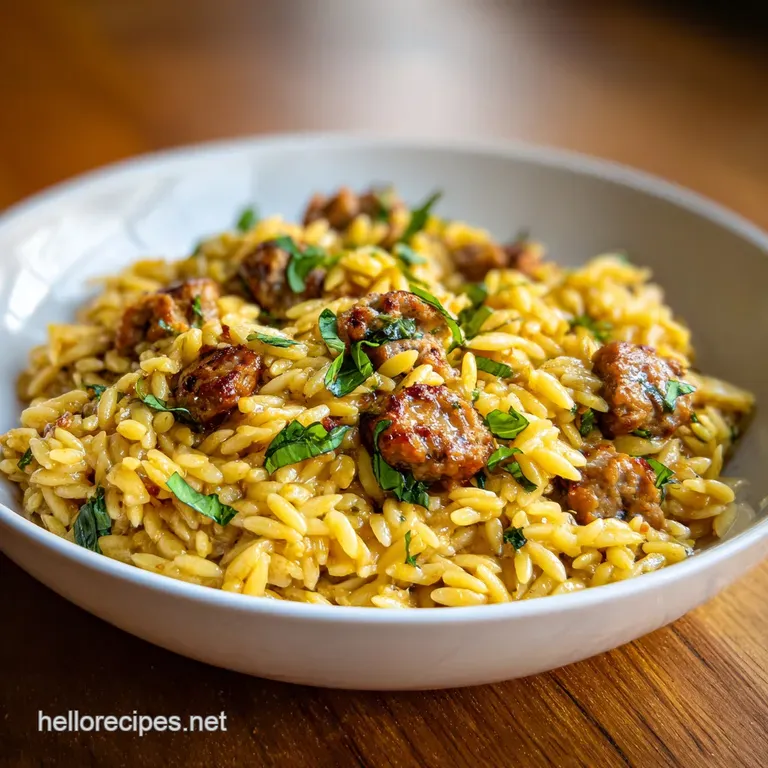
Italian Sausage Orzo: Velvety Sauce
- Time: Active 10 mins, Passive 20 mins, Total 30 mins
- Flavor/Texture Hook: Velvety sauce with spicy, browned crumbles
- Perfect for: High speed weeknight gastronomy
- Master the One Pot Italian Sausage Orzo
- Why This Flavor Contrast Works
- Essential Components for Deep Flavor
- Ingredients & Substitutes
- Tools for the Perfect Sear
- Simple Steps for Maximum Flavor
- Solving Common Orzo Texture Issues
- Creative Ways to Swap Flavors
- Debunking Common Kitchen Ideas
- Storing and Reheating Your Leftovers
- Bright Sides to Serve Tonight
- Critical Level of Sodium
- Recipe FAQs
- 📝 Recipe Card
Master the One Pot Italian Sausage Orzo
Imagine the sharp sizzle as 450g of spiced pork hits a heavy pan, immediately releasing the scent of toasted fennel and garlic into your kitchen. I first stumbled onto this method during a frantic Tuesday when I wanted the depth of a slow cooked ragu but only had 30 minutes before my hunger turned into a headache.
I realized that treating orzo like risotto - but without the constant stirring - created a texture that was far more interesting than just boiling it in water.
The magic happens when the fat from the sausage renders out, becoming the cooking medium for the pasta itself. By toasting the dry grains in that savory oil, you create a barrier that keeps the center firm while the outside melts into the broth.
It’s a contrast of textures that makes this Italian Sausage Orzo feel far more complex than a standard pasta dish. We are looking for that specific point where the spinach wilts into the heat, providing a vibrant, earthy snap against the rich, heavy cream.
Trust me, once you see how the starch from the orzo creates its own sauce, you’ll never go back to boiling pasta in a separate pot. We’ve all made the mistake of overcooking orzo until it looks like porridge, but this technique fixes that.
This isn't just a meal; it's a lesson in flavor layering and moisture management that will change how you approach quick dinners forever.
Why This Flavor Contrast Works
- Starch Suspension: Toasting the orzo in rendered fat coats each grain, slowing down the hydration process so the pasta stays firm while creating a silky glaze.
- Acidic Balance: The sun dried tomatoes provide a concentrated burst of acidity that cuts through the heavy lipids in the sausage and cream.
- Emulsification: Simmering the pasta directly in the broth allows released starches to bind the water and fat together into a cohesive, velvety sauce.
| Method | Time | Texture | Best For |
|---|---|---|---|
| Stovetop Skillet | 20 mins | Silky and glazed | Quick weeknight dinners |
| Oven Bake | 35 mins | Crispy top edges | Serving a larger crowd |
| Soup Style | 25 mins | Brothy and light | Cold winter evenings |
Choosing the right approach depends on how much texture you want. The skillet method we're focusing on today provides the most innovative balance between a soft sauce and a distinct bite in the pasta.
Essential Components for Deep Flavor
| Ingredient | Science Role | Pro Secret |
|---|---|---|
| Dried Orzo | Main carbohydrate | Toast until it smells like popcorn for nutty depth |
| Italian Sausage | Fat and protein base | Let it brown deeply to build Maillard complexity |
| Chicken Broth | Hydration agent | Use low sodium to control the final mineral snap |
| Heavy Cream | Emulsion stabilizer | Add at the very end to prevent curdling from heat |
While the sausage provides the bulk of the flavor, the sun dried tomatoes are the secret weapon here. They offer a chewy, savory contrast to the tender pasta. If you’re looking to expand your repertoire of comforting classics, the technique of building a sauce from a meat base is very similar to what you'll find in this Pasta e Fagioli recipe.
Ingredients & Substitutes
- 1 lb Italian sausage (mild or hot): Bulk sausage is easiest, or remove casings from links. Why this? Provides the foundational fat and seasoning for the entire pan.
- Substitute: Ground turkey with 1 tsp fennel seeds and 1 tsp smoked paprika.
- 1 medium yellow onion: Finely diced to melt into the sauce. Why this? Adds essential sweetness to balance the salt.
- Substitute: Two large shallots for a more delicate, garlicky profile.
- 4 cloves garlic: Minced fresh. Why this? Adds aromatic intensity that defines the flavor profile.
- Substitute: 1 tsp garlic powder added to the broth if fresh isn't available.
- 1.5 cups dried orzo pasta: The small, rice like shape is crucial for the texture. Why this? Releases the perfect amount of starch for a self thickening sauce.
- Substitute: Pearl couscous, though it will cook faster and be less creamy.
- 3 cups low sodium chicken broth: Use a high-quality stock for the best results. Why this? Liquid for hydration and primary savory seasoning.
- Substitute: Vegetable broth or even water with a bouillon cube.
- 0.5 cup heavy cream: Adds the signature velvety finish. Why this? Smooths out the spice and emulsifies the pan juices.
- Substitute: Full fat coconut milk for a slightly nutty, dairy-free alternative.
- 0.25 cup sun dried tomatoes: Packed in oil and chopped. Why this? Provides intense umami pops and bright acidity.
- Substitute: 1 tbsp tomato paste sautéed with the onions.
- 3 cups fresh baby spinach: Added at the very end. Why this? Adds color, fiber, and a fresh earthy contrast.
- Substitute: Chopped kale, though you must add it 5 minutes earlier to soften.
- 0.5 cup Parmesan cheese: Freshly grated is mandatory. Why this? Adds saltiness and helps thicken the sauce via protein binding.
- Substitute: Pecorino Romano for a sharper, saltier bite.
- 0.25 tsp red pepper flakes: Adjust based on your heat tolerance. Why this? Adds a subtle back of-the throat warmth.
- Salt and black pepper: To taste.
Chef's Tip: Freeze your block of Parmesan for 10 minutes before grating. It prevents the cheese from clumping and ensures it melts into a perfectly smooth lattice within the sauce.
Tools for the Perfect Sear
Using a heavy bottomed skillet, preferably cast iron or stainless steel, is non negotiable for this Italian Sausage Orzo. You want a pan that can hold heat consistently when you add the cold meat.
A thin pan will drop in temperature, causing the sausage to steam in its own juices rather than developing that dark, shatter crisp crust we're after.
If you don't have a large skillet, a Dutch oven works beautifully too. The high sides help prevent broth splatters when the liquid hits the hot pan. Just make sure the surface area is wide enough so the orzo can cook evenly in a relatively shallow layer of liquid.
This ensures every grain is submerged and hydrates at the same rate.
Simple Steps for Maximum Flavor
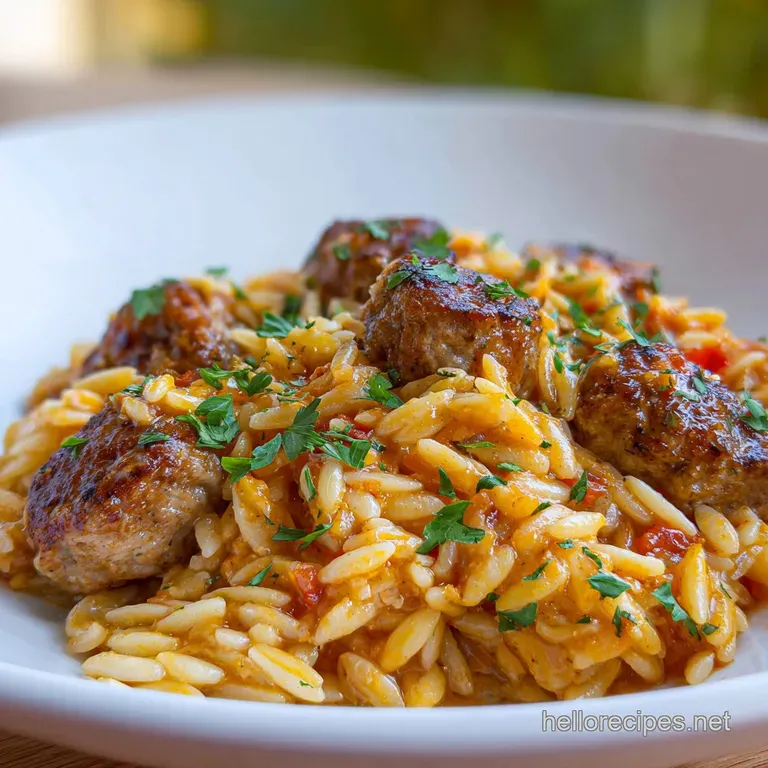
- Brown the meat. Place the 1 lb Italian sausage in a large skillet over medium high heat. Cook 6-8 minutes until deeply browned and crispy, breaking it into small crumbles with a wooden spoon.
- Sauté aromatics. Add the diced yellow onion to the sausage fat. Cook 4 minutes until translucent and soft, scraping the bottom of the pan to release the brown bits (fond).
- Aromatize. Stir in the 4 minced garlic cloves and 0.25 tsp red pepper flakes. Note: Toasting spices in fat unlocks fat soluble flavor compounds.
- Toast the pasta. Pour in the 1.5 cups dried orzo. Stir for 2 minutes until the edges turn golden, ensuring every grain is coated in the rendered fat.
- Simmer. Add the 3 cups chicken broth and 0.25 cup chopped sun dried tomatoes. Bring to a boil, then reduce heat to low and cover.
- Hydrate. Simmer for 10-12 minutes until the orzo is tender and most liquid is absorbed, stirring once halfway through to prevent sticking.
- Cream finish. Stir in the 0.5 cup heavy cream and the 0.5 cup freshly grated Parmesan. Note: The cheese should melt instantly into a silky glaze.
- Wilt the greens. Add the 3 cups fresh baby spinach. Fold gently for 1 minute until the leaves collapse into the sauce from the residual heat.
- Season. Taste and add salt or black pepper as needed. Wait 2 minutes before serving to let the sauce thicken slightly.
Solving Common Orzo Texture Issues
Why Your Orzo Is Gummy
The most common cause of a mushy texture is skipping the toasting step or using too much liquid. If the pasta sits in boiling water for too long without enough fat to coat the grains, the exterior starches hydrate too quickly and turn into a paste.
Always measure your broth precisely 710ml (3 cups) is the sweet spot for 1.5 cups of orzo.
Why Your Sauce Broke
If the sauce looks oily or separated, the heat was likely too high when you added the cream and cheese. Dairy emulsions are fragile. If the pan is boiling aggressively, the proteins in the cheese and cream will tighten and push out the fat.
Always drop the heat to the lowest setting or even turn it off before finishing the dish.
| Problem | Root Cause | Solution |
|---|---|---|
| Hard Pasta | Insufficient liquid or lid not sealed | Add 1/4 cup broth and simmer covered for 3 mins |
| Bland Flavor | Lack of browning or under salting | Brown sausage longer; add a splash of lemon juice |
| Oily Surface | Sausage fat wasn't incorporated | Stir vigorously when adding cream to create emulsion |
Common Mistakes Checklist:
- ✓ Pat the sausage dry before adding to the pan (prevents steaming).
- ✓ Don't drain all the sausage fat; you need at least 1 tbsp to toast the orzo.
- ✓ Grate your own Parmesan; pre shredded cheese is coated in starch and won't melt smoothly.
- ✓ Use low sodium broth to avoid an oversalted final dish.
- ✓ Add the spinach at the very end to keep its color vibrant and texture snappy.
Creative Ways to Swap Flavors
If you want to scale this down for a solo lunch, simply halve all ingredients and use a smaller 8 inch skillet. For the 0.5 cup of cream, use 0.25 cup, and for the egg in other recipes, you'd use half but here, just use a splash less broth.
The cook time remains almost identical because the hydration rate of the orzo doesn't change with volume.
Scaling up for a dinner party is easy, but don't double the red pepper flakes immediately. Spices can become overwhelming in large batches, so start with 1.5x the amount and adjust at the end.
When doubling the recipe, you might need to use a large 5 liter Dutch oven to ensure the orzo has enough room to expand without clumping into a solid mass.
| Premium Ingredient | Budget Alternative | Flavor Impact |
|---|---|---|
| Fresh Hot Sausage | Bulk mild sausage | Less heat, more control over spice levels |
| Sun dried Tomatoes | Canned tomato dice | Less chew, but more liquid in the sauce |
| Heavy Cream | Evaporated milk | Same creaminess with slightly less fat |
If you enjoy the structure of this dish but want something with more of a classic pasta feel, you might love the Chicken Alfredo Penne Pasta recipe which uses a similar emulsion technique to create a restaurant quality sauce.
Debunking Common Kitchen Ideas
The idea that you must boil pasta in a huge pot of salted water is simply not true for small shapes like orzo. Cooking it "one pot" style actually results in a better sauce because you aren't pouring all that precious starch down the drain.
The starch stays in the pan, creating that velvety mouthfeel that water boiled pasta just can't replicate.
Another myth is that you need to wash orzo before cooking. Unlike rice, which is often coated in excess surface starch from the milling process, orzo is pasta. Washing it would remove the very starches we need to build our sauce. Keep it dry until it hits the pan for toasting.
Storing and Reheating Your Leftovers
This dish stores beautifully in the fridge for up to 4 days in an airtight container. The orzo will continue to absorb liquid as it sits, so it will likely be thicker the next day. To reheat, don't just microwave it on high. Add a splash of water or broth (about 1 tbsp per serving) to the bowl before heating.
This recreates the steam needed to loosen the sauce back into its original silky state.
I don't recommend freezing this specific recipe because the cream and spinach don't hold their texture well after thawing. The cream can grain out, and the spinach turns quite slimy. If you have extra spinach, use the stems! Finely chop them and sauté them with the onions at the beginning of the recipe for zero waste crunch and extra nutrition. Leftover sausage fat can also be saved in a jar in the fridge to roast potatoes the next day; it's pure liquid gold. For another great use of pantry staples, check out this Grilled Shrimp Orzo recipe for a brighter, summer friendly variation.
Bright Sides to Serve Tonight
Because this Italian Sausage Orzo is quite rich and savory, it pairs best with something high in acidity or crunch. A simple arugula salad with a lemon shallot vinaigrette is my go to. The peppery bite of the greens cuts right through the heavy cream, refreshing your palate between bites of the decadent pasta.
If you want something more substantial, roasted broccoli with a heavy dusting of lemon zest and red pepper flakes works wonders. The charred edges of the vegetables echo the browned bits of the sausage, creating a cohesive meal that feels like it came from a high end bistro rather than a single skillet on your stove.
Keep it simple, let the orzo be the star, and enjoy the contrast.

Critical Level of Sodium
1285 mg mg of sodium per serving (56% % of daily value)
The American Heart Association recommends limiting sodium intake to no more than 2,300mg per day for most adults. Aim for even less if you have high blood pressure.
Sodium Reduction Tips for Your Orzo Recipe
-
Broth Swap-30%
Replace the 3 cups of low-sodium chicken broth with a no-sodium chicken broth or homemade broth. This simple swap can drastically reduce the sodium content.
-
Sausage Selection-25%
Choose a truly low-sodium Italian sausage or, better yet, use ground turkey or chicken seasoned with Italian herbs and spices to mimic the flavor profile.
-
Cheese Control-15%
Reduce the amount of Parmesan cheese or substitute with a lower sodium cheese option. Consider using nutritional yeast for a cheesy flavor with significantly less sodium.
-
Sun-Dried Tomato Tweak-10%
Rinse the sun-dried tomatoes thoroughly before chopping to remove excess oil and some sodium. Alternatively, use fresh tomatoes sautéed with a touch of olive oil for a similar flavor.
-
Omit Added Salt-25%
Completely omit adding any additional salt to the recipe. Taste after cooking and adjust seasonings with pepper and other herbs, if needed.
-
Spice It Up
Instead of relying on salt for flavor, experiment with other herbs and spices like oregano, basil, thyme, or a touch more red pepper flakes to enhance the dish.
Recipe FAQs
Can I substitute Arborio rice for orzo in this one-pan method?
No, this technique is optimized for orzo. Arborio rice requires constant stirring and significantly more liquid to achieve the creamy risotto texture; using it here will result in a sticky, gummy mess.
How to ensure the sausage is deeply browned before adding onions?
Cook the sausage at medium high heat without stirring for the first 3 minutes. This initial high heat contact is crucial for developing the dark, flavorful crust (fond) we need for the sauce base.
Is it true that I must drain the rendered sausage fat before toasting the orzo?
No, keep most of the fat in the pan. You need that rendered fat coating the orzo grains during toasting; it acts as a moisture barrier that prevents the starch from releasing too early, ensuring a distinct bite.
How to keep the heavy cream from curdling when added at the end?
Turn the heat off or down to the absolute lowest setting before stirring in the cream. If the pan is actively boiling when dairy hits it, the proteins tighten up, causing the sauce to separate and look oily.
What is the best substitute for sun dried tomatoes if I don't have any?
Sauté 1 tablespoon of tomato paste with the garlic. While sun dried tomatoes offer a chewy texture, tomato paste concentrates the umami and acidity needed to balance the richness of the sausage and cream.
How to adjust this recipe if I want a soupier consistency instead of thick and velvety?
Increase the chicken broth by at least 1 full cup (240ml). Add the extra liquid when you add the initial broth amount, and reduce the simmering time by about 2 minutes to maintain the pasta's structure while increasing the liquid volume.
How to quickly reheat leftovers without drying out the orzo?
Stir in a tablespoon of water or broth per serving before microwaving. This replenishes the moisture absorbed by the pasta while sitting, effectively recreating the steam needed to loosen the sauce back into its silky state.
Italian Sausage Orzo
Ingredients:
Instructions:
Nutrition Facts:
| Calories | 782 kcal |
|---|---|
| Protein | 31.6 g |
| Fat | 40.9 g |
| Carbs | 63.6 g |
| Fiber | 4.2 g |
| Sugar | 5.8 g |
| Sodium | 1285 mg |
