The Crispy Crown Custardy Heart Heritage Herb Stuffing

- The Ultimate Comfort: Why This Is The Traditional Thanksgiving Stuffing
- Unearthing the Secret to Truly Savoury Depth in Your Dressing
- Assembling Your Cornerstone Components for Flavour Mastery
- Essential Pantry Staples for Authentic Aromatic Results
- Step-by-Step Transformation: From Cubes to Culinary Triumph
- Baking Dynamics: Ensuring Uniform Cooking and Browning
- Maximizing Enjoyment: Tips for Making This Traditional Thanksgiving Stuffing Ahead of Time
- Troubleshooting Common Stuffing Hurdles and Delicious Adaptations
- Recipe FAQs
- 📝 Recipe Card
The Ultimate Comfort: Why This Is The Traditional Thanksgiving Stuffing
Thanksgiving dinner is a symphony of flavour, but the true, beating heart of the feast is arguably the stuffing. Forget those dry, bland blocks of bread you sometimes encounter; we are diving deep into the essence of what makes this dish iconic.
This Traditional Thanksgiving Stuffing is designed not just to accompany the turkey, but to be a star in its own right a deeply savoury, perfectly moist side that captures the essence of holiday nostalgia.
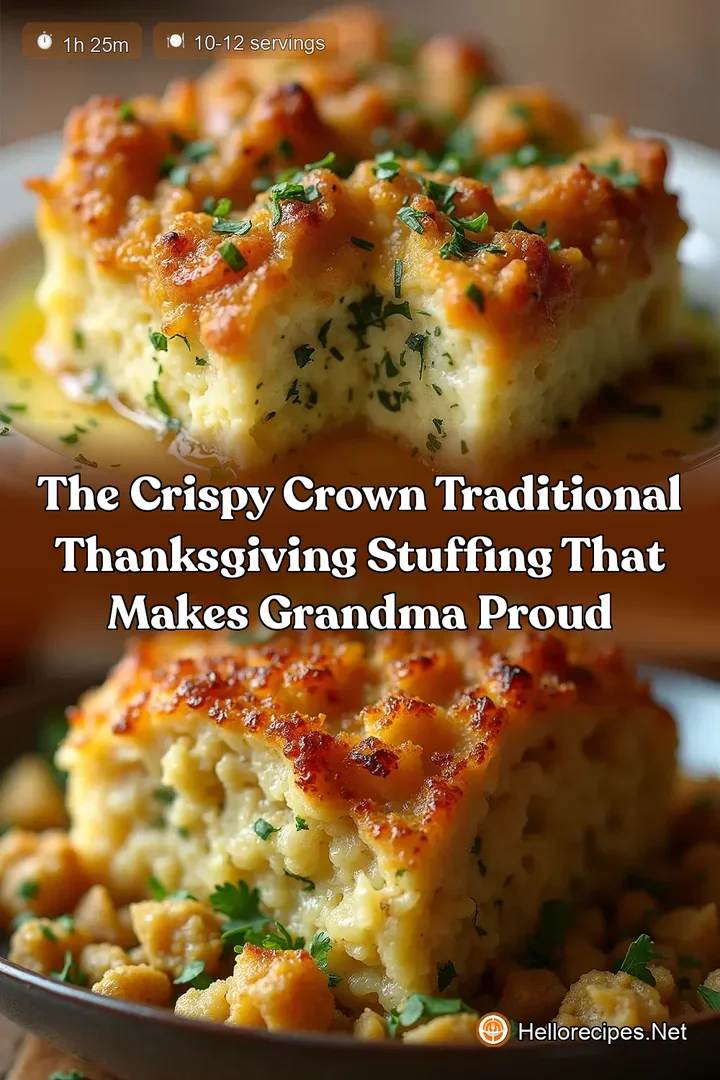
When done right, this dish offers a beautiful textural contrast: a burnished, crispy crown sheltering a centre that is rich, herbaceous, and nearly custardy. If you've been searching for The Best Stuffing Recipe Ever , your quest ends here, as we build a classic dressing from the ground up.
Unearthing the Secret to Truly Savoury Depth in Your Dressing
Crafting the perfect Classic Thanksgiving Stuffing From Scratch hinges on a few key non-negotiables. It’s not just about the ingredients; it’s about technique, ensuring that every spoonful delivers that rich, aromatic payoff you expect from a holiday table.
We aim for a complex flavour profile that goes beyond simple salt and pepper, leaning heavily on fresh herbs and properly sweated aromatics.
Setting the Stage: Rejecting Soggy Substitutes for Heritage Flavour
The biggest mistake home cooks make when attempting Good Stuffing Recipes for Holidays is using bread that hasn't been properly prepared. Fresh, soft bread acts like a sponge designed to soak up too much liquid too quickly, resulting in dense, gluey stuffing, sometimes closer to bread pudding than savoury dressing.
Our foundational step involves using bread cubes that are fully dried out preferably stale cubes from a rustic sourdough or French loaf. This ensures that when the binding liquids are added, the bread absorbs just the right amount, leading to that coveted structural integrity.
Defining the Texture: Achieving That Perfect Crispy Crown
Texture is everything. A successful stuffing should not be homogenous. We are aiming for about 70% tender interior to 30% crisp edge. To achieve this enviable contrast, we rely on a generous application of butter during the sauté stage, coating the exterior of the bread cubes, which then crisps beautifully during baking.
If you prefer individual portions, this exact mixture can be utilized to form delicious Thanksgiving Stuffing Balls Recipe before baking.
A Nod to Nostalgia: The Essence of Grandma's Best Recipe
What makes this flavour profile so traditional? It’s the powerful trio of herbs. This recipe leans heavily on fresh sage, thyme, and a hint of parsley for brightness. The Traditional Thanksgiving Stuffing with Sage and Thyme creates an unmistakable aroma that signals the holidays are truly upon us.
We gently sweat the onions and celery first to sweeten them, then introduce the herbs to the fat just before mixing, allowing their essential oils to bloom into the butter, maximizing their impact.
Assembling Your Cornerstone Components for Flavour Mastery
This Traditional Thanksgiving Stuffing Recipe relies on high-quality components treated with respect. Since the bread absorbs nearly everything else, the flavour of your liquid and fat base is paramount.
We use 12 cups of dried bread cubes, which serves a generous crowd of 10 to 12 people, establishing the backbone of our dish.
Essential Pantry Staples for Authentic Aromatic Results
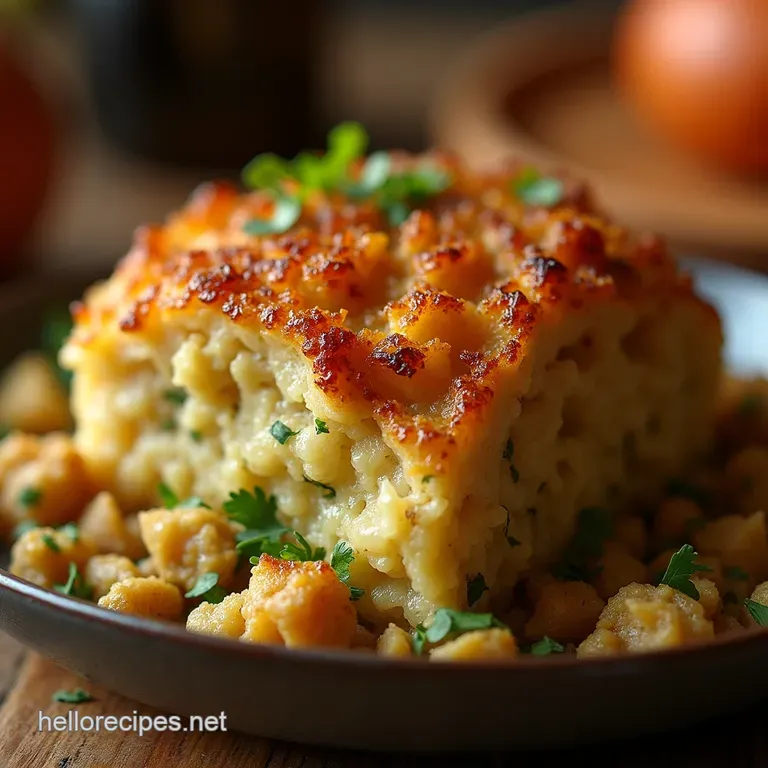
Before we begin the mixing process, understanding the role of each major component ensures success. We require 8 tablespoons of unsalted butter, which serves both to sauté the vegetables and to coat the bread for crisping.
The aromatic foundation is built from one large diced yellow onion and three finely diced celery stalks, along with three cloves of minced garlic.
Choosing Your Bread Base: Stale vs. Fresh Cube Selection
As mentioned, staling is crucial. If you are preparing this Traditional Thanksgiving Stuffing recipe more than a day in advance, cut your bread into 1 inch cubes and spread them across baking sheets.
Allowing them to air dry overnight or baking them gently at a low temperature (around 250° F) removes moisture without toasting them dark brown, ensuring they are ready to absorb the forthcoming liquids perfectly.
The Broth Conundrum: Why Rich Stock Elevates Everything
The liquid binder is where much of the dish’s savouriness resides. We call for 3 to 4 cups of low-sodium chicken or turkey broth. The key here is richness; if your stock tastes weak or watered down, your stuffing will, too.
Using homemade or a high-quality, concentrated store-bought stock ensures that when the bread absorbs the moisture, it’s bringing along deep, savoury notes that define a truly Best Homemade Thanksgiving Dressing .
Herb Ratios: Perfecting the Sage, Thyme, and Marjoram Blend
For this heritage flavour, we use 2 tablespoons of finely chopped fresh sage and 1 tablespoon of fresh thyme leaves. If using dried herbs, reduce the quantity by two-thirds (2 teaspoons sage, 1 teaspoon thyme).
The fresh parsley (1/4 cup chopped) is added at the end of the sauté process purely to introduce a vibrant, fresh lift that prevents the heavy herbs from feeling too earthy.
Crucial Tools: What You Need Before You Begin Mixing
While no specialized equipment is needed, having a large, sturdy skillet or Dutch oven is essential for properly sweating the vegetables, and a very large mixing bowl is necessary for coating the copious amount of bread cubes evenly. Remember, this is a hands-on process where thorough, gentle mixing is your friend.
Related Recipes Worth Trying
- FailProof Baked Egg Custard Silky Smooth Traditional — Learn how to make egg custard that is perfectly silky smooth every time using the foolproof water bath method This traditional British dessert is pure comfort
- Rotisserie Chicken Casseroles Thanksgiving Dinner Made Easy — Love Thanksgiving This rotisserie chicken casserole brings those flavours to any night Quick easy and packed with cranberry goodness Get the ultimate...
- Mama Mias Minestrone My Traditional Soup Recipe — Need a hug in a bowl Try my traditional minestrone soup recipe This hearty vegetable soup is packed with flavour just like Nonna made Get the authentic recipe
step-by-step Transformation: From Cubes to Culinary Triumph
The process is straightforward but demands attention to the timing of the vegetable sauté and the critical resting period once the liquid is introduced. This systematic approach is what makes it one of the Easy Holiday Stuffing Recipes that yields professional results.
Baking Dynamics: Ensuring Uniform Cooking and Browning
Preheat your oven to 375° F ( 190° C). Lightly butter your 9x13-inch baking dish; this promotes an even bake and prevents sticking while enhancing the golden crust.
The Soaking Phase: Hydrating the Cubes Without Making Them Mushy
After gently tossing the dried bread cubes with the melted herb butter mixture, it’s time to hydrate. In a separate bowl, lightly beat three large eggs, then whisk in 3 cups of the broth, salt, and pepper. Pour this mixture over the bread.
Fold everything gently you should aim for the bread to be fully moistened but not swimming in liquid. Allow this mixture to rest for about 15 minutes. This crucial waiting time permits the bread to fully absorb the binder without being submerged, preventing that undesirable gluey texture.
Building the Custard: Combining Eggs and Aromatic Vegetables
The eggs, combined with the moisture from the broth, act as the setting agent, creating that luscious, almost custardy interior texture. If, after the 15-minute rest, the mixture still seems overly dry (a common issue if bread cubes vary in density), incorporate the remaining broth, adding it quarter cup by quarter cup, until the mixture is just moist enough to hold its shape loosely when squeezed.
The Final Mix: Gently Integrating Wet and Dry Elements
Once you’ve achieved the perfect moisture level, fold in the fresh parsley. Remember to handle the mixture gently from this point onward. Overworking the hydrated bread activates the gluten structure, which directly leads to a dense, heavy stuffing instead of a light, airy one.
Transfer the mixture evenly into your prepared baking dish.
Baking Vessel Preparation: To Butter or Not to Butter the Pan?
Generously buttering the baking dish is recommended. While this recipe tastes best when cooked outside the bird (as dressing), the butter on the pan ensures the bottom layer develops a pleasing, slightly crisped texture that contrasts beautifully with the soft middle.
Maximizing Enjoyment: Tips for Making This Traditional Thanksgiving Stuffing Ahead of Time
One of the best aspects of this dish is its make-ahead potential. You can complete all steps up to and including Step 6 (the hydration). Cover the assembled, unbaked stuffing tightly with plastic wrap and refrigerate for up to 24 hours.
When ready to bake, remove it from the fridge about an hour before going into the oven to allow it to come closer to room temperature. This ensures more uniform cooking. Increase the baking time by about 5 to 10 minutes if baking straight from the refrigerator.
Troubleshooting Common Stuffing Hurdles and Delicious Adaptations
Even the best laid plans can sometimes encounter minor issues. Knowing how to pivot ensures your holiday meal remains stress free.
Storage Secrets: Keeping Leftovers Fresh Until Tomorrow
Leftover stuffing keeps wonderfully. Store it in an airtight container in the refrigerator for up to four days. Reheat gently in the oven, perhaps sprinkling a teaspoon of broth or butter over the top before covering loosely with foil to refresh the moisture before serving.
Stuffing vs. Dressing: Answering the Age-Old Debate
The terms are often used interchangeably today, but traditionally, stuffing is cooked inside the turkey cavity, and dressing is cooked separately in a baking dish. For safety, texture, and flavour enhancement which allows for that signature crispy top we strongly recommend preparing this Traditional Thanksgiving Stuffing as a dressing.
Flavor Twists: Incorporating Savoury Add-ins Like Sausage or Apples
While this recipe is strictly traditional, it serves as a phenomenal base. For a richer profile, sauté 1 lb of crumbled, cooked breakfast sausage (drained of excess fat) along with the onions and celery.
For a sweeter, autumnal note, incorporate 1/2 cup of finely diced Granny Smith apples during the final 5 minutes of the vegetable sauté.
Nutritional Snapshot: Understanding the Richness of Heritage Baking
This is comfort food at its finest, utilizing butter and rich broth, meaning it is decidedly rich. Per serving (estimated at 12), expect roughly 300 to 350 calories, with the majority of the fat coming from the butter used for sautéing and coating.
It is dense, satisfying, and meant to be enjoyed as a deeply flavorful side dish that perfectly balances the lighter elements of the Thanksgiving plate.
Recipe FAQs
Why does my Traditional Thanksgiving Stuffing always turn out soggy or gluey?
That’s a common kitchen conundrum, usually caused by using bread that hasn't been properly dried out, like a fresh loaf straight from the baker. You absolutely must use stale or dried bread cubes stale bread soaks up the liquid evenly without turning to mush.
Remember, we’re aiming for a custardy heart, not a bread pudding!
Can I make this Traditional Thanksgiving Stuffing ahead of time, and if so, how do I store it?
Yes, assembly can be done the day before! After mixing the bread with the liquid binder (Step 6), cover the dish tightly and refrigerate for up to 24 hours. Before baking, let it sit on the counter for about 30 minutes to warm up slightly, and add an extra 5 10 minutes to the baking time to ensure it cooks through.
I'm worried about cooking it inside the turkey is baking it outside (as dressing) truly better?
For this recipe, baking it outside the bird as a dressing is definitely the superior route for texture. Cooking outside allows the top layer to crisp up beautifully and ensures the internal temperature reaches a safe level evenly.
If you bake it inside, it steams, often becoming denser, and you must be diligent about the internal temperature hitting 165°F (74°C) for safety.
My herbs are fresh how much dried seasoning should I use instead if I don’t have fresh sage or thyme on hand?
A general rule of thumb, often used when cooking hearty dishes like this, is that dried herbs are more potent, so you use less. If the recipe calls for 2 tablespoons of fresh sage, use about 2 teaspoons of dried rubbed sage instead. For thyme, substitute 1 tablespoon fresh with 1 teaspoon dried.
How can I make this stuffing recipe suitable for vegetarians or vegans without losing all that wonderful flavour?
It’s quite straightforward! Swap the chicken/turkey broth for a rich, high-quality vegetable broth, and ensure your butter is plant based or omitted in favour of olive oil. Since we rely on eggs for binding, you might need a substitute like a flax egg slurry (1 Tbsp ground flaxseed mixed with 3 Tbsp water per egg) for the best structural integrity.
Heritage Herb Stuffing Recipe
Ingredients:
Instructions:
Nutrition Facts:
| Calories | 442 kcal |
|---|---|
| Protein | 6.2 g |
| Fat | 12.6 g |
| Carbs | 28.7 g |
| Fiber | 12.3 g |
| Sodium | 125 mg |
