Grandmas Thanksgiving Stuffing: the Family Secret Butter and Herb Recipe

- Unlocking the Secret to The Ultimate Grandmas Thanksgiving Stuffing
- Essential Ingredients for Traditional Herb Stuffing (Plus Swaps)
- The Science of Perfect Stuffing: Why This Classic Recipe Delivers
- Mastering This Classic Grandmas Thanksgiving Stuffing: A Step-by-Step Guide
- Troubleshooting and Expert Secrets for Flavor Maximization
- make-ahead, Storage, and Freezing Guide
- Perfect Pairings: What to Serve Alongside Your Stuffing
- Recipe FAQs
- 📝 Recipe Card
Unlocking the Secret to The Ultimate Grandmas Thanksgiving Stuffing
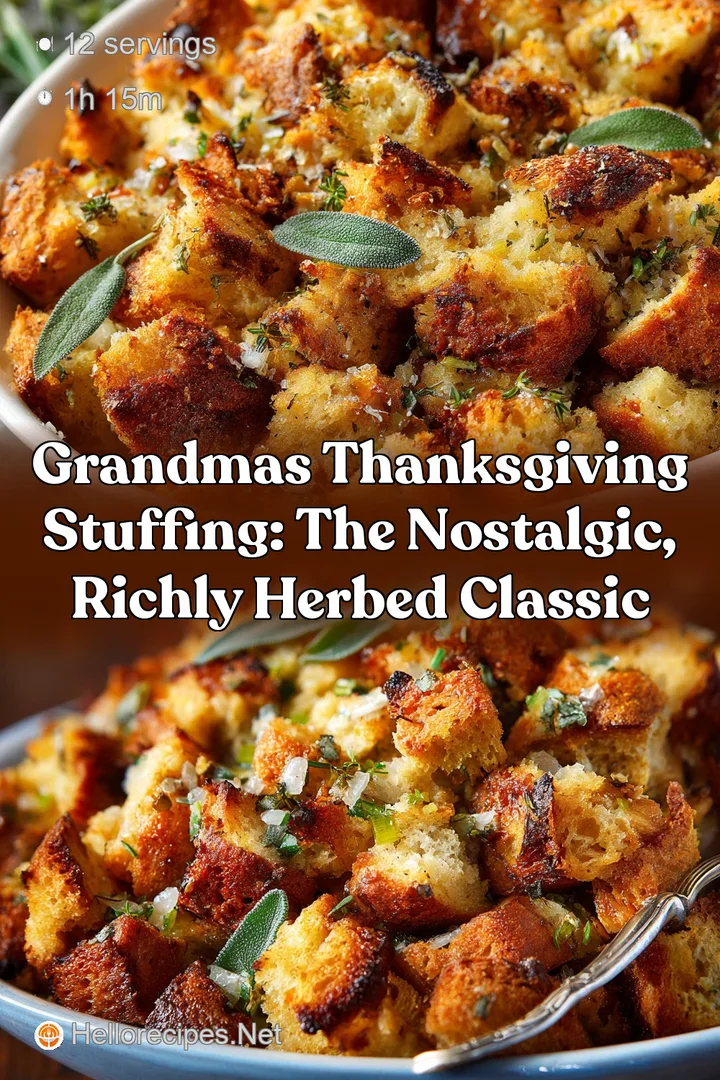
You know that specific, warm, comforting smell that hits you the moment the oven door opens? That’s this stuffing. It’s fragrant with fresh sage, deeply savoury from browned butter, and has that perfect textural contrast a crispy, golden top giving way to a lush, moist interior.
Forget those sad, crumbly versions. This is the real deal, the one your entire family will fight over.
This Grandmas Thanksgiving Stuffing recipe is an absolute lifesaver on Thanksgiving morning, trust me. It uses inexpensive ingredients and requires minimal active cooking time. Everything major can be prepped the day before, leaving you free to manage the turkey catastrophe and the chaotic pre-dinner drinks situation. Gran always knew the easy way was usually the best way.
We are talking about real, old-school flavor here, built on proper butter and fresh herbs. So grab your biggest mixing bowl and let’s crack on with the techniques that make this classic homemade dressing absolutely spectacular.
The Nostalgic Roots of Classic Butter and Herb Stuffing
Every Thanksgiving needs a cornerstone, and for my family, this recipe is it. It’s just simple, honest food. We rely heavily on sautéed onions and celery, which slowly melt down into a sweet, flavourful base.
The magic comes from using fresh sage and thyme, which smells utterly incredible while cooking.
My grandma used to call this her "secret weapon" because it required zero fancy ingredients. Honestly, the most important element is your patience when drying the bread cubes. If you nail that, you’ve basically mastered the entire dish.
Why Gran's Stuffing Outshines the Box Mix
Boxed stuffing mixes are usually dry, chalky, and frankly, taste mostly of salt and preservatives. Why waste a slot on your holiday table with something that tastes vaguely of cardboard? This homemade version is infinitely richer because we are utilizing real butter, and lots of it.
Plus, we control the texture completely. We aim for that delightful dichotomy: a crunchy, slightly brittle exterior that contrasts beautifully with the soft, perfectly seasoned, moist bread underneath. That moisture balance is impossible to get right with a dry mix.
Key Differences Between Stuffing and Dressing
Okay, let’s clear this up once and for all, especially if you’re searching for a proper Homemade Thanksgiving Dressing recipe. Technically, the difference is where you cook it.
If you cook it inside the cavity of the turkey, it’s stuffing. If you cook it in a separate dish (like this recipe calls for), it’s dressing. This is a classic baked dressing recipe, but since everyone calls it stuffing, we are going with the popular name. The good news? Baking it separately is much safer, ensures a crispy crust, and doesn't dry out your bird. If you want to check out my tips on cooking it the classic, moist interior way, check out this guide: Homemade Stuffing: The Classic Stuffing Recipe for a Moist Interior .
Essential Ingredients for Traditional Herb Stuffing (Plus Swaps)
This recipe is built on four core pillars: fantastic dried bread, lots of butter, plenty of aromatic vegetables, and fresh herbs. Don't cheap out on the herbs; they are the heart of this dish.
| Ingredient | Why We Use It | Substitution Advice |
|---|---|---|
| Stale Bread | Provides structure and absorbs liquid without dissolving. | Use cornbread, challah, or day-old white sandwich loaf. Ensure it is completely dry. |
| Unsalted Butter | Creates rich flavour base and allows us to control the salt level. | You can use good quality olive oil or plant based butter, but you lose the nutty brown butter flavour. |
| Chicken Stock | Adds moisture and huge depth of savoury flavour. | Vegetable stock works perfectly for vegetarian guests. Water is a no-go; it dilutes the flavour. |
| Fresh Sage/Thyme | Crucial aromatic components for classic holiday flavour. | Dried herbs work, but reduce the quantity by two-thirds (e.g., use 1 tsp dried instead of 1 Tbsp fresh). |
| Sweet Sausage (Optional) | Adds a huge boost of savory, spicy depth. | Omit completely for a pure vegetarian dressing, or use a robust Thanksgiving Stuffing: Spot On Homemade Sausage Stuffing Recipe if you want the meat to be the star. |
The Science of Perfect Stuffing: Why This Classic Recipe Delivers
Choosing the Right Bread Base: White Loaf vs. Sourdough
Sourdough or a French boule is my preference because they have a sturdy structure. They won't crumble or dissolve into mush when soaked. The slightly tangy flavor of sourdough also plays beautifully against the richness of the butter and the sweetness of the sautéed onions. The key here is dryness.
If the bread isn’t dry enough, it becomes soggy, end of story.
Detailed Notes on Butter Quality and Type
This is where we add the secret, nutty flavour. We use unsalted butter so we can actively brown it before adding the vegetables. Browning the butter creates beurre noisette , which imparts an incredible depth almost like caramel but savoury.
This makes a huge difference to the final flavour profile of your stuffing.
Preparing Celery and Onion for Maximum Softness
I once made the mistake of rushing the sauté step. Big mistake! You need to cook the onion and celery low and slow in that glorious browned butter for 10 to 12 minutes. They must be completely soft, sweet, and translucent.
If they still have a crunch, they won’t fully integrate into the Moist Stuffing Recipes For Thanksgiving texture we are aiming for.
Achieving the Crucial Crispy Top and Moist Interior
This is the holy grail of stuffing. We achieve the crispy top by baking in two stages. First, we bake it covered with foil to trap the steam and cook the interior thoroughly, ensuring that lovely moist texture.
Then, we remove the foil for the last 15– 20 minutes, allowing the exposed top layer to dry out, caramelize, and turn golden brown. Don't skip the foil step!
The Role of Fresh Sage in Classic Holiday Flavor
If you use one fresh herb, make it sage. It’s what gives Grandmas Thanksgiving Stuffing its classic, comforting identity. Sage is robust, slightly piney, and holds up beautifully to the baking process. If you can only find dried sage, I strongly suggest pairing it with fresh parsley to bring back some vibrancy.
Mastering This Classic Grandmas Thanksgiving Stuffing: A step-by-step Guide

Phase 1: Creating Homemade Dried Bread Cubes
Cut your chosen bread into even 1 inch cubes. Uniformity helps them cook evenly. Spread them out on a sheet pan, and please, leave them exposed to the air overnight if you can. If you are short on time, bake them at a low temperature (300°F) for 15- 20 minutes until they feel stiff and dry, like oversized croutons.
Phase 2: Sautéing Aromatics Until Golden
First, brown your optional sausage and remove it from the pan, reserving the fat. Next, melt the remaining butter and watch it carefully. It will foam, then the foam will subside, and brown bits will form at the bottom.
When it smells nutty and looks light brown, add the onions and celery immediately to stop the browning. Sauté the aromatics on medium low until completely softened no crunch! Stir in your fresh herbs for just one minute until their scent is powerfully fragrant.
Phase 3: Properly Combining the Wet and Dry Mix
Transfer your dried bread cubes and the aromatic, buttery mixture into a large bowl. Toss everything thoroughly so the fat coats every cube. Now, gently add the beaten eggs and the warm stock. Start with three cups. Toss, don't stir aggressively. We want coating, not mashing.
Chef's Note: Tossing gently prevents gluten development. You are aiming for a mixture that feels saturated, like wet sand that holds its shape, but not sloppy soup. Give it 5 minutes to soak before deciding if you need the fourth cup of stock.
Phase 4: Baking Times for Moist Stuffing vs. Crispy Stuffing
If you prefer a mostly moist stuffing, keep the foil on for longer, maybe 40 minutes, and only remove it for the final 10 minutes. For a really crispy, golden top the one I prefer stick to the 30 minutes covered, 15– 20 minutes uncovered plan outlined in the recipe card.
Ensure that internal temperature hits 165°F.
Troubleshooting and Expert Secrets for Flavor Maximization
We've all had stuffing failures. I once served a pan of dense, pale, under seasoned bread mush. Never again! Here are the top ways people mess up and how to fix them.
The Danger of Over Saturating the Bread
Adding too much liquid upfront is the number one cause of soggy stuffing. Remember, dry bread is porous and needs time to absorb the stock. If you toss it and it looks too liquidy, do not panic. Wait five minutes.
If it’s still swimming, you can add a small handful of extra dry bread cubes to soak up the excess, or simply leave the cover off while baking.
How to Fix Dry Stuffing Post Baking
Oh no, your grandma's thanksgiving turkey stuffing is dry and crumbly? This usually happens if you over baked it uncovered. It's salvageable! Quickly warm up some extra stock (chicken or turkey) and gently drizzle 1/2 cup over the top.
Cover it tightly with foil and let it rest for 10 minutes. The trapped steam will hydrate the top layer, bringing back the moisture.
make-ahead, Storage, and Freezing Guide
Thanksgiving is chaos; make-ahead recipes are vital. This stuffing is the perfect candidate for day-before prep.
Safety Guidelines for Stuffing Prepared Ahead
You can assemble the entire dish (Steps 1 3) up to 24 hours in advance. Transfer it to the baking dish, cover it tightly, and refrigerate. Crucially, bring the dish out of the fridge about 30 minutes before baking.
Putting a cold dish into a hot oven results in uneven cooking.
Reheating Leftover Grandmas Thanksgiving Stuffing
Leftovers are mandatory, obviously. Store baked stuffing in an airtight container for up to 4 days in the fridge. To reheat, scoop individual portions onto a plate and microwave, or place it back in an oven safe dish, cover tightly with foil, and warm at 350°F (175°C) for 15 minutes.
Add a splash of stock if it looks dry before heating.
Best Practices for Freezing Baked Stuffing
But does it freeze well? You bet it does! Once completely cooled, wrap the leftovers tightly in plastic wrap, then foil, or place in a freezer safe bag. It keeps beautifully for up to 3 months. Thaw overnight in the fridge and reheat according to the reheating instructions above.
Perfect Pairings: What to Serve Alongside Your Stuffing
Classic Main Course Pairings
This rich, herby Homemade Stuffing for Turkey is meant to be served with poultry, of course! While the turkey is the traditional focus, this robust dressing pairs equally well with a slow roasted pork loin or a holiday ham. It’s hearty enough to stand up to any main course.
Complementary Side Dishes That Won't Clash
Since this stuffing is already rich and savoury, pair it with sides that offer brightness and acidity. Think about something tart, like my Cranberry Sauce with Zest, or a simple bright green vegetable like glazed carrots or sautéed green beans with lemon. You need that acidity to cut through all that incredible butter! If you are looking for a lighter take on the dressing concept, you might prefer this one: Thanksgiving Dressing: Herb Sage Recipe for a Crisp Top .
Recipe FAQs
Why is my stuffing dry or crumbly instead of moist?
The most common culprit is insufficient liquid or under soaked bread. Ensure you add enough broth until the mixture is thoroughly moistened, similar to a wet sponge, as the bread will absorb a lot of liquid during baking. If it seems dry halfway through cooking, add a splash more warm broth and stir gently.
Can I prepare this stuffing ahead of time to save time on Thanksgiving Day?
Absolutely. You can prepare the entire unbaked mixture (sautéed vegetables, bread, and seasoning) up to 24 hours in advance and store it tightly covered in the refrigerator.
Before baking, allow it to sit at room temperature for 30 minutes, then add a small amount of extra broth to compensate for any liquid absorbed overnight.
What is the best type of bread to use, and how dry does it truly need to be?
Sturdy, day-old white breads, such as sourdough or French baguettes, work best because they hold their structure well when moist. The bread must be completely dried out (like large croutons) before mixing, which prevents the stuffing from turning into a soggy, gluey paste during baking.
How should I store leftover stuffing, and can I freeze it?
Store cooled leftovers in an airtight container in the refrigerator for up to 3 days. Stuffing freezes extremely well; wrap portions tightly in aluminum foil, place them inside a freezer bag, and freeze for up to three months for optimal freshness.
How can I make this classic butter and herb recipe suitable for vegetarians or vegans?
For vegetarians, simply replace the chicken broth with a high-quality vegetable broth or stock. For a vegan preparation, substitute the butter with a high fat plant based butter substitute, ensuring all other ingredients remain naturally vegan.
Is it safe to cook the stuffing inside the turkey cavity?
While traditional, cooking stuffing inside the turkey is generally discouraged by food safety experts. If you choose to do so, the stuffing must reach an internal temperature of 165°F (74°C) to ensure safety, often requiring the turkey to be fully cooked before the stuffing reaches temperature.
It is safer to bake it separately.
I don't have fresh sage; can I use dried sage instead, and how much?
Yes, you can substitute dried sage, but you must use a significantly smaller amount due to its concentration use about one teaspoon of dried sage for every tablespoon of fresh sage specified.
For best results with dried herbs, mix them into the melted butter while sautéing the vegetables to properly "bloom" their flavour.
Grandmas Thanksgiving Stuffing Recipe

Ingredients:
Instructions:
Nutrition Facts:
| Calories | 314 kcal |
|---|---|
| Protein | 8.3 g |
| Fat | 0.8 g |
| Carbs | 75.6 g |
