Mei Fun Noodles: Speedy Wok-Tossed Chicken Stir-Fry
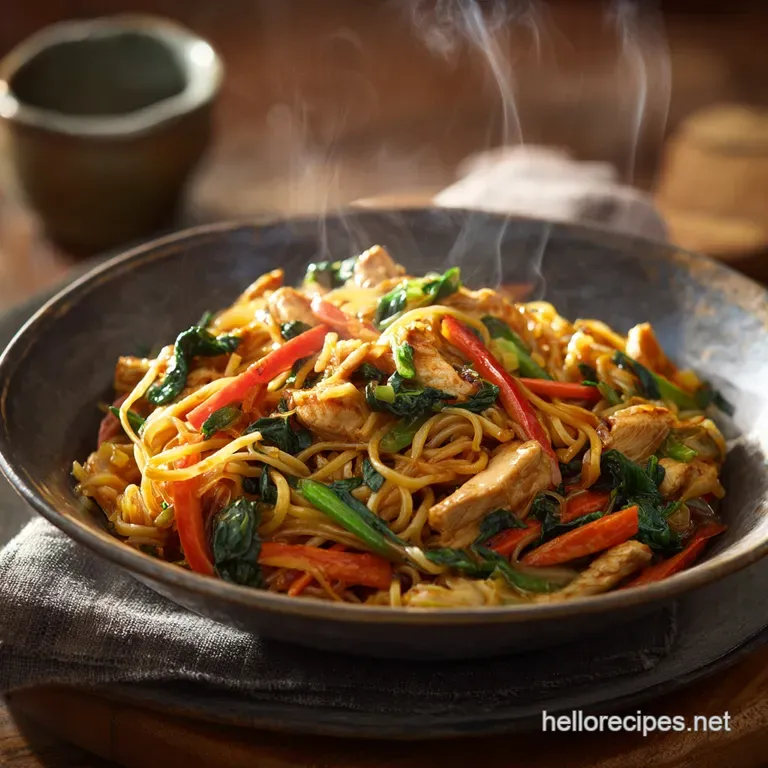
- The Allure of Speedy Mei Fun Noodles
- Mastering the Wok: Secrets to Perfect Stir-Fry Texture
- Essential Components for the Ultimate Rice Vermicelli Stir-Fry
- Cooking Method: From Prep to Plate in 20 Minutes
- Troubleshooting and Expert Stir-Fry Techniques
- Making Ahead and Reheating Safely
- Enhancing Your Meal: Suggested Pairings
- Recipe FAQs
- 📝 Recipe Card
The Allure of Speedy Mei Fun Noodles
There is nothing quite like the sound of thin rice noodles sizzling in a smoking hot wok. When you crave that deeply satisfying, savory, and lightly smoky crunch, there is only one dish that can deliver on speed and flavour: classic Mei Fun Noodles .
These delicate rice vermicelli strands soak up an incredible amount of flavor, making this stir fry totally addictive, which is exactly why it’s a constant rotation in my kitchen.
Let’s be real, weeknights are chaotic. You need a recipe that doesn’t require three hours of simmering or obscure ingredients you can only find on a remote island. This recipe for Mei Fun Noodles is your weeknight superhero; it’s fast, incredibly economical, and genuinely tastes better than anything you’d get delivered.
It's truly a lifesaver when the dinner clock is ticking down fast.
So, ditch the take out menu and grab your wok. We’re going to run through the essential prep work, the over high heat cooking techniques, and all the little secrets I’ve learned (usually by messing it up first) to guarantee you get perfect, non-clumpy, intensely flavorful Mei Fun Noodles every single time.
Let’s get these noodles tossed!
Mastering the Wok: Secrets to Perfect Stir Fry Texture
This isn't just a collection of ingredients; this is a technique. The magic of this dish relies entirely on high heat and smart sequencing. We call this the "why it works" section, where I break down the science so you can cook like a pro, even if you’re using a standard home burner.
Defining the Rice Vermicelli: What Makes Mei Fun Unique?
Mei Fun Noodles are characterized by their incredibly thin diameter, usually made purely from rice flour and water. They are practically gossamer strands! Unlike thicker wheat based noodles, like Lo Mein, Mei Fun requires zero boiling.
If you boil these little threads, they will immediately turn into an absolute gluey mess. We only hydrate them using hot tap water, which gives them the perfect springy chewiness (al dente) before they hit the scorching wok.
This precise hydration method is the first secret to flawless texture when preparing Mei Fun Noodles .
The Joy of Quick Wok Cooking: Why This Dish is a Weeknight Champion
The speed of this dish is its ultimate weapon. Because the ingredients are sliced thin and we cook over ferocious heat, the total time from wok to plate is usually less than 10 minutes.
This method not only preserves the crisp tender texture of the vegetables but also locks in the moisture of the chicken. When you need a quick, satisfying meal that packs a flavour punch, this classic style of Mei Fun Noodles simply cannot be beaten.
Recipe Yields and Preparation Timeline
Trust me when I say that spending the 15 minutes prepping the ingredients the mise en place —is the absolute key to success here. Once the wok is hot, you can’t stop!
Having everything measured, sliced, and ready to dump into the pan is mandatory for mastering any stir fry, especially something quick like these Mei Fun Noodles .
| Stage | Time Required | My Advice |
|---|---|---|
| Prep Time | 15 minutes | Get the chicken marinating while you slice the veg. |
| Marinating | 15 minutes (min) | The cornstarch needs time to work its velvet magic. |
| Cook Time | 10 minutes | Fast, furious, and fun. |
| Total Time | 40 minutes | Includes the full marinade time. |
Achieving 'Wok Hei': The Science of over High heat Flavour
"Wok Hei" translates literally to the "breath of the wok." It’s that wonderfully smoky, intensely aromatic flavour that characterizes authentic stir fries and sets these Mei Fun Noodles apart from the steamed, dull versions often found at questionable buffets.
You achieve this by ensuring the oil is smoking hot and that the ingredients hit the metal at blistering temperatures, caramelizing the natural sugars almost instantly. If your stove isn't quite powerful enough for true Wok Hei , using a cast iron skillet over high heat is a decent runner-up.
The Role of Prepping Ingredients (Mise en Place) for Success
Seriously, don't skip this step. If you are scrambling for ingredients while the wok is screaming hot, you will inevitably burn the garlic or overcook the chicken. Slice your vegetables into uniform, thin pieces (julienned carrots, thin onion slices) so they cook quickly and evenly.
Everything must be organized into separate bowls, ready to go in sequential order. A well organized prep station means perfectly cooked Mei Fun Noodles .
Preventing Soggy Noodles: The Crucial Draining Step
This is the make-or-break moment. After the 5– 7 minutes of soaking the Mei Fun noodles in hot tap water, they need to be immediately drained and rinsed with cold water.
This shock of cold water halts the cooking process, ensuring the noodles are still slightly resistant almost tough in the center. Why? Because they will finish cooking and absorb the sauce perfectly in the final minute of over high heat stir frying, yielding the delightful springy texture that makes truly excellent Mei Fun Noodles .
Essential Components for the Ultimate Rice Vermicelli Stir Fry
Every stellar stir fry, particularly this one, relies on three components: the texture giving marinade, the perfectly balanced sauce, and crunchy vegetables. Let’s look at the specific components that make this classic Mei Fun Noodles dish shine.
Building the Flavour Base: Chicken Marinade Must Haves
We use a technique called "velveting" here, which sounds fancy but is dead simple. The combination of cornstarch, soy sauce, and a touch of sesame oil tenderizes the protein. The cornstarch is non-negotiable ; it coats the chicken strips, protecting them from the harsh heat of the wok and resulting in unbelievably tender bites.
If you want to make incredibly tender Mei Fun Noodles that everyone raves about, do not skip the cornstarch.
Sauce Composition: Balancing Salty, Sweet, and Umami Notes
The sauce for these Mei Fun Noodles must hit all the critical notes. You need salt (light soy), color (dark soy), richness (oyster sauce), and a tiny bit of sweetness to balance the umami depth.
Chef's Note: I once tried to sub out Dark Soy Sauce with molasses for color. It was a disaster. Stick to the actual stuff; it provides that essential mahogany hue without altering the salty profile. You can find it easily at any major grocery store in the international aisle.
| Ingredient | Role | Viable Substitution |
|---|---|---|
| Oyster Sauce | Umami, Richness | Vegetarian Stir Fry Sauce or Hoisin Sauce (will be sweeter) |
| Dark Soy Sauce | Colour, Depth | Standard Soy Sauce + a pinch of brown sugar (texture difference will be slight) |
| White Pepper | Pungency, Aroma | Black Pepper (use slightly less, as white pepper is sharper) |
| Cornstarch | Velveting Agent | Arrowroot Powder |
Selecting the Right Vegetables for Fast Stir Frying
The best vegetables for these Mei Fun Noodles are those that are hard and can withstand high heat without dissolving into mush. Carrots and cabbage are classics. I love adding the optional rehydrated Shiitake mushrooms because they provide an earthy, chewy contrast to the noodles.
Pro tip: Always add the harder vegetables first (carrots, onions) before the softer, leafier ones (cabbage) to ensure everything reaches crisp tender perfection at the same time.
If you don't have cabbage, you could easily substitute it with bell peppers, thinly sliced, or even some thinly cut celery for extra crunch. Just remember the goal is speed.
Sourcing Quality Thin Rice Noodles
The quality of the Mei Fun Noodles themselves really matters. Look for packages labeled "Rice Vermicelli" or "Thin Rice Noodles." Avoid the thicker, clear glass noodles (mung bean starch) or the flat rice noodles (Pad Thai style); they cook differently and won't give you that signature lightweight texture.
Using a reputable brand ensures that the noodles are uniform and less likely to break down into tiny fragments during the vigorous wok tossing.
Cooking Method: From Prep to Plate in 20 Minutes
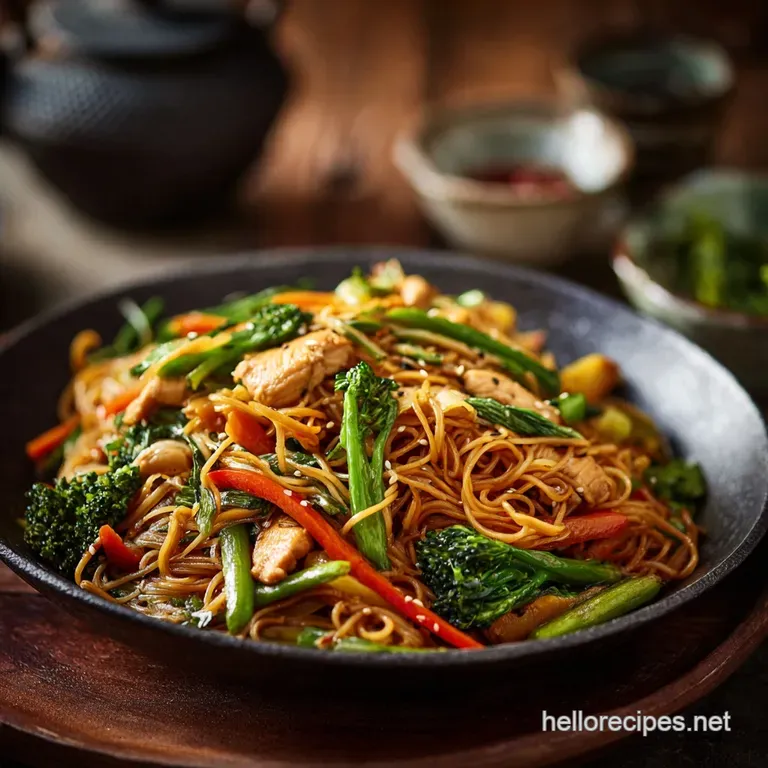
You have everything prepped, marinated, and lined up like little soldiers. Now, we cook! Remember, we are aiming for maximum heat and minimum time to achieve that beautiful Wok Hei texture in these Mei Fun Noodles .
Pre-Wetting the Vermicelli: Hydration without Over Soaking
As mentioned, this step is critical. Place the dry noodles in a large bowl and cover them with hot tap water. Not boiling water, seriously. I learned this the hard way when I created a giant, sticky block of noodle cement in college trying to rush the process.
After 5– 7 minutes, they will be flexible but firm. Drain immediately, rinse quickly with cold water, and set them aside. They shouldn't be dripping, but they shouldn't be dry either.
Sequential Stir Frying: Cook Time By Ingredient Density
- High Heat, Hot Oil: Get that wok smoking hot over high heat. Add the first tablespoon of oil.
- Sear the Protein: Add the marinated chicken. Spread it out quickly and leave it alone for 30 seconds to get some colour before stirring. Once it's mostly white on the outside, remove it and set it aside. Crucial: Never leave the chicken in while cooking the vegetables, or it will overcook and crowd your pan.
- Aromatics: Add the remaining oil, then immediately toss in the garlic and ginger. Thirty seconds max, until you smell that lovely, nutty aroma.
- Hard Veg: Add the onions and carrots. Stir fry for 2 minutes until they start to soften slightly.
- Soft Veg: Toss in the cabbage (and optional mushrooms). Another 1- 2 minutes until they wilt, but still have that satisfying snap.
Integrating the Sauce and Noodle Toss
Return the cooked chicken to the wok. Now, pour the pre-mixed sauce directly over the vegetables and chicken. Wait maybe 10 seconds for the sauce to bubble slightly. Immediately dump the pre-soaked Mei Fun Noodles on top of the sauce.
The Final over High heat Finish and Plating
Grab a sturdy set of tongs. This isn't gentle mixing; this is a vigorous, rapid toss. Lift and drop the noodles repeatedly, ensuring they turn over and soak up that sauce evenly. The high heat will finish cooking the rice vermicelli and thicken the sauce slightly.
Once the noodles are uniformly coated and beautifully caramel colored (thanks, dark soy!), usually about 90 seconds to 2 minutes, you are done. Immediately transfer the hot Mei Fun Noodles to a serving dish and shower them with those diagonal spring onion slices.
Troubleshooting and Expert Stir Fry Techniques
We’ve all been there a great recipe that somehow ends up in the "oops" pile. Here are the three most common pitfalls when tackling Mei Fun Noodles and exactly how to fix them, or better yet, prevent them altogether.
Fixing Clumpy Noodles: Prevention and Rescue Tactics
If your Mei Fun Noodles come out of the wok in a giant, gummy, sticky knot, it’s usually because you soaked them too long or didn't rinse them properly, leaving residual starch. Prevention is key: always drain them when they are still slightly firm.
Rescue Tactics: If they clump in the wok, remove the noodles briefly and splash a tiny bit of water or stock (1 2 Tbsp) directly onto the noodles in a separate bowl. Toss quickly to loosen, then immediately return them to the scorching wok for a quick, final reheat.
The steam from the water will help separate them without making them soggy.
Optimizing Your Heat Source: Wok Vs. Skillet
A traditional carbon steel wok is best because it heats up incredibly fast and the rounded sides allow for efficient tossing and even heat distribution. If you don't have one, use the largest, heaviest skillet you own, preferably cast iron or stainless steel.
Avoid non-stick pans if possible, as they struggle to retain the extremely high heat necessary to achieve the Wok Hei needed for flavorful Mei Fun Noodles .
Common Mistakes: Overcrowding the Wok and Watery Sauce
This is the killer. If you fill your wok more than halfway with ingredients, the temperature drops instantly, and everything starts steaming instead of frying. This releases moisture from the vegetables, resulting in a dull, watery sauce rather than a glossy coat on your Mei Fun Noodles .
The fix: Cook the chicken and hard vegetables in separate batches if necessary. Always ensure the pan is empty and smoking hot before adding the next round of oil and ingredients.
If you find your sauce is thin at the end, simply toss the noodles for an extra 30 seconds on high heat; the starch on the noodles will naturally help thicken the sauce.
Making Ahead and Reheating Safely
Life happens, and sometimes you need to cook once and eat twice. While stir fries are generally best fresh, you can definitely store and successfully reheat these Mei Fun Noodles .
Safe Refrigeration Guidelines for Leftovers
Once the Mei Fun Noodles have cooled down slightly (within two hours of cooking), transfer them to an airtight container. They keep beautifully in the refrigerator for up to 3 days. After that, the texture of the rice vermicelli starts to degrade, getting a bit too soft for my liking.
Reheating Methods: Restoring Moisture and Texture
Microwave: The fastest option, but tends to dry out the edges. Reheat in 60 second bursts, tossing between each interval. Add a tiny splash of water or stock before the final reheat to introduce a bit of needed steam.
Stovetop (Recommended): This is the best method to revive your Mei Fun Noodles . Heat a clean wok or skillet over medium high heat. Add a teaspoon of oil and a splash of water or stock.
Add the leftovers and toss vigorously for 2– 3 minutes until the noodles are steaming hot and the texture has revived. This brings back some of that Wok Hei aroma!
Is It Freezable? Maintaining Noodle Integrity
Technically, yes, you can freeze it, but I strongly advise against freezing Mei Fun Noodles . The delicate rice vermicelli absorbs too much moisture during the freezing/thawing process and will almost always result in a mushy, broken texture when reheated.
Stick to the refrigerator for storage; this dish is too good to ruin with freezer burn!
Enhancing Your Meal: Suggested Pairings
You’ve mastered the Mei Fun Noodles ! Now, how do you round out the meal?
These vibrant, savoury noodles are actually quite versatile. They pair excellently with anything light and fresh, or something deep and comforting. If you are looking for other quick noodle dishes to try, I highly recommend checking out my easy recipe for [Wok Masters 30Min GingerSesame Chicken Asian Noodles].
It has a completely different flavour profile that works wonderfully on another chaotic weeknight.
For a palate cleanser, serve a side of simple blanched green beans dressed with a sprinkle of sesame oil and salt. If you’re wanting another stir fry main course to balance the table, my popular recipe for [Beef Lo Mein: Ultimate 20 Minute Restaurant Quality Recipe] uses a completely different noodle type (thick wheat) and offers a great contrast to the thin, delicate strands of Mei Fun Noodles .
Enjoy every bite!
Recipe FAQs
Why are my Mei Fun noodles sticking together or becoming a soggy clump?
This common issue usually stems from over soaking or insufficient draining of the vermicelli before cooking. Ensure you only steep the noodles in hot water until they are just pliable (about 4 5 minutes), then drain them immediately and toss them lightly with a small amount of oil.
High heat is also critical, as it rapidly evaporates surface moisture, preventing the starches from gluing together.
My finished stir fry looks dry, and the sauce didn't coat the noodles well. What went wrong?
Dryness often occurs if the noodles absorb all the liquid before the sauce has a chance to distribute, or if the vegetables released too much steam during cooking. Always pre-mix your sauce and add it in one swift motion right before the noodles, tossing quickly and vigorously.
Use minimal oil during the stir fry stage to ensure the sauce can adhere properly to the strands.
Can I make this Mei Fun recipe completely vegan or vegetarian?
Absolutely; Mei Fun is highly adaptable. Replace the chicken with firm, pressed tofu cubes or substantial mushrooms like shiitake or king oyster mushrooms. To maintain the classic savory depth, substitute the oyster sauce with a vegetarian oyster sauce made from mushrooms or a high-quality dark soy sauce.
I don't have a wok. Can I still achieve that authentic high heat stir fry flavor?
Yes, use your largest, heaviest bottomed skillet or cast iron pan as an effective alternative. The essential technique is to ensure the pan gets screaming hot and to avoid overcrowding it, which prevents the ingredients from sautéing and causes them to steam instead.
If necessary, cook your proteins and vegetables in separate, smaller batches.
What is the difference between Mei Fun and Pad Thai noodles? Can I substitute them?
Mei Fun are thin, round rice vermicelli noodles, while Pad Thai noodles (Sen Lek) are typically flatter and significantly wider. While they are both rice based, the texture and absorption rate are very different, as Mei Fun noodles are far lighter and more delicate.
Substituting them will change the entire mouthfeel of the dish, though it is technically possible in a pinch.
How should I properly store leftover Mei Fun noodles, and can they be frozen?
Store leftovers in an airtight container in the refrigerator for up to three days. It is generally advised not to freeze stir fried rice vermicelli. The thin nature of the noodles causes them to become either mushy or brittle upon thawing, which ruins the desired al dente texture.
What is the best way to reheat Mei Fun noodles without drying them out?
Reheat the noodles quickly in a hot skillet or wok over medium high heat, adding a tablespoon of water or broth to generate a bit of steam to restore moisture. Alternatively, if microwaving, cover the noodles loosely with a damp paper towel and heat in short bursts on medium power.
Easy Wok Tossed Mei Fun Noodles
Ingredients:
Instructions:
Nutrition Facts:
| Calories | 451 kcal |
|---|---|
| Protein | 11.3 g |
| Fat | 14.1 g |
| Carbs | 57.8 g |
