Crock Pot Hoppin John the Cagle: Low and Slow Perfection
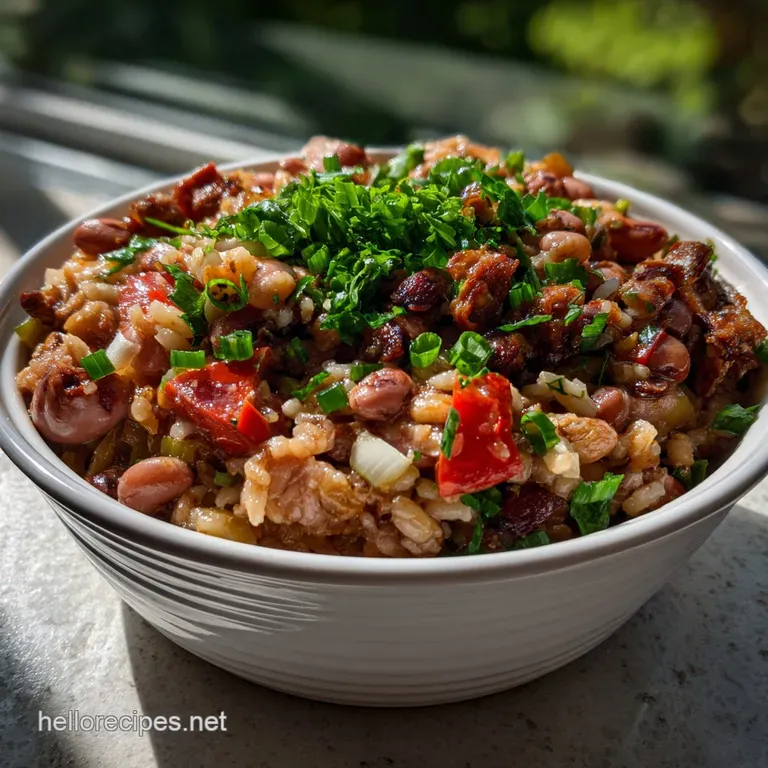
- Effort/Time:15 minutes prep; 7 hours hands-off cooking.
- Flavor Hook: High-impact smoke and spice balanced by earthy, creamy beans.
- Perfect for: New Year's Day traditions, hands-free meal prepping, and budget-friendly feeding.
- Master the Ultimate Crock Pot Hoppin John The Cagle
- The Culinary Physics Behind Slow-Simmered Legumes
- Critical Logistics and Human-Readable Cooking Timelines
- The Alchemy of Umami: Selecting Your Elements
- Essential Tools for Low and Slow Precision
- Thermal Layering and the 8 Step Assembly Protocol
- Common Pitfalls and Troubleshooting Your Legumes
- ⚗️ The Scaling Lab: The Physics of Quantity
- Flavor Architecture and Creative Ingredient Swaps
- Thermal Preservation and the Zero-Waste Philosophy
- Textural Contrast and Final Presentation Strategies
- Recipe FAQs
- 📝 Recipe Card
Master the Ultimate Crock Pot Hoppin John The Cagle
There is nothing more frustrating than investing 7 hours into a slow cooker meal only to end up with a bowl of gray, disintegrated mush and meat that feels like wet cardboard.
When the structural integrity of your legumes fails, you lose that signature bite, and the financial cost of a pound of high-quality smoked ham hocks and 12 oz andouille sausage goes down the drain.
This textural failure usually stems from a misunderstanding of how heat affects legume starch and how protein fibers react to prolonged moisture.
I once completely ruined a batch of Crock Pot Hoppin John The Cagle by thinking I could skip the "pick over and rinse" step. Not only did I serve my family a literal pebble, but I also forgot to adjust the seasoning at the end, leading to a salt bomb that was physically impossible to eat.
It was a humbling lesson in the necessity of checking your raw materials and understanding that as liquid evaporates and flavors concentrate in a slow cooker, your spice ratios shift significantly.
The secret to a successful Crock Pot Hoppin John The Cagle isn't just throwing ingredients in a pot; it's the scientific principle of collagen hydrolysis combined with controlled pectin breakdown.
When you maintain a steady, low temperature, the collagen in the 1 lb smoked ham hocks transforms into gelatin, creating a rich, unctuous mouthfeel. Meanwhile, the 1 lb dried black eyed peas absorb the 6 cups of low sodium chicken broth slowly, allowing the starches to swell without rupturing the outer skin.
This results in a savory, mahogany hued dish with distinct, tender beans and shreds of succulent pork.
The Culinary Physics Behind Slow Simmered Legumes
- Collagen Hydrolysis: Long term heat at 160°F+ converts the tough connective tissue in smoked pork into liquid gelatin, providing a silky texture to the broth.
- Pectin Stabilization: Maintaining an acidic neutral environment prevents the pea skins from dissolving too quickly, ensuring the legumes hold their shape for the full 7 hours.
- Aromatic Infusion: The closed system environment of a slow cooker traps volatile aromatic compounds from the garlic and thyme, forcing them back into the liquid rather than letting them escape as steam.
- Osmotic Equilibrium: Using low sodium chicken broth allows the salt to penetrate the peas slowly, seasoning the core without toughening the skin through premature osmotic pressure.
Critical Logistics and Human Readable Cooking Timelines
To execute the Crock Pot Hoppin John The Cagle with precision, you need to account for both the biological soaking time of the legumes and the thermal ramp-up of your specific appliance.
Unlike a stovetop, a slow cooker takes about 1 hour to reach its target simmer temperature, making the active cooking window closer to 6 hours once at heat.
| Metric | Value | Technical Note |
|---|---|---|
| Prep Time | 15 minutes | Includes dicing the "holy trinity" (onion, pepper, celery). |
| Cook Time | 7 hours | Duration required for complete protein denaturation. |
| Total Time | 7 hours 15 mins | Total cycle from raw assembly to service. |
| Yield | 8 servings | Based on a standard 6 quart Crock Pot capacity. |
The Alchemy of Umami: Selecting Your Elements
The foundation of Crock Pot Hoppin John The Cagle relies on high-quality cured meats and fresh aromatics. Every ingredient in this list serves a specific chemical or structural purpose to ensure the final result is cohesive and balanced.
Ingredient Chemistry Breakdown
| Ingredient | Chemical/Physical Role (Science) | The Pro Secret (Why This Matters) |
|---|---|---|
| 1 lb Dried Black Eyed Peas | Starch gelatinization and structural base | Picking over removes stones and damaged peas that cook unevenly. |
| 1 lb Smoked Ham Hocks | Collagen source for gelatin extraction | Bone-in provides marrow depth and superior mouthfeel to boneless cuts. |
| 12 oz Andouille Sausage | Emulsified fat and capsaicin delivery | Searing before adding releases fat-soluble spices into the mix. |
| 6 cups Chicken Broth | Liquid medium for hydration and heat transfer | Low sodium is non-negotiable to prevent a salt concentrated finish. |
Component Analysis
- 1 lb dried black eyed peas, picked over and rinsedWhy this? Dried peas provide superior texture control compared to canned versions which would disintegrate.
- 12 oz andouille sausage, sliced into roundsWhy this? This specific sausage provides the "Cagle" kick and necessary smoky fat for flavor emulsification.
- 1 large yellow onion, diced (approx. 200g)
- 1 green bell pepper, diced (approx. 150g)
- 2 stalks celery, diced (approx. 100g)
- 4 cloves garlic, minced
- 1 tsp smoked paprika
- 0.5 tsp cayenne pepper
- 2 dried bay leaves
- 1 tsp dried thyme
- 1 tsp black pepper
- 0.5 tsp salt (adjusted to taste at end)
- - Chicken Broth
- Use vegetable broth if preferred, though you lose the gelatinous body provided by animal proteins.
- - Andouille Sausage
- Use Kielbasa for a milder flavor profile, though it lacks the authentic "Cagle" spice level.
- - Smoked Ham Hocks
- Use Smoked Pork Shoulder (1 lb) for more meat yield, though the broth will have less "body" due to lower bone-to-meat ratio.
Essential Tools for Low and Slow Precision
To achieve the intended results for Crock Pot Hoppin John The Cagle, you must use tools that provide consistent heat distribution. I recommend using a 6 quart Crock Pot Programmable Slow Cooker to ensure your timing is exact.
For the aromatics, a Lodge Cast Iron Skillet is the gold standard for browning the sausage, as it retains the thermal mass needed to create a proper sear without steaming the meat.
- Colander: Essential for rinsing the peas and removing surface dust/starch.
- Chef's Knife (e.g., Wüsthof): A sharp blade is required for the precise dicing of the celery and onions to ensure uniform cooking.
- Fine mesh Sieve: Useful if you need to skim any surface fat or stray foam during the final hour of cooking.
Thermal Layering and the 8 Step Assembly Protocol
- Pick over the 1 lb dried black eyed peas to remove stones and debris.
- Rinse peas in a colander under cold water until the water runs clear and surface dust is removed.
- Brown the 12 oz andouille sausage in a skillet for 5 minutes until the edges are crisp and mahogany brown.
- Place the 1 lb smoked ham hocks at the bottom of the Crock Pot to maximize contact with the heating element.
- Add the rinsed peas, sautéed sausage, diced onion, green pepper, and celery.
- Pour the 6 cups chicken broth over the ingredients until everything is submerged by at least two inches.
- Stir in the garlic, paprika, cayenne, bay leaves, thyme, and black pepper until the spices are evenly distributed.
- Cook on Low for 7 hours until the peas are tender to the bite but still hold their shape.
- Remove the ham hocks, shred the meat, and return it to the pot.
- Taste the broth and add the 0.5 tsp salt (or more) only after the flavors have fully concentrated at the end.
Common Pitfalls and Troubleshooting Your Legumes
Why Your Peas Are Crunchy
If your peas remain hard after 7 hours, it is likely due to an acidic environment or "old" legumes. Acid (like tomatoes or vinegar) can prevent the cell walls of the beans from softening.
If you encounter this, your Crock Pot Hoppin John The Cagle may need an extra hour on the High setting.
| Problem | Root Cause | The Fix | Pro Protocol |
|---|---|---|---|
| Crunchy Peas | Hard water or old beans | Add 1/4 tsp baking soda | Soda raises pH, accelerating pectin breakdown. |
| Watery Broth | Excess liquid/No starch release | Smash 1/2 cup of peas | Releasing internal starches naturally thickens the liquid. |
| Bland Flavor | Lack of finishing acid | Add 1 tsp Apple Cider Vinegar | Acid brightens heavy fats and awakens the spices. |
Chef's Note: If your broth is looking thin, similar to the technique used in our Black Eyed Peas Recipe, simply take a potato masher and crush a small portion of the beans against the side of the pot to create a natural creaminess.
⚗️ The Scaling Lab: The Physics of Quantity
When you decide to double your batch of Crock Pot Hoppin John The Cagle, the thermodynamics change significantly. You cannot simply double every ingredient and expect the same results.
- The 1.5x Spice Rule: Flavor compounds like cayenne and smoked paprika accumulate non-linearly. If you double the peas, only scale the spices by 1.5x initially. You can always add more, but you cannot remove the heat once it's integrated.
- The Evaporation Paradox: In a slow cooker, the seal is highly efficient. When you increase the volume of 6 cups of broth to 12, the surface area for steam to escape remains the same. Reduce the total liquid by 15% when doubling to prevent a watery outcome.
- Thermal Mass Recovery: Adding 2 lbs of cold meat and 2 lbs of peas to a slow cooker will significantly drop the temperature. Expect the "Low" setting to take an additional 1.5 to 2 hours to reach the target temperature.
- Pan Crowding: Do not brown 24 oz of sausage in one pan. The temperature will drop, and the meat will steam rather than sear. Cook in two separate batches to maintain the Maillard reaction.
Flavor Architecture and Creative Ingredient Swaps
The Spicy "Cagle" Kick
The "Cagle" style is defined by its robust heat and smoky undertones. If you want to lean further into this, you can swap the yellow onion for a red onion for a sharper bite, or add a diced jalapeño (seeds included) with the aromatics.
Grains Swap
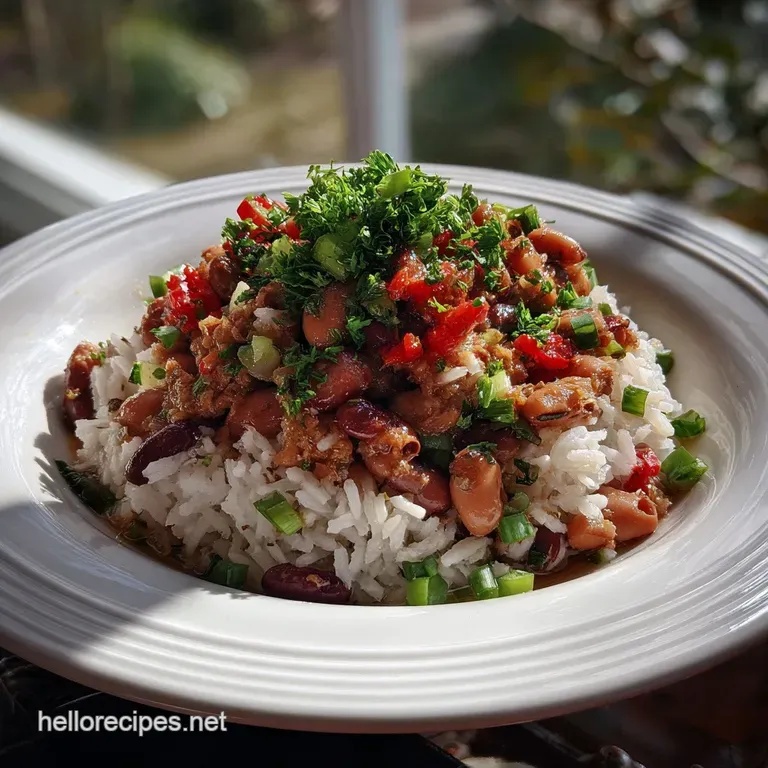
While traditional Hoppin' John | The Cagle Diaries is served over long grain white rice, you can swap this for farro or quinoa for a nuttier texture. This is particularly effective if you find the final dish to be very soft; the grain provides a necessary structural contrast.
Debunking Common Myths
Myth: You must soak black eyed peas overnight. Truth: Black eyed peas are thin skinned compared to kidney beans. A 7 hour slow cook provides more than enough time for full hydration without the pre-soak, which can actually lead to mushy results.
Myth: Salt prevents beans from softening. Truth: While excessive salt can slow the process, the 0.5 tsp called for in Crock Pot Hoppin John The Cagle is not enough to interfere with the chemical breakdown of the skins.
Thermal Preservation and the Zero Waste Philosophy
Proper storage of Crock Pot Hoppin John The Cagle is essential because the starches in the peas will continue to absorb liquid even after the heat is turned off.
- Fridge: Store in airtight containers for up to 4 days. The flavors actually improve on day two as the aromatic compounds further meld.
- Freezer: This recipe freezes beautifully for up to 3 months. Leave 1 inch of headspace in your container to allow for expansion.
- Reheating: Reheat on the stovetop over medium heat. You will likely need to add a splash of water or extra broth, as the peas will have thickened the liquid significantly.
💡 ZERO WASTE TIP: Don't discard the ham hock bones! Transform: Simmer the spent bones in water for 4 hours to create a secondary pork stock. Science: Even after 7 hours, the deep marrow and bone structure contain residual minerals and flavor that can be used for an Au Jus recipe or a base for other soups.
Textural Contrast and Final Presentation Strategies
When serving your Crock Pot Hoppin John The Cagle, the goal is to balance the soft, savory elements with fresh, bright notes. A bowl of Hoppin' John | The Cagle Diaries is traditionally served alongside collard greens or cornbread to provide a variety of textures.
- The Base: Use fluffy, separate grains of white rice. Avoid overcooked, sticky rice, as it will disappear into the broth of the beans.
- The Garnish: A heavy sprinkling of fresh green onions provides a "crunch" that offsets the velvety texture of the peas.
- The Acid: Always serve with a bottle of hot sauce or a small bowl of pickled peppers. The vinegar based heat cuts through the heavy fat of the andouille and ham hock, cleansing the palate between bites.
By following this technical protocol for Crock Pot Hoppin John The Cagle, you ensure a result that is rich in history, scientifically sound, and texturally satisfying.
Every element, from the 1 lb of dried peas to the specific "Cagle" spice blend, works in harmony to create a dish that is far more than the sum of its parts. | The Cagle Diaries.

Recipe FAQs
Is soaking the black eyed peas necessary before using the slow cooker?
No. Slow cooking for 7 hours provides adequate hydration. Overnight soaking is often skipped because the thin skins of black eyed peas can lead to mushy results when cooked long after rehydration.
Why is my broth excessively watery after the cooking cycle is complete?
Smash a portion of the cooked beans against the pot wall. This releases internal starches which act as a natural thickening agent for the broth. If you mastered controlling cookie spread here, see how the same principle of starch release works in our [Sugar Cookie recipe] for texture control.
Should I use salted or unsalted chicken broth for this recipe?
Unsalted broth for precision control. The smoked meats and andouille sausage already contribute significant sodium content as they render. Unsalted broth allows you to standardize the final salt level after the long reduction.
What happens if I use too high a temperature setting?
The legumes will disintegrate into a paste. High heat accelerates the breakdown of pectin in the pea skins before the collagen in the ham hocks fully converts to gelatin, ruining the desired textural contrast.
How do I ensure the ham hock meat shreds easily?
Low, steady heat hydrolyzes collagen into tender gelatin. Prolonged exposure to temperatures above 160°F breaks down tough connective tissue into a moist, shreddable form.
- Use bone-in cuts only
- Maintain the 'Low' setting for 7 hours
- Rest meat briefly before pulling apart
Can I substitute the andouille sausage with another smoked sausage?
Kielbasa offers a milder, less spicy flavor. Andouille is essential for the authentic "Cagle" heat profile due to its specific spice blend and fat content. Kielbasa lacks the characteristic cayenne kick.
Is the final dish too heavy to serve without an acidic component?
Myth: You must balance the richness with acid at the end. The dense fat from the sausage and the gelatinous mouthfeel require a sharp counterpoint to prevent palate fatigue.
A dash of vinegar mimics the flavor balancing used in the [Blood and Sand Cocktail Recipe: Master the Classic 1:1:1:1 Scotch Drink].
Crock Pot Hoppin John Recipe

Ingredients:
Instructions:
Nutrition Facts:
| Calories | 488 kcal |
|---|---|
| Protein | 31g |
| Fat | 22g |
| Carbs | 38g |
| Fiber | 11g |
| Sugar | 4g |
| Sodium | 980mg |
