Zeppole Italian Donuts Authentic Cloudsoft Italian Dessert Balls
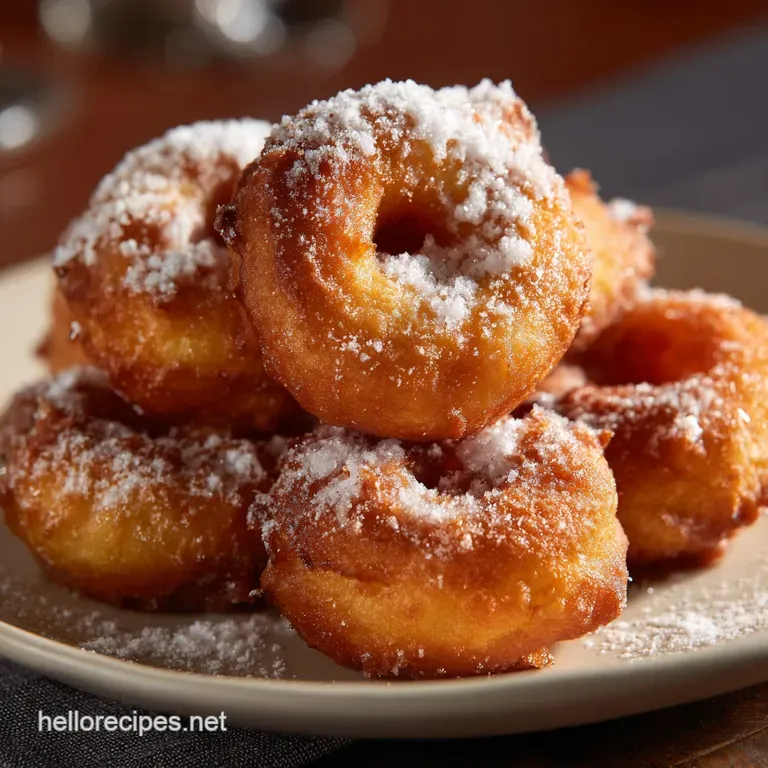
- Capturing the Spirit of Naples: Why Zeppole Are Different
- Essential Components for Authentic Italian Zeppole
- Setting Up Your Frying Station: Tools and Oil Selection
- Mastering the Zeppole Dough: From Saucepan to Pastry Bag
- Achieving the Perfect Golden Crust on Your Zeppole Italian Donuts
- Expert Troubleshooting and Frequently Asked Zeppole Questions
- Recipe FAQs
- 📝 Recipe Card
Capturing the Spirit of Naples: Why Zeppole Are Different
If you’ve only ever had American yeast doughnuts, prepare yourself. We are entering a completely different realm of fried dough here. When I first tried to tackle Zeppole, I thought, “Oh, it’s just Italian deep and fried dough balls, how hard can it be?” Turns out, they are subtle, they are temperamental, and they are absolutely brilliant when done right.
The major difference is the texture. Zeppole are light . They puff up dramatically because they are steam and leavened, not yeast and risen. That means no long waits for dough to proof, which is my kind of baking, honestly.
They have a crisp, thin shell surrounding an almost entirely hollow, airy interior. When you bite into one, it shouldn't be chewy or dense. It should basically vanish.
A Holiday Tradition: Celebrating St. Joseph’s Day
While you can (and should) eat these Fried Donut Balls year and round, they are inextricably linked to the Feast of St. Joseph (Festa di San Giuseppe) on March 19th. In Southern Italy, particularly Naples, the Zeppola di San Giuseppe is the star of the show.
It’s funny, my Nonna always made a huge fuss about this day. It was less about the solemnity and more about the impending sugar rush. She would stand over the pot, flipping these little puffs with the focus of a surgeon, only occasionally shouting at us kids to stand back from the spitting oil. Good memories.
If you want to bring a little slice of that classic Italian feast to your home, making authentic Zeppole Italian Donuts is the way to do it.
The Pâte à Choux Secret to Airy Doughnuts
So, how do we get that magical puff? The secret weapon is pâte à choux . Yes, the same French dough used for elegant éclairs and cream puffs. The reason this works so well is chemistry.
When you cook flour and water on the stovetop (creating a roux or panade ), you gelatinize the starch. Then, when you beat in the eggs, you create an incredibly stable, elastic structure.
This stability is the key. When this dough hits the hot oil, the moisture inside turns instantly to steam. That trapped steam forces the dough to expand rapidly, creating that famous hollow center. If your dough is too wet, or you didn't cook the panade long enough, the steam escapes too fast, and they collapse.
Science, right?
Introducing the Best Authentic Zeppole Italian Donuts Recipe
This is the non and negotiable, foolproof method I’ve honed over years of trial and error (mostly errors involving sad, oily pucks). We're making easy soft zeppole italian donuts that will make your kitchen smell like heaven. Let’s get to the nitty and gritty of the ingredients.
Essential Components for Authentic Italian Zeppole
Think of this recipe less like mixing a cake batter and more like preparing a structured sauce. Everything needs to be measured precisely, especially the eggs, because the success relies entirely on the correct hydration of the dough.
We aren’t aiming for a thick cake batter; we’re aiming for a glossy, slightly sticky paste that knows how to hold its shape.
Setting Up Your Frying Station: Tools and Oil Selection

You need a clear area for frying. Seriously. Move the dish towels away. Put the kids and pets in another room. Safety first, friends. Frying requires focus, and having the right setup makes all the difference between a joyful experience and a deep and fried disaster.
Pantry Staples: Flour, Water, and Sweetness
We are using all and purpose flour here, nothing fancy. Just make sure you weigh it if you can. A cup of scooped flour versus sifted flour can be a massive difference, and remember, hydration is everything in this dough.
The small amount of salt isn't just for flavor; it helps strengthen the gluten structure we are relying on for the puff.
Ingredient Notes: Ensuring Proper Dough Hydration
The eggs are the tricky bit. They need to be room temperature, always. If you add cold eggs to the still and warm choux dough, you risk seizing the butter and making a greasy mess. More importantly, you must add the eggs one at a time, or even half an egg at a time toward the end.
Different batches of flour absorb moisture differently, so you might only need three eggs, or you might need four. Watch the dough, not the measurement.
The Required Kitchen Tools Checklist
If you only have one takeaway from this section, let it be the thermometer. Please.
- Heavy and bottomed pot (prevents scorching and holds heat steady).
- Candy/Deep and fry Thermometer (This is non and negotiable for success).
- Sturdy wooden spoon or spatula (for the vigorous mixing needed for the panade ).
- Piping bag and tip (optional, but it makes the Italian Dessert Balls consistently round).
- Slotted spoon or spider strainer (for safe removal).
- Wire rack (critical for draining, ditch the paper towel pile it steams the bottoms).
Choosing the Right Oil for Optimal Zeppole Texture
Use a neutral oil with a high smoke point. Canola, vegetable, or sunflower oil are perfect. Olive oil? Too low a smoke point, and it will taste too strong anyway. You need about 2 inches of oil depth. Don’t reuse old frying oil for this; fresh oil prevents that heavy, oily flavor we are trying to avoid.
Related Recipes Worth Trying
- The Cracking NoMayo Pasta Salad Recipe with Tangy Italian Dressing — The ultimate bright and crunchy Pasta Salad perfect for summer group dinner ideas Skip the heavy mayo This easy recipe uses a zesty Italian dressing that...
- Ultimate Italian Deli Pasta Salad Recipe Better than StoreBought — This easy pasta salad recipe is the perfect Bank Holiday spread Tossed in a vibrant Italian dressing this no lettuce salad gets better as it chills...
- Foolproof Baked gluten-free Vanilla Cake Donuts for a Proper Cuppa — Get fluffy tender gluten-free Vanilla Cake Donuts without the fryer This easy gluten-free Donut Recipe is baked to perfection and drenched in a simple sweet...
Mastering the Zeppole Dough: From Saucepan to Pastry Bag
This is the main event. If you ace the choux, you ace the zeppole. It happens in three distinct phases: boiling the liquid, cooking the flour (the roux), and adding the eggs. Don’t multitask during this phase.
Achieving the Perfect Golden Crust on Your Zeppole Italian Donuts
Once the dough is ready, the goal shifts to temperature management. You want the outside to form a crust and the inside to steam and cook simultaneously, without burning.
The Roux Method: Cooking the Water and Flour Base
We start with water, butter, and salt in a pan. Bring it to a rolling boil not a simmer, a proper, enthusiastic boil. Remove the pan from the heat, dump in the flour, and stir violently until you have a smooth ball of dough. This should take about 30 seconds.
Now, here is the secret step: Put that dough ball back onto medium and low heat. Stir and mash it around constantly for about two to three minutes. This cooks off excess moisture. When you see a thin film forming on the bottom of the pan, you are done.
That film is the sign of a perfectly cooked panade , ensuring light and puffy results.
Incorporating Eggs (The Crucial Dough Temperament Test)
Transfer the cooked dough to your mixing bowl (or stand mixer). Let it cool for five minutes. If you put the eggs in too soon, they will scramble, and we will cry.
Add the lightly beaten eggs slowly, one at a time. The dough will look awful and separated at first keep mixing! It will eventually come back together into a smooth, glossy paste. I use my stand mixer for this because my arms are weak, but a wooden spoon and sheer will power also work.
Preparing the Batter for Frying: Consistency Checks
Stop adding the egg when the dough looks glossy and drops slowly from a spatula in a thick, shiny "V" shape. If it runs off the spoon like lava, it's too wet. If it holds its shape stiffly, it's too dry. Trust your eye over the exact measurement of the fourth egg.
This perfect dough for zeppole is what gives us the glorious puff.
Temperature Management: Keeping the Oil Steady
Your oil temperature must start at 350°F (175° C) . When you drop the cool dough in, the temperature will drop. Let it reheat back up to 350°F before adding the next batch. Never let it fall below 325°F or climb over 375°F.
CRUCIAL WARNING: If the oil temperature is too low, the zeppole will take too long to cook, resulting in heavy, oil and logged dough balls. Use the thermometer religiously.
Forming and Dropping the Puffs Safely
If you’re not using a piping bag (which gives the prettiest shape), use two small teaspoons dipped in a little bowl of water. Scoop a rounded teaspoon of dough with one spoon, and use the other spoon to gently push it off into the hot oil.
Fry in small batches (no more than 5 or 6 at a time). Overcrowding the pan instantly drops the oil temperature and leads to soggy zeppole. They should take about 6 to 8 minutes total to achieve a beautiful, even golden brown.
Don’t pull them out too early, or they will collapse while cooling.
Drainage and Seasoning Immediately After Frying
Pull them out with your spider strainer and place them immediately on the wire rack. Do not let them sit on paper towels for too long. They will steam themselves soft.
While they are still piping hot and I mean immediately —toss them in a bowl with your powdered sugar mixture. This is the only time the sugar will truly adhere to the crust.
Expert Troubleshooting and Frequently Asked Zeppole Questions
Why Did My Dough Puffs Collapse? (Common Errors)
Nine times out of ten, they collapsed because they were undercooked inside, or the oil temperature was too low. If they collapse the moment they hit the cooling rack, it means the interior structure wasn't set, and the choux crust wasn't strong enough to hold the shape.
Fry them longer, or slightly increase your oil heat (but stay under 375°F).
Can I Prepare the Zeppole Batter Ahead of Time?
You can! You can make the complete choux dough, put it in a piping bag, and refrigerate it for up to 24 hours. Just let it warm up slightly on the counter (15- 20 minutes) before frying, as cold dough will dramatically drop the oil temperature.
Storage Solutions: Keeping Leftovers Fresh
Ha! Leftovers. Good luck with that. Seriously though, if you do have some, they are best eaten the day they are made. If you must store them, keep them uncovered at room temperature for up to two days. Reheat them quickly in a 350°F oven for about five minutes to re and crisp the shell.
Never refrigerate them; they just get sadly soggy.
Beyond Powdered Sugar: Creative Topping Ideas
The classic italian feast zeppole recipe involves simple powdered sugar, maybe mixed with cinnamon. But we are home cooks, we get creative!
| Topping Idea | Flavor Profile | Notes |
|---|---|---|
| Orange Zest & Honey | Bright & Floral | Mix a tablespoon of warmed honey with fresh zest. Drizzle immediately after frying. |
| Nutella Injection | Rich & Decadent | Let the zeppole cool completely, then use a piping tip to inject a warm chocolate and hazelnut spread inside. |
| Pastry Cream | Traditional Filled Zeppola | Cut slightly larger zeppole in half and fill with Crema Pasticcera (Italian pastry cream) and maybe a cherry on top. |
Baking Zeppole: An Oven Method Alternative
Yes, you can bake them. Are they the same? Absolutely not. But if you want a lower and fat option, pipe the dough onto a parchment and lined sheet pan and bake at 400°F (200°C) for 25– 30 minutes until golden.
They will still puff, but the crust will be softer and closer to a standard cream puff than a fried donut.
Nutritional Snapshot: Calories and Serving Size
Look, it’s deep and fried dough. We aren't pretending this is salad. This is pure comfort, joy, and Sunday afternoon decadence. Focus on the experience, share them with friends, and maybe follow them up with a salad the next day. Everything in moderation, including moderation itself! Go forth and fry!

Recipe FAQs
My zeppole came out dense and flat they didn't puff up properly. What’s the niggle?
Right then, this usually comes down to two things: either the pâte à choux wasn’t dried enough during the ‘panade’ cooking stage, or the frying oil temperature was too low.
Ensure the oil is consistently at 350°F (175°C) to generate enough steam inside the dough to create that cloud like puff.
I found my Zeppole Italian Donuts tasted a bit heavy and oily. Any tricks to fix that?
Greasy doughnuts are a sign the oil temperature dropped too low; when it's cool, the dough absorbs the fat rather than cooking on the surface. Always use a thermometer and keep the oil steady between 350°F and 375°F (175°C 190°C), and fry in small batches to prevent temperature crashes.
Can I make these ahead of time, and how should I store leftovers?
Zeppole are truly best enjoyed the moment they are tossed in sugar, as they lose their signature crispness quickly once cooled. If you must store leftovers, keep them in an airtight container at room temperature and refresh them briefly in a 350°F (175°C) oven before serving never microwave them!
What are some quick variations if I fancy a change from the traditional icing sugar dusting?
Try mixing the icing sugar with orange or lemon zest for a bright Southern Italian flavour, or serve the puffs alongside a rich dark chocolate dipping sauce or a sharp raspberry coulis for a decadent finish.
I’m trying to cut back on fat; is it possible to bake or air fry this recipe?
Yes, you can pipe the dough onto a lined baking sheet and bake at 400°F (200°C) for about 20 minutes; while they will puff up beautifully, they will achieve a crisp bun texture rather than the distinct tender, delicate bite of a proper fried zeppole.
Cloud Soft Zeppole Italian Donuts Recipe

Ingredients:
Instructions:
Nutrition Facts:
| Calories | 274 kcal |
|---|---|
| Protein | 5.0 g |
| Fat | 21.0 g |
| Carbs | 17.0 g |
