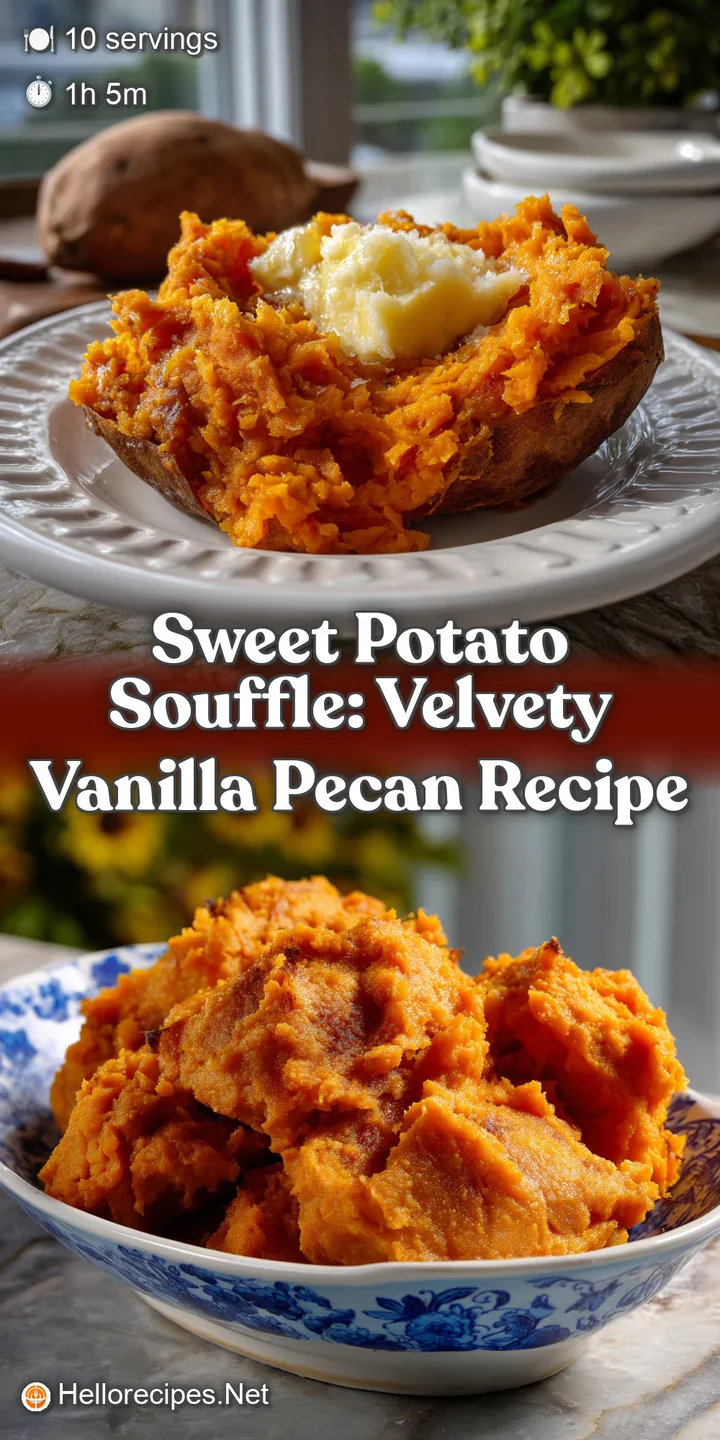
The Best Sweet Potato Souffle: Cloud-Like Texture
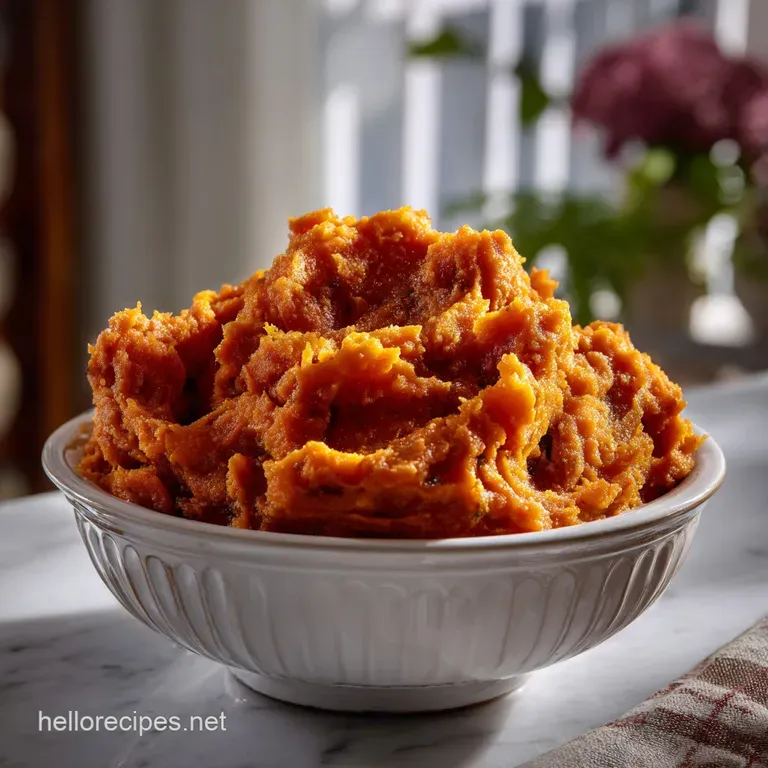
- Effort/Time: 1 hour 5 mins total.
- Flavor Hook: Velvety vanilla-spiced base meets mahogany-caramelized pecans.
- Perfect for: Holiday-gatherings or make-ahead Sunday roasts.
- Mastering the Velvety Texture of Sweet Potato Souffle
- The Molecular Physics of Structural Stability and Aeration
- Thermal Processing Durations and Ingredient Efficiency Metrics
- The Chemistry of Flavor: Selecting High-Performance Elements
- Culinary Engineering: Tools for Maximum Emulsion Stability
- Precision Execution: The Sequential Assembly Protocol
- Diagnostic Analysis for Maintaining Souffle Structural Integrity
- Modifying Flavor Architecture: Smart Swaps and Adjustments
- Post-Bake Preservation and Optimal Thermal Recovery
- Strategic Pairings for Enhancing the Sweet Potato Souffle
- Myths Regarding This Potato Souffle
- Recipe FAQs
- 📝 Recipe Card
Mastering the Velvety Texture of Sweet Potato Souffle
Listen, we’ve all been there staring at a plate of holiday "souffle" that looks more like watery baby food than a culinary triumph. I once served a version so grainy and sad it basically wept all over the turkey. It was a texture nightmare caused by over boiling and zero structural support.
I spent three seasons obsessing over the starch-to-fat ratio to ensure this never happens to you.
The secret isn't just "mashing harder." It's about engineering a stable matrix where the sweet potatoes provide the body, the eggs provide the lift, and the pecans provide the acoustic "shatter" that makes every bite interesting.
We’re aiming for a glossy sheen and a velvety mouthfeel that holds its shape on the fork.
This Sweet Potato Souffle is the solution to every soggy casserole problem. We’re using specific thermal controls to ensure the starch cells hydrate without bursting into a gluey mess. Let's dive into the physics of why this works so you can nail it on the first try.
The Molecular Physics of Structural Stability and Aeration
The success of a Sweet Potato Souffle relies on two scientific pillars: protein denaturation and starch gelatinization.
- Protein Matrix Formation: Large eggs act as the "scaffolding" of the dish; as they bake, the proteins uncoil and bond, trapping air bubbles and moisture to prevent the base from collapsing.
- Hygroscopic Moisture Control: The granulated sugar doesn't just sweeten; it attracts water molecules, keeping the souffle moist while preventing the "weeping" effect common in lower sugar recipes.
- Maillard Reaction Synergy: The brown sugar and pecans in the topping undergo a rapid Maillard reaction at 350°F, creating a complex, nutty aroma and a brittle, glass like texture.
Thermal Processing Durations and Ingredient Efficiency Metrics
Precision timing is non-negotiable for the perfect Sweet Potato Souffle. We need enough time for the center to set without scorching the delicate fats in the pecan topping.
- Prep Time: 20 minutes
- Cook Time: 45 minutes
- Total Time: 1 hour 5 minutes
- Yield: 10 servings
The Chemistry of Flavor: Selecting High Performance Elements
Using high-quality fats and fresh spices is the difference between a "flat" flavor and a multidimensional Sweet Potato Souffle.
Ingredient Chemistry Breakdown
| Ingredient | Chemical/Physical Role (Science) | The Pro Secret (Why This Matters) |
|---|---|---|
| Sweet Potatoes | Starch gelatinization provides the core structure | Choose Garnet or Jewel varieties for higher sugar-to-starch ratios. |
| Large Eggs | Emulsification and protein based structural lift | Ensure they are room temperature to avoid "shocking" the warm potato fats. |
| Unsalted Butter | Lipid based flavor carrier and "shortening" agent | Land O'Lakes Unsalted Butter allows you to control the exact sodium levels. |
| Pecans | Provides "shatter" texture via cellular lipid density | Toasting them slightly before assembly intensifies the nutty aromatic oils. |
The Essential Element List:
- 3 lbs sweet potatoes. Why this? This specific mass ensures a 1:1 ratio of starch to moisture once boiled.
- 1/2 cup Land O'Lakes Unsalted Butter (softened). Why this? High fat content ensures a velvety emulsion with the potatoes.
- 1/2 cup granulated sugar.
- 2 large eggs (room temperature, lightly beaten).
- 1/2 cup whole milk. Why this? The 3.25% milkfat carries the fat-soluble cinnamon flavor throughout the palate.
- 1 tsp vanilla extract.
- 1/2 tsp salt.
- 1/2 tsp ground cinnamon.
- 1 cup chopped pecans.
- 1/2 cup light brown sugar (packed).
- 1/3 cup all-purpose flour.
- 1/4 cup unsalted butter (melted).
Culinary Engineering: Tools for Maximum Emulsion Stability
- KitchenAid Hand Mixer: Essential for incorporating air into the potato base.
- Le Creuset 9x13 Casserole Dish: Cast iron or heavy stoneware provides even thermal mass, preventing burnt edges.
- Lodge 6 Quart Enamel Pot: For uniform boiling of the cubed potatoes.
- Digital Kitchen Scale: For precise measurement of that 3 lbs of potatoes.
Precision Execution: The Sequential Assembly Protocol
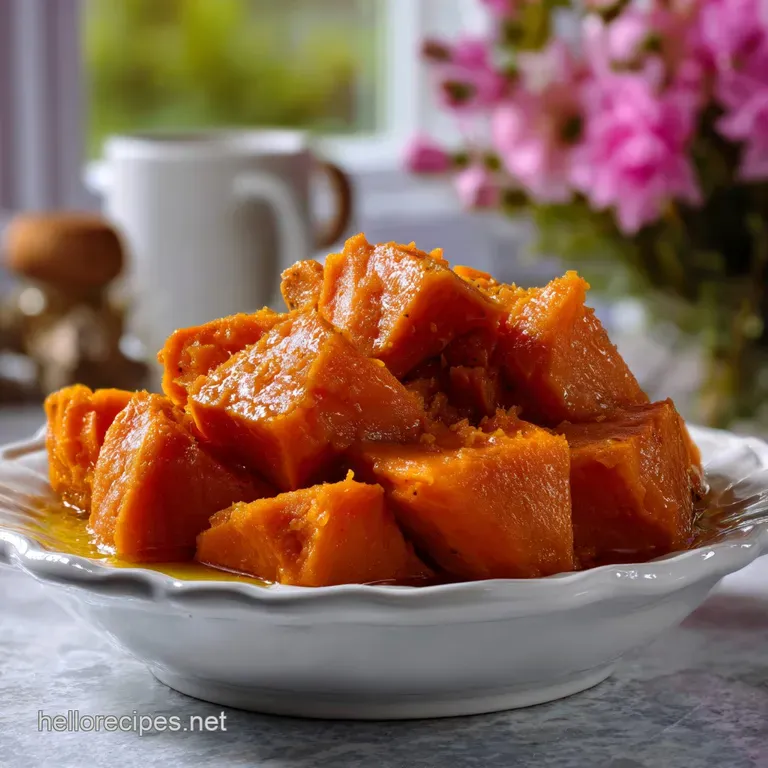
Follow these steps exactly to maintain the structural integrity of your Sweet Potato Souffle.
- Peel and cube 3 lbs sweet potatoes into uniform 1 inch squares. Note: Uniformity ensures all pieces reach starch gelatinization simultaneously.
- Boil potatoes in salted water for 15 minutes until a fork slides through with zero resistance and edges begin to fray.
- Drain thoroughly and let sit in the hot pot for 60 seconds until surface moisture evaporates and steam subsides.
- Whip the potatoes using a KitchenAid hand mixer with 1/2 cup softened Land O'Lakes butter until the texture is silky and no lumps remain.
- Incorporate 1/2 cup granulated sugar, 2 beaten eggs, 1/2 cup whole milk, 1 tsp vanilla, 1/2 tsp salt, and 1/2 tsp cinnamon until the batter is light, aerated, and pale orange.
- Transfer the mixture to a greased Le Creuset dish, smoothing the top with a spatula until the surface is level and even.
- Combine 1 cup chopped pecans, 1/2 cup brown sugar, 1/3 cup flour, and 1/4 cup melted butter in a separate bowl until it resembles wet, clumpy sand.
- Distribute the topping evenly across the potato base until no orange surface is visible.
- Bake at 350°F for 45 minutes until the topping is mahogany brown and the edges sizzle and pull away slightly from the dish.
Chef's Tip: To achieve an even more "souffle like" lift, separate the egg whites, whip them to soft peaks, and fold them into the potato mixture last. This adds a secondary level of aeration.
Diagnostic Analysis for Maintaining Souffle Structural Integrity
If your Easy Sweet Potato Souffle isn't performing as expected, it's usually a matter of moisture management or temperature control.
Why Your Souffle is Watery
Watery results are typically caused by "weeping." This happens when the starch cells are over hydrated (boiled too long) or if the eggs are overcooked, causing them to squeeze out moisture (syneresis). This is why draining and air-drying the potatoes for 60 seconds is a critical "Pro Protocol" step.
| Problem | Root Cause | The Fix | Pro Protocol |
|---|---|---|---|
| Soggy Bottom | Excess potato moisture | Air-dry potatoes after draining | Roast potatoes instead of boiling for zero added water. |
| Sunken Center | Premature oven opening | Keep the oven door shut | Check doneness through the glass to maintain thermal stability. |
| Grainy Texture | Butter was too cold | Use softened, room temp butter | Emulsify the butter into the potatoes while they are still warm (140°F). |
Modifying Flavor Architecture: Smart Swaps and Adjustments
You can adapt this Sweet Potato Souffle Recipe for different dietary needs, but keep the fat-to-starch ratios consistent.
| Original Ingredient | Substitute | Why It Works |
|---|---|---|
| Whole Milk | Full fat Coconut Milk | Matches the lipid profile but adds a subtle tropical/nutty note. |
| Pecans | Walnuts | Similar fat content. Note: Adds a slightly more bitter, earthy finish. |
| All-purpose Flour | Almond Flour | High fat content; results in a slightly softer, grainier topping. |
The "Double Topped" Hybrid
If you love a Sweet Potato Souffle with Marshmallows, you can add a layer of mini marshmallows over the pecan topping during the last 5 minutes of baking. This creates a "glass and goo" texture contrast.
Post Bake Preservation and Optimal Thermal Recovery
A Southern Sweet Potato Souffle is surprisingly resilient, but the topping is the first thing to degrade.
- Storage: Store in an airtight container in the fridge for up to 4 days.
- Freezing: You can freeze the potato base (without topping) for up to 3 months. Thaw overnight before adding fresh topping and baking.
- Reheating: To avoid a soggy topping, reheat in a 325°F oven for 10 15 minutes. Avoid the microwave, as it turns the pecan crust into a gummy mess.
Zero Waste Philosophy: Don't discard the potato skins! Transform: Toss them in olive oil and salt, then air-fry at 400°F for 8 minutes. Science: The skins are high in fiber and pectin, creating a nutrient dense, crispy snack.
Strategic Pairings for Enhancing the Sweet Potato Souffle
This Sweet Potato Pecan Souffle acts as a bridge between savory and sweet. It’s one of the most versatile Thanksgiving Side Dishes Sweet Potato enthusiasts swear by.
- The Savory Balance: Pair with salty proteins like smoked ham or roasted turkey to balance the 31.8g of sugar. It also complements our Boiled Potatoes recipe if you're looking for a starch heavy holiday spread.
- The Texture Contrast: Serve alongside a bright, acidic cranberry sauce to cut through the 23.3g of fat.
- Dessert Alternative: If you have leftovers, they make an incredible breakfast paired with Healthy Oatmeal Cookies recipe for a fiber rich start to the day.
Myths Regarding This Potato Souffle
Myth: You must use marshmallows for it to be a true "souffle." Truth: A souffle is defined by its aerated structure (usually from eggs), not its topping. The pecan version is actually the more traditional "Southern" style.
Myth: Canned sweet potatoes are just as good. Truth: Canned potatoes are often packed in syrup, which alters the osmotic pressure of the dish and leads to a much mushier, less stable Best Sweet Potato Souffle. Stick to fresh tubers for the best structural results.
This Sweet Potato Souffle is all about that contrast the velvety, spice laden interior against the crunch of the pecans. Master the whip, mind the moisture, and you'll have the most requested dish on the table. Let’s get baking!
Recipe FAQs
Can I make this recipe ahead of time?
Yes, prep 12 hours in advance is possible. Bake immediately before serving for the best contrast between the soft filling and crust. Ensure the topping remains dry until oven time.
Should I use fresh or canned sweet potatoes?
Use freshly cooked potatoes for superior texture. Canned puree often contains stabilizers that impede proper starch gelatinization, leading to a denser final product. Learn more about proper cooking times for the best results here: How Long To Cook Sweet Potatoes My Easy Guide.
Why did my souffle sink immediately after cooling?
Undermixed egg whites led to a fragile internal structure. Incomplete aeration means the protein matrix couldn't trap sufficient steam during the bake, resulting in collapse once the temperature dropped.
- Ensure whites reach stiff, glossy peaks
- Fold gently, minimizing deflation
- Do not open the oven door prematurely
Is adding baking soda necessary for lift?
No. Leavening relies on mechanical aeration. Baking soda is an alkali chemical leavener; this recipe uses whipped egg whites to create the airy structure, relying on steam expansion for rise.
If you prefer faster cooking methods for tubers, explore our guide on Air Fryer Jacket Potatoes How to Bake a Potato FAST.
What is the purpose of brown sugar versus white sugar?
Brown sugar adds moisture and deeper caramel notes. White sugar contributes purely to crystalline structure and sweetness, whereas the molasses in brown sugar promotes a softer crumb and richer color upon baking.
Myth: Over beating the filling causes it to separate.
Myth: Over beating the filling causes it to separate. Reality: Separation primarily occurs from excessive heat or insufficient binding agents (eggs/starch), not just mixing speed.
Over beating the filling incorporates too much air, which is then lost upon baking, causing deflation, not separation.
Can I substitute walnuts for pecans in the crust?
Walnuts provide a sharper, earthier flavor. Pecans offer a higher fat content, which contributes to the signature buttery, melt-in-your mouth crispness when toasted against the heat.
Cloud Like Sweet Potato Souffle
Ingredients:
Instructions:
Nutrition Facts:
| Calories | 430 kcal |
|---|---|
| Protein | 5.9 g |
| Fat | 23.3 g |
| Carbs | 53.2 g |
| Fiber | 5.2 g |
| Sugar | 31.8 g |
| Sodium | 135 mg |
