Ribeye Roast: the Best Standing Prime Rib with Garlic-Thyme Crust
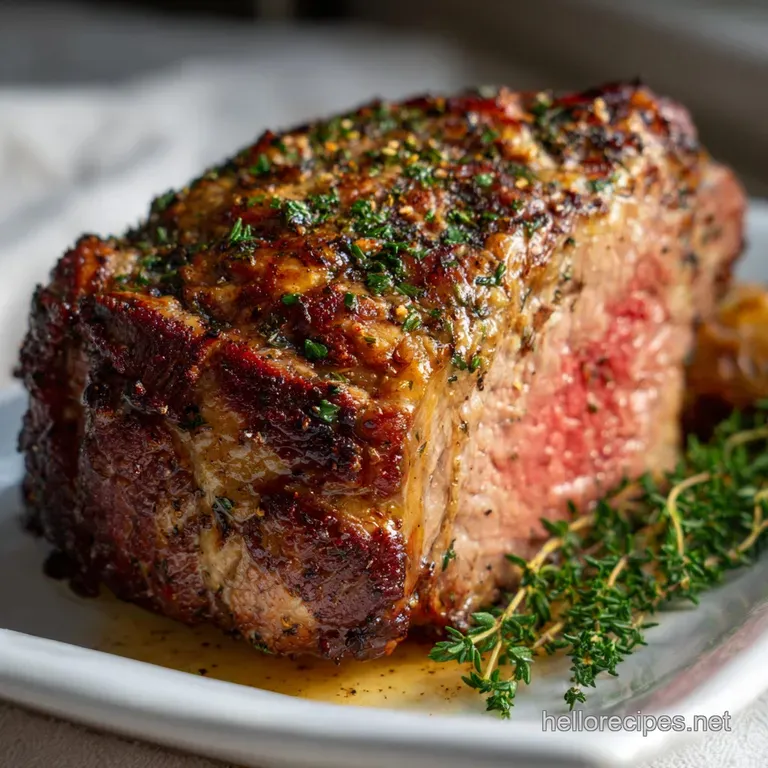
- The Ultimate Standout Centrepiece: Mastering the Classic Standing Ribeye Roast
- Why the Reverse Sear Method is Essential for Juicier Prime Rib
- Essential Shopping List: Everything Needed for the Standing Ribeye
- Step-by-Step Cooking Guide: Delivering the Perfect Medium-Rare
- Internal Temperature Guide: Hitting the Ideal Doneness for Your Roast
- Storage, Freezing, and Reheating
- Serving Suggestions
- Recipe FAQs
- 📝 Recipe Card
The Ultimate Standout Centrepiece: Mastering the Classic Standing Ribeye Roast
You know that moment when the most ridiculously beautiful, deeply crusted roast is carried to the table? The one that fills your entire home with that rich, garlicky, herby perfume that makes everyone silent for a sec? That, my friend, is the magic of a properly cooked Ribeye Roast .
It’s the ultimate edible centrepiece, all crispy fat and perfect internal pinkness.
Look, I used to think this was exclusively a fancy restaurant dish, something too complicated for a Sunday afternoon. Turns out, making a magnificent Ribeye Roast at home is shockingly simple if you respect the thermometer and follow one critical technique. Stop stressing about expensive cuts!
This method turns a brilliant piece of meat into pure gold without turning your kitchen upside down.
So ditch the guesswork and stop peering into the oven every five minutes. I’m going to walk you through the reverse sear method that guarantees the most consistent, glorious medium rare you’ve ever seen.
If you are looking for showstopping ribeye roast recipes , this is the one you need to stick on the fridge.
Chef’s Note: Never salt and cook immediately. The pre-salting is mandatory for flavour and texture, trust me. It’s the secret weapon of any top-tier joint.
Why the Reverse Sear Method is Essential for Juicier Prime Rib
What is a Standing Ribeye Roast (and Why is it a Showstopper)?
A standing Ribeye Roast is simply a beautiful block of muscle and fat, harvested from the rib section of the steer. It’s celebrated for its incredible marbling, which melts during cooking and bastes the meat from the inside out.
When you call it a ‘standing’ roast, it just means the roast is cooked ‘standing’ on the rack of rib bones, which acts like a natural roasting rack and insulator.
The Difference Between Ribeye Roast and Prime Rib: Understanding Your Cut
This is where the semantics get confusing, but stick with me. Sometimes people ask for ribeye roast vs prime rib , but here’s the secret: they often come from the same primal cut. "Prime Rib" technically refers to a grade of beef (US Prime grade). However, in common butcher jargon, any beautiful, impressive standing rib cut is now often called Prime Rib. Regardless of the official grade USDA Choice, Select, or Prime if you buy a good standing Ribeye Roast , this specific preparation method will make it taste absolutely premium. You can try my slightly tweaked recipe for Prime Rib Roast: The Best Reverse Sear Recipe for Medium Rare later, but today we focus on nailing this classic.
Achieving Edge-to-Edge Perfection: The Science of Slow Roasting
Why is the reverse sear so beloved for something like a Ribeye Roast in oven ? Traditionally, you blast the roast high first, then drop the heat. This creates that awful ‘grey ring’ of overcooked meat right under the crust. We flip that script.
We roast low and slow (135°C/275°F) first. This brings the internal temperature up gently and incredibly evenly across the entire roast, minimizing moisture loss. Then, at the very end, we hit it with a high blast (the ‘sear’) to develop that dark, crunchy, herb infused crust.
This is the only way to guarantee a perfect medium rare from edge to edge without any fuss.
Essential Shopping List: Everything Needed for the Standing Ribeye
You don’t need much for a stunning Ribeye Roast recipe oven method, but every ingredient needs to be decent quality. Skimp on the herbs and you ruin that gorgeous crust.
| Ingredient | My Recommendation | Viable Substitute |
|---|---|---|
| Ribeye Roast | Bone-in, 4 ribs (7 lbs) | Boneless (adjust cook time down 15- 30 mins) |
| Garlic | Freshly minced, always! | 1 tsp garlic powder (if absolutely necessary) |
| Fresh Thyme/Rosemary | Fresh is vital for aroma | 1 Tbsp dried thyme/½ tsp dried rosemary |
| Butter | Unsalted, softened | Salted butter (reduce added coarse salt) |
| Worcestershire Sauce | Use a quality brand | A dash of soy sauce or marmite for umami |
Selecting Your Beef: Choosing the Right Grade and Weight
Always aim for marbling; that white fat webbing is flavour. Ask your butcher to slice the bones off and tie them back on securely it simplifies carving massively later. For a small crowd (6 8 people), a four rib, seven pound Ribeye Roast is perfect.
Clarifying Your Fat: Salted vs. Unsalted Butter for the Crust
I always specify unsalted butter when creating a herb crust for a Ribeye Roast . Why? Because it gives you total control over the seasoning. Beef can handle a lot of salt. If you use salted butter, you might accidentally over salt the exterior while trying to flavour the interior.
Fresh Herbs Only: The Impact of Thyme and Rosemary Quality
Fresh herbs release their oils slowly as they bake, creating that phenomenal, heady aroma that defines the crust of a great Ribeye Roast . Dried herbs taste dusty and can burn quickly in the over high heat sear phase. Do yourself a flavour favor and buy fresh!
Equipment Checklist: Tools for Temperature Accuracy
You need a good roasting pan and a rack for air circulation. But honestly, the one tool you absolutely cannot skip is a digital probe thermometer . If you stick a probe into the thickest part of the meat and monitor the temperature without opening the oven door , you remove 90% of the risk associated with this expensive cut.
step-by-step Cooking Guide: Delivering the Perfect Medium Rare
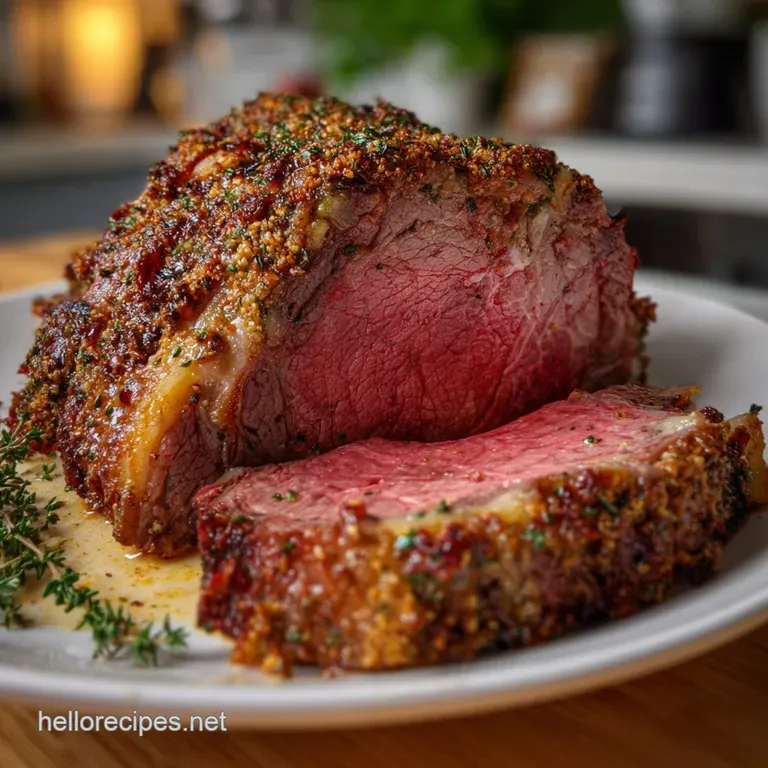
Making a perfect Ribeye Roast is a game of patience and temperature. Follow these steps meticulously.
Preparation Phase: Trimming, Tying, and Pre-Salting
- Dry It Out: Pat the whole Ribeye Roast aggressively dry with paper towels. Seriously, get every speck of moisture.
- Seasoning: Rub the roast with olive oil, then coat extremely generously with coarse salt and pepper. Don’t be shy; the salt has to penetrate deeply.
- The Chill: Place the seasoned beef uncovered on the rack in the fridge for at least two hours. This is the crucial step that creates a surface that won't steam, but will turn beautifully crunchy later.
- Temper: Remove the roast from the fridge one hour before you plan to put it in the oven. Room temperature beef cooks more evenly.
Low and Slow: The Initial Roasting Process (The 'Reverse')
- Oven Prep: Preheat your oven to a low 135°C (275°F).
- The Crust: Mix your softened butter with minced garlic, fresh herbs, and Worcestershire. Slather this paste all over the fat cap and sides of the Ribeye Roast. Every centimeter should be covered!
- Probe Time: Insert your temperature probe into the middle of the thickest part of the roast, avoiding the bone structure.
- Slow Cook: Slide the Ribeye Roast in oven and start cooking the meat low and slow until the probe hits 50°C (122° F) . This usually takes between 90 minutes and 2 hours, depending on the roast size don't rush it.
The Final Blast: Creating the Flawless Seared Crust
- The First Rest: Once the internal temp hits 50°C (122°F), yank the roast out. Cover it loosely with foil and let it rest on the counter for 15 quick minutes. This allows the heat to redistribute slightly.
- Crank the Heat: While the roast rests, crank that oven up to 260°C (500°F) or its highest setting. Get it roaring hot!
- The Sear: Uncover the roast and slide it back into the screaming hot oven for 6 to 10 minutes. Watch it closely; you’re looking for a deep, browned, crackling crust, not charred herbs.
- Pull It: Remove the roast when the internal temperature reaches 52°C (125° F) . Don't wait for medium rare; you'll overcook it!
The Critical 30 Minutes: Why Resting the Joint is Non-Negotiable
Transfer the Ribeye Roast to a clean cutting board. Cover it tightly with foil again (I usually wrap the whole board end-to-end to trap the heat). Now, let it sit for a full 30 minutes.
The internal heat will keep rising (carry over cooking), achieving the glorious, perfect medium rare target of 55°C to 58°C (132°F to 136°F). This rest also allows the muscle fibers to relax, sucking back in all those beautiful juices.
Skip the rest, and those precious juices will flood your cutting board instead of your plate.
Internal Temperature Guide: Hitting the Ideal Doneness for Your Roast
| Doneness Target | Pull Temperature (Before Rest) | Final Resting Temperature (After Rest) | Sensory Description |
|---|---|---|---|
| Rare | 46°C (115°F) | 50°C (120°F) | Cool, deeply red center |
| Medium Rare | 52°C (125° F) | 55°C 58°C (132°F 136° F) | Warm, pink center (The sweet spot!) |
| Medium | 57°C (135°F) | 60°C 63°C (140°F 145°F) | Warm, light pink center |
Storage, Freezing, and Reheating
You’ll always want to maximise the longevity of your majestic Ribeye Roast . It makes for the best cold sandwiches the next day, honestly.
How to Store Leftovers
Allow any leftover roast slices to cool completely at room temperature. Transfer them to an airtight container. The leftover Ribeye Roast will happily keep in the fridge for up to 3 to 4 days.
Freezing Instructions
If you have a large amount, sliced portions of your Ribeye Roast freeze beautifully. Wrap individual slices or small stacks tightly in plastic wrap, then place them in a freezer safe zip-top bag, squeezing out all the air. It will keep well for up to three months.
Best Reheating Methods
Do NOT blast leftover Ribeye Roast in the microwave; you will turn it into shoe leather. To restore its tenderness, preheat your oven to a very low 150°C (300°F). Place the sliced roast inside a foil package along with a tablespoon of pan juices or stock.
Close the foil tightly and warm for 5 to 10 minutes, just until warmed through. The low temperature prevents further cooking.
Serving Suggestions
What to Serve With This Dish
Since this Ribeye Roast is the star, the side dishes should complement, not compete. A sharp side ensures the richness doesn't overwhelm the palate. The classic combination includes creamy mash and something robust. I always recommend serving alongside deeply flavourful classics like Cooked Turnips: Honey Glazed Roasted Turnips with Thyme . For something really simple but elegant, serve a light, sharp salad, which helps cut through the richness of the roast. For another show stopping main course, especially when entertaining, you might also be interested in my methods for a classic Top Round Roast: Tender Herb Crusted Sunday Beef .
And don't forget the jus! Take the drippings from the roasting pan, deglaze with a splash of red wine or stock, thicken slightly, and pour that majestic liquid over your carved slices. That's true perfection. This Ribeye Roast is always worth the effort.
Recipe FAQs
What is the difference between a Ribeye Roast and Prime Rib?
They are fundamentally the same cut of beef, sourced from the rib primal section. "Prime Rib" traditionally refers to the roast when it is still bone-in, but the terms are now often used interchangeably.
To be officially labeled "Prime," the beef must meet USDA quality grading standards, yielding a superior marbling and texture.
How do I achieve a perfectly consistent medium rare throughout the roast?
The key is the "Reverse Sear" method, which involves cooking the roast slowly at a low temperature (around 250°F) until it is about 10 15°F below your target internal temperature. This gentle heat eliminates the grey thermal ring.
You finish by blasting the roast at a very high heat (450°F+) for 10 15 minutes to crisp the exterior crust.
Why is my herb crust burning before the roast reaches the right temperature?
A burning crust usually indicates that you applied the oil and herbs too early, or your initial roasting temperature was too high. Ensure the dry rub is mostly fresh herbs and salt, and only increase the oven temperature for the final searing stage.
If your herbs are browning too fast, try covering the roast loosely with foil during the initial low-temperature cook.
How much time should I allocate for the Ribeye Roast to rest?
The resting period is critical and cannot be rushed; a roast of this size requires at least 20 to 30 minutes, tented lightly with foil. Resting allows the internal juices, which were driven outward during the heat exposure, to redistribute back through the muscle fibers.
This ensures a moist, tender result when you slice it.
If I have a smaller 3-4 lb roast, how should I adjust the cooking time?
While the overall process remains the same (Reverse Sear), a smaller roast will reach temperature much faster. Focus on the internal temperature rather than the clock; check the roast every 30-45 minutes until it reaches your target pre-sear temperature (e.g., 115°F for medium rare).
Always use an accurate instant read meat thermometer inserted into the thickest part.
Can I cook the Ribeye roast without the bone?
You absolutely can cook a boneless ribeye roast, often called a Beef Ribeye Centre Cut. However, the bones often act as an insulator, helping the roast cook more evenly and lending depth to any accompanying sauces.
If using boneless, keep your internal temperature checks accurate, as its cooking time will be slightly reduced.
How long can I store leftover roast, and can I freeze it?
Leftover sliced ribeye can be stored in an airtight container for 3 4 days in the refrigerator. To freeze, wrap individual slices tightly in plastic wrap before placing them in a freezer bag, where they can last up to 3 months.
For reheating, gently warm the slices on the stovetop with a bit of broth to prevent them from drying out.
Classic Standing Ribeye Roast Recipe
Ingredients:
Instructions:
Nutrition Facts:
| Calories | 2295 kcal |
|---|---|
| Protein | 194.1 g |
| Fat | 154.5 g |
| Carbs | 19.7 g |
