Manhattan Cocktail: a Sophisticated Guide
- Time: Active 5 minutes, Passive 0 minutes, Total 5 minutes
- Flavor/Texture Hook: Silky mouthfeel with a sharp, peppery finish and herbal aromatics.
- Perfect for: Elegant evening starts, steak dinners, or technical mixology practice.
- Crafting the Icon: Manhattan Cocktail Science
- Why This Works
- Component Analysis and Selection
- Selecting Premium Ingredients and Substitutes
- Essential Kit for Liquid Gastronomy
- Executing the Flawless Stir Sequence
- Solving Common Texture and Balance Problems
- Modern Adaptations for Every Palate
- Managing Temperature and Component Life
- Debunking Cocktail Legends
- Elevating the Final Sensory Experience
- Recipe FAQs
- 📝 Recipe Card
Crafting the Icon: Manhattan Cocktail Science
The first time I really understood the soul of this drink, I wasn't at a bar; I was in my tiny apartment kitchen, shivering because I had just spent twenty minutes hand carving a block of ice.
I remember the sharp, medicinal snap of the Angostura bitters hitting the glass, followed by the deep, wine like aroma of a freshly opened sweet vermouth. When the rye hit the ice, the smell changed again peppery, oaky, and suddenly very serious.
I realized then that a Manhattan Cocktail isn't just a drink you assemble; it is a brief exercise in liquid gastronomy where temperature and friction are the only tools that matter.
The sound is what gets you first the rhythmic, metallic clink clink clink of a bar spoon against crystal. It’s a quiet, meditative process that creates a texture so silky it almost feels heavy on the tongue.
If you’ve ever had one that tasted like a glass of fire or, worse, a watery mess, it’s usually because the balance between the spirit’s proof and the ice’s melting rate was ignored.
We are looking for that specific moment where the liquid turns iridescent and gains a certain viscosity that coats the palate.
In this guide, we are moving past the basic "pour and stir" method. We will look at the technology of ice, the chemical oxidation of fortified wines, and why the specific weight of your glassware actually changes how you perceive the flavor.
Whether you are using a high rye bourbon or a classic spicy rye, the goal is the same: a crystal clear, deep amber masterpiece that stays cold from the first sip to the last. Let's get into the mechanics of making a drink that actually honors the spirits inside it.
Why This Works
- Thermal Mass Regulation: Pre chilling the glass creates a heat sink that prevents the room temperature from immediately warming the spirits, preserving the velvety texture.
- Controlled Dilution: Stirring for exactly 30 seconds introduces approximately 20-25% water by volume, which is the "sweet spot" where the rye's alcohol burn softens to reveal hidden notes of vanilla and spice.
- Density Gradient: Using large ice cubes minimizes surface area relative to volume, allowing for rapid chilling without the chaotic melting that occurs with small, porous "fridge ice."
- Emulsification of Oils: The gentle stirring action integrates the essential oils from the bitters and the vermouth's botanicals without introducing air bubbles, keeping the drink translucent and heavy.
| Stirring Duration | Liquid Temperature | Dilution Level | Visual/Sensory Cue |
|---|---|---|---|
| 10 seconds | 45°F (7°C) | Low (5-10%) | Visible alcohol "legs" in the glass; harsh burn |
| 20 seconds | 38°F (3°C) | Medium (15%) | Mixing glass begins to frost; aroma opens up |
| 30 seconds | 32°F (0°C) | Optimal (22%) | Liquid is viscous and clear; frost is thick |
| 45+ seconds | 28°F (-2°C) | High (30%+) | Drink looks thin; flavors become muted/watery |
The table above demonstrates why timing is everything. Unlike a shaken drink where you are looking for aeration and "bruised" spirits, the Manhattan is about clarity and weight. If you go too long, you lose the spicy punch of the rye. Too short, and the drink is too aggressive to enjoy slowly.
Component Analysis and Selection
| Ingredient | Science Role | Pro Secret |
|---|---|---|
| Rye Whiskey | Structural Base | Use a bottled in-bond rye (100 proof) to ensure the flavor survives the dilution process. |
| Sweet Vermouth | Aromatic Modifier | Always use vermouth from a freshly opened bottle stored in the fridge; oxidation ruins the botanical profile. |
| Angostura Bitters | Binding Agent | Think of this as the "salt" of the cocktail; it bridges the gap between the sweet wine and the hot spirit. |
Understanding these components is vital because each one behaves differently under cold temperatures. Rye, especially those with high rye content (95%), contains specific grain oils that thicken when chilled.
When you mix this with the sugar content of the vermouth, you create a solution with a higher specific gravity than water, which is why the mouthfeel is so distinctive.
Selecting Premium Ingredients and Substitutes
To make a truly great cocktail, you need to be picky about what goes into the mixing glass. I’ve made the mistake of using a "cooking" vermouth before honestly, don't even bother. It’s a fortified wine, meaning it’s alive and it will die (oxidize) if you leave it on the counter.
- 2 oz Rye Whiskey: Why this? Rye provides the necessary "spice" to cut through the sugar in the vermouth.
- Substitute: Bourbon (specifically a high rye version like Bulleit or Old Grand Dad). Note: This will result in a sweeter, mellower profile.
- 1 oz Sweet Red Vermouth: Why this? It provides body, herbal complexity, and the essential sweetness.
- Substitute: Punt e Mes. Note: This adds a significant bitter "kick" compared to standard sweet vermouth.
- 2 dashes Angostura Bitters: Why this? It adds the classic clove and cinnamon aromatic backbone.
- Substitute: Peychaud’s Bitters. Note: This shifts the flavor toward a more floral, anise forward profile.
- 1 dash Orange Bitters: Why this? Brightens the drink and bridges the gap between the rye and the cherry.
- Substitute: A fresh strip of orange peel expressed over the glass.
- 1 Maraschino Cherry: Why this? Provides a textural contrast and a sugar soaked finish.
- Substitute: A brandy soaked Luxardo cherry or a simple lemon twist for a drier finish.
When choosing your whiskey, consider the "bottled in-bond" designation. This is a bit of technology from the 1897 Bottled in-Bond Act that guarantees the spirit is 100 proof and aged at least four years.
In a drink where water is added via ice, starting with a higher proof spirit ensures that the final result isn't flabby.
Essential Kit for Liquid Gastronomy
You don't need a lab, but you do need tools that respect the ingredients. I once tried to stir a Manhattan in a plastic pint glass with a butter knife it was a disaster. The plastic didn't hold the cold, and the knife didn't have the surface area to move the ice effectively.
- Mixing Glass: Use a heavy bottomed, lead free crystal glass. The weight provides stability, and the thick glass acts as an insulator to keep the cocktail cold during the 30 second stir.
- Bar Spoon: A long handled, weighted spoon (teardrop style) is essential. The twisted handle allows it to spin smoothly in your fingers, which is key for a quiet, efficient stir.
- Jigger: Accuracy is the difference between a masterpiece and a mess. Use a Japanese style jigger with clear markings for 1 oz and 2 oz.
- Strainer: A Julep strainer is traditional for stirred drinks. It fits snugly inside the mixing glass and allows the liquid to pass through while keeping the ice (and any tiny shards) back.
- Glassware: A 5.5 oz Coupe or a Nick and Nora glass. You want a glass that is small enough to look full with a 3 oz drink; otherwise, it looks lonely and warms up too fast.
If you find yourself making these often, investing in a high-quality mixing glass is a sustainable choice. Cheap glass can shatter under the thermal shock of ice, whereas tempered crystal will last a lifetime. For more technical drink making advice, you might find the ratios in my classic Gimlet recipe a helpful comparison for understanding spirit to modifier balance.
Executing the Flawless Stir Sequence
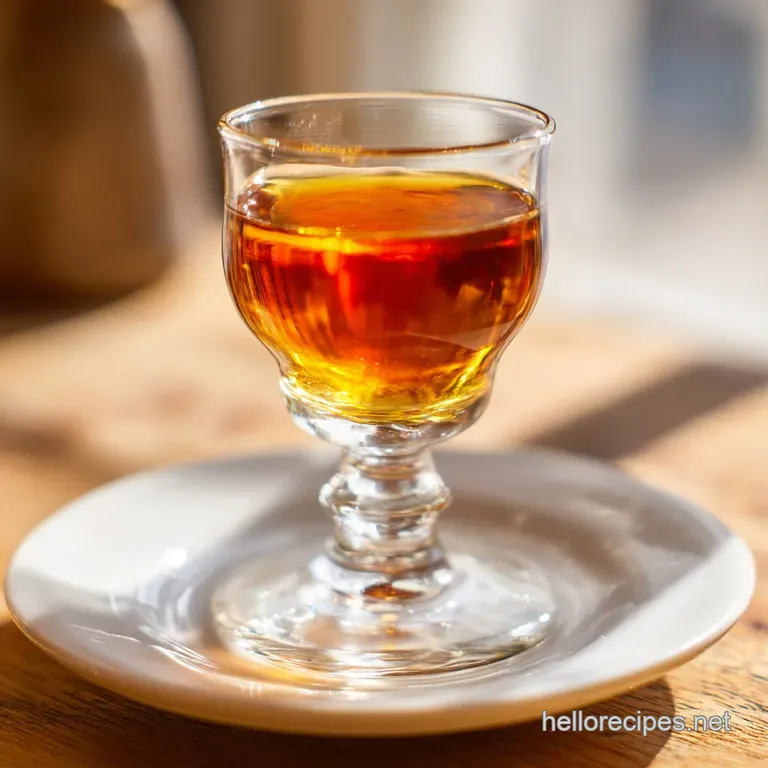
- Place your coupe or Nick and Nora glass in the freezer. Note: This creates a frost layer that helps maintain the drink's temperature for up to 15 minutes.
- Measure 2 oz of rye whiskey and pour it into your mixing glass. Note: Always start with the cheapest ingredients first in case you mess up, but here we go spirit first for better integration.
- Add 1 oz of sweet red vermouth. Wait until you smell the wine like botanicals blooming as they hit the whiskey.
- Add 2 dashes of Angostura bitters and 1 dash of orange bitters. Note: Hold the bottle vertically for consistent "dashes."
- Fill the mixing glass 3/4 full with large, solid ice cubes. Listen for the sharp crack as the room temperature spirits touch the ice.
- Insert the bar spoon along the inside wall of the glass. Stir gently for 30 seconds until the glass feels painfully cold to the touch and the liquid has risen slightly in volume.
- Remove the glass from the freezer. It should be opaque with frost.
- Strain the mixture through a Julep strainer into the chilled glass. Watch for the shimmering, oily surface of the liquid.
- Garnish with a high-quality maraschino cherry.
- Serve immediately. Observe the condensation forming on the outside of the glass.
For a completely different sensory profile using similar ingredients, the Blood and Sand is a fantastic way to explore how orange juice and Scotch interact with sweet vermouth. It's a bit more complex, but uses the same technical stir (or shake, depending on the school of thought) principles.
Solving Common Texture and Balance Problems
Why Your Drink Feels Watery
If your Manhattan lacks that velvety "clings to the glass" texture, the issue is almost always the ice. Small, "wet" ice cubes from a fridge dispenser have too much surface area and melt instantly. This floods the drink with water before the spirits have a chance to chill.
To fix this, use larger cubes (at least 1 inch) and ensure they are "dry" meaning they come straight from the freezer and aren't already melting in a bucket.
Why Your Drink Tastes Medicinal
This usually happens when the vermouth has turned. Vermouth is wine, and once oxygen hits it, the delicate herbs and spices start to taste like cardboard or old raisins. Another culprit is "over bittering." If you use a heavy hand with the Angostura, it can overwhelm the rye. Always use a measured dash.
If the drink still feels "off," check the age of your bitters; while they have a long shelf life, the aromatics can fade over several years.
| Problem | Root Cause | Solution |
|---|---|---|
| Cloudiness | Shaking instead of stirring | Always stir with a spoon to avoid air bubbles. |
| Harsh alcohol burn | Under dilution | Increase stirring time to a full 30 seconds. |
| Clooyingly sweet | Poor vermouth to rye ratio | Ensure you are using a full 2 oz of high proof rye. |
Common Mistakes Checklist:
- ✓ Using room temperature glassware (it kills the drink in 2 minutes).
- ✓ Storing sweet vermouth on the liquor shelf instead of the fridge.
- ✓ Using "maraschino" cherries that are bright neon red (they taste like plastic).
- ✓ Stirring too vigorously and splashing the liquid.
- ✓ Forgetting to strain immediately after stirring (this leads to over dilution).
Modern Adaptations for Every Palate
The Manhattan is a template, not a cage. Once you understand the 2:1 ratio, you can swap parts of the machine to see how it runs. For instance, the "Perfect Manhattan" isn't about quality; it's a technical term for using 0.5 oz sweet vermouth and 0.5 oz dry vermouth.
It results in a much leaner, crispier drink that pairs well with seafood.
If you prefer a darker, moodier experience, try the "Black Manhattan." Replace the sweet vermouth with Averna (an Italian Amaro). The result is viscous, chocolatey, and incredibly deep.
This is where innovation meets tradition you're using the same technology (the stir) but changing the chemical makeup of the modifiers.
| Method | Time | Texture | Best For |
|---|---|---|---|
| Mixing Glass | 30 seconds | Silky, heavy | Traditionalists and purists |
| Built in Glass | 10 seconds | Thin, evolving | Casual sipping over one large rock |
| Shaken | 15 seconds | Aerated, frothy | NOT recommended for this cocktail |
If you want X, do Y:
- If you want a drier drink, use a rye with a 95% mash bill and a lemon twist.
- If you want a richer drink, use a barrel proof bourbon and a dash of chocolate bitters.
- If you want a lower ABV version, flip the ratio to 2 parts vermouth and 1 part rye (the "Reverse Manhattan").
Managing Temperature and Component Life
One of the most sustainable things you can do as a home bartender is to stop throwing away spoiled vermouth. Because it's a fortified wine (around 16-18% ABV), it doesn't have the "infinite" shelf life of whiskey. Once opened, it will stay peak fresh for about 3 weeks in the fridge.
After that, it’s still safe, but the bright botanical notes begin to dull. I recommend buying 375ml bottles instead of the full 750ml unless you're hosting a party.
For leftover whiskey, there's no rush; it's practically immortal. However, keep it out of direct sunlight, which can cause the delicate esters to break down over years. If you end up with a tiny bit of rye left in the bottle, don't toss it!
Save it in a "solera" bottle a glass jar where you dump the last half ounce of every bottle of whiskey you finish. Over time, it creates a unique house blend that makes for a fascinating, one of-a kind Manhattan.
If you are planning to batch this for a crowd, the math changes. You cannot just multiply everything and stir it all at once because the ice will melt too fast. Instead, combine the rye, vermouth, and bitters in a large bottle.
Add about 20% of the total volume as filtered water (to mimic the dilution of stirring) and keep the whole bottle in the freezer. When guests arrive, just pour and garnish. It’s a bit of liquid technology that saves you from being stuck behind the bar all night.
Debunking Cocktail Legends
Myth: Shaking a Manhattan makes it colder than stirring. The truth is that while shaking does reach a lower temperature slightly faster due to the violent movement of ice, it also introduces tiny air bubbles and ice shards that ruin the silky mouthfeel of the drink.
A 30 second stir achieves the same terminal temperature (around 32°F) without sacrificing the crystalline clarity.
Myth: You must use a cherry for it to be a "true" Manhattan. Actually, the original Manhattans in the late 19th century were often served with a lemon peel. The cherry became popular later.
If you find the drink too sweet, swapping the cherry for a lemon twist can actually highlight the floral notes in the vermouth and the citrus in the orange bitters.
Elevating the Final Sensory Experience
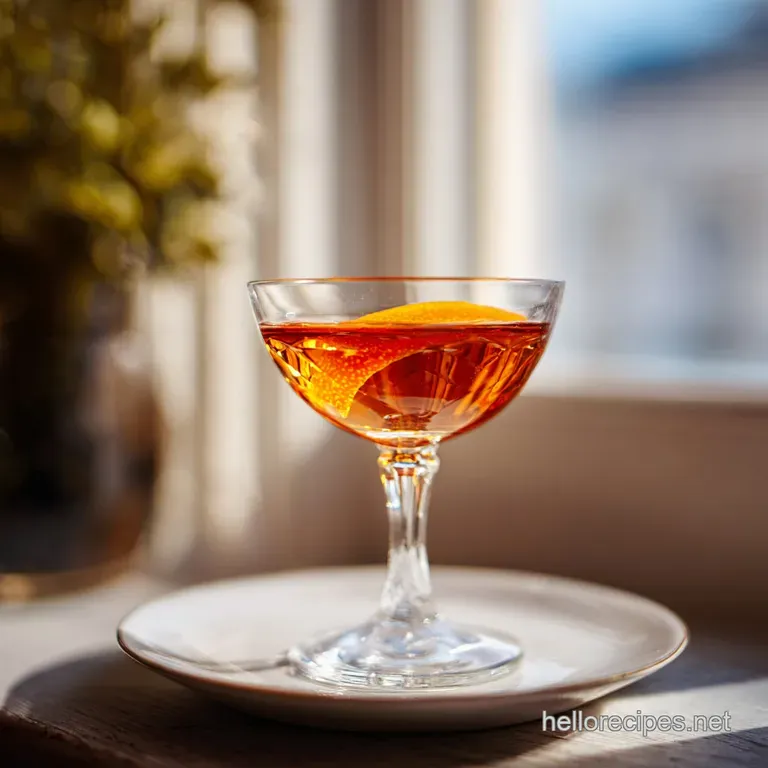
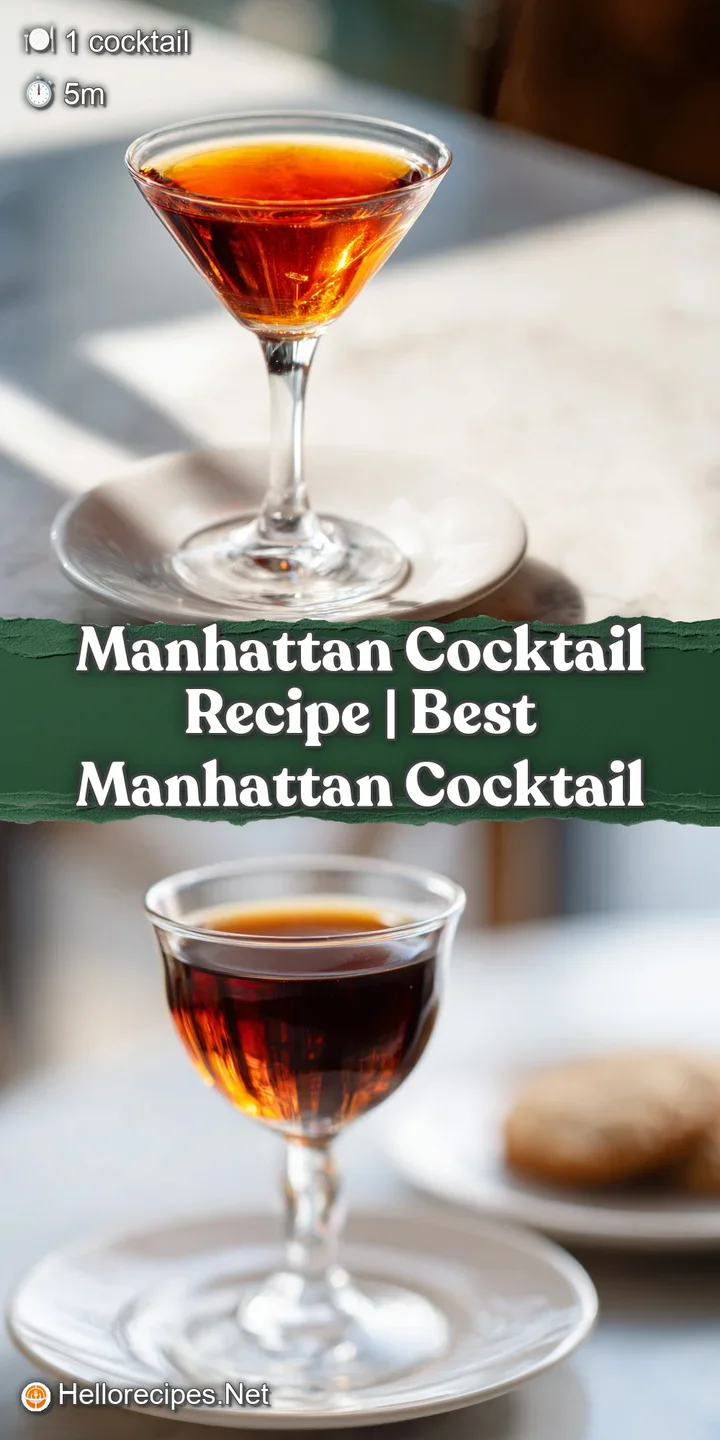
Serving a Manhattan is about the "reveal." When you pull that frosted glass from the freezer and pour the amber liquid, the contrast is visually stunning. The drink should look like liquid topaz.
If you want to take the aroma to the next level, take a small piece of orange peel and "express" it over the surface meaning you squeeze it so the oils mist across the top of the drink. Then, discard the peel and add the cherry.
The first thing your guest will smell is fresh citrus, followed by the deep, spicy whiskey.
For food pairings, don't just think "dinner." A Manhattan is innovative when paired with snacks. Try it with high-quality dark chocolate (70% cocoa) or sharp blue cheese. The high alcohol and acidity of the vermouth cut through the fat of the cheese, while the rye's spice complements the bitterness of the chocolate.
It's a drink that demands you slow down. The way the flavor changes as it slowly warms up in the glass is part of the journey. The first sip is sharp and cold; the last sip is mellow, herbal, and warm.
It’s a perfect loop of flavor that shows why this cocktail has survived for over 150 years without needing a single trend to keep it relevant. Right then, I think you're ready to mix. Just remember: trust the spoon, watch the frost, and always, always keep that vermouth in the fridge.
Recipe FAQs
What is the original Manhattan?
The original Manhattan is a classic mix of rye whiskey, sweet vermouth, and aromatic bitters. While variations exist, this specific spirit forward ratio is the historical standard for achieving the drink's signature peppery depth.
Is the Manhattan Taylor Swift’s favorite cocktail?
No, this is a common misconception. While media speculation often links various drinks to celebrities, her personal preferences are not officially tied to this specific rye-based cocktail.
Is the Manhattan the unhealthiest cocktail?
No, it is not considered particularly unhealthy compared to other options. Because it contains no sugary mixers or syrups, it remains a relatively low-calorie choice at approximately 225 kcal per serving.
What is a perfect Manhattan made of?
A perfect Manhattan consists of 2 oz rye whiskey, 1 oz sweet red vermouth, 2 dashes Angostura bitters, 1 dash orange bitters, and a maraschino cherry. This specific combination balances the spicy whiskey notes with the herbal complexity of the vermouth.
How to ensure the drink has a silky mouthfeel?
Stir the mixture gently with a bar spoon for exactly 30 seconds. This method provides the precise amount of dilution needed to soften the rye's edge while achieving the desired viscosity. If you enjoyed mastering this layered cocktail technique of precision control, the same principle of patience applies to your mixing process here.
How to chill the glass effectively?
Place a coupe or Nick and Nora glass in the freezer for at least 5 minutes before serving. A properly chilled vessel is essential for maintaining the drink's temperature and silky texture from the first sip to the last.
How to prepare the drink in advance?
Batch the rye whiskey, sweet vermouth, and both bitters in a sealed glass bottle. You can store this mixture for up to two weeks, as long as you do not add ice or water until you are ready to serve.
Classic Manhattan Cocktail
Ingredients:
Instructions:
Nutrition Facts:
| Calories | 225 kcal |
|---|---|
| Protein | 0 g |
| Fat | 0 g |
| Carbs | 7 g |
| Fiber | 0 g |
| Sugar | 6 g |
| Sodium | 4 mg |
