Cute New Year Desserts: Clock Topper Cupcakes
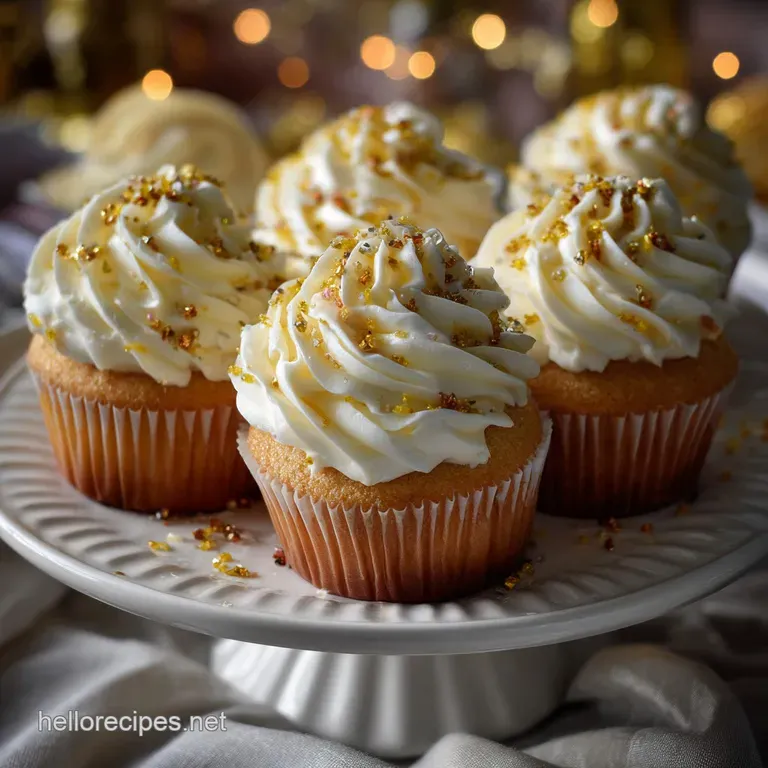
- Effort/Time: Moderate / 50 minutes
- Flavor Hook: Concentrated Brut Champagne and aromatic Vanilla Bean
- Perfect for: Midnight-toasts and New Year's Eve parties
- The Architecture of Celebration: Crafting These Cute New Year Desserts
- Carbonation Chemistry and Moisture Balance: Why This Recipe Succeeds
- Logistics of the Midnight Countdown: Yield and Time Requirements
- The Alchemy of Effervescence: Essential Elements for Festive Success
- Precision Engineering Tools for High-Altitude Festive Baking
- Phase-Based Protocol for Mastering the Midnight Clock Aesthetic
- Structural Integrity and Emulsion Failures: Baker Fixes
- Flavor Architecture: Creative Adaptations for New Year Celebrations
- ⚗️ The Scaling Lab: The Physics of Quantity
- Common Myths
- Preserving Textural Fidelity: Storage and Shelf-Life Guidelines
- Visual Presentation and Pairings for Your Midnight Table
- Recipe FAQs
- 📝 Recipe Card
Nothing kills a party mood faster than serving a $40 bottle of champagne inside a cupcake that tastes like damp cardboard and medicinal extract. I used to think pouring bubbly straight into batter was the trick, but it just resulted in a flat, gummy mess that left my guests politely hiding half eaten cakes behind napkins.
The financial sting of wasted premium wine and the emotional blow of a failed centerpiece taught me that moisture is the enemy of flavor concentration.
I once spent three hours hand piping clocks onto a batch of Cute New Year Desserts only to have the fondant circles melt into the frosting because I didn't understand the hygroscopic nature of sugar.
I was rushing, the kitchen was humid, and by 11:55 PM, my "clocks" looked like Salvador Dalí paintings not exactly the "chic countdown" vibe I was going for. It was a humbling lesson in patience and the chemistry of decorative stabilizers.
The secret to success here isn't a better brand of wine; it's the science of reduction. By simmering the champagne, we trigger evaporation to remove water while concentrating the tartaric acid and sugar, ensuring a velvety crumb that doesn't collapse under its own weight.
This process, combined with the Reverse Creaming Method, coats the flour proteins in fat early to prevent a tough gluten network, yielding a "shattering" soft texture that mimics the bubbles in your glass.
The Architecture of Celebration: Crafting These Cute New Year Desserts
These Cute New Year Desserts are engineered to be the focal point of your holiday spread. We aren't just making "cake"; we are creating a sensory experience that mirrors the crisp, dry profile of a high-quality Brut.
The use of egg whites instead of whole eggs is a deliberate choice to maintain a pale, sophisticated crumb that allows the gold sprinkles to pop.
The "Midnight Clock" topper isn't just a decoration; it’s a functional piece of edible art. By using an edible ink pen on white fondant, you create a sharp, high contrast visual that stands up against the rich buttercream.
This recipe bridges the gap between professional patisserie and home kitchen approachability, focusing on techniques that ensure every bite is as light as air.
Carbonation Chemistry and Moisture Balance: Why This Recipe Succeeds
- Flavor Distillation: Reducing 1.5 cups of champagne to a concentrated syrup intensifies the grape notes while removing excess water that would otherwise over hydrate the flour.
- Acid Induced Tenderness: The sour cream introduces lactic acid, which weakens gluten bonds and results in a more delicate, melt-in-the-mouth sensation.
- Reverse Creaming Barrier: Mixing cubed butter directly into the dry ingredients coats the starch, preventing the baking powder's CO2 from escaping too quickly during the initial rise.
- Albumin Structure: Using only egg whites provides a clean flavor profile and a lighter structural scaffold, ensuring the cupcakes don't feel "eggy" or dense.
Logistics of the Midnight Countdown: Yield and Time Requirements
Planning your New Year's Eve timeline is critical to ensure the frosting doesn't weep and the decorations stay crisp.
- Yield: 12 servings
- Prep Time: 30 minutes
- Cook Time: 20 minutes
- Total Time: 50 minutes (plus cooling)
The Alchemy of Effervescence: Essential Elements for Festive Success
Selecting the right components for your Cute New Year Desserts is the difference between a grocery store taste and a masterclass finish.
| Ingredient | Chemical/Physical Role (Science) | The Pro Secret (Why This Matters) |
|---|---|---|
| Brut Champagne | Acidic flavor concentrate and pH adjuster | Low sugar content prevents the cake from becoming cloying or browning too fast. |
| Unsalted Butter | Fat-in-water emulsion and gluten inhibitor | Cubed, room temperature butter (65°F) ensures even distribution during reverse creaming. |
| Sour Cream | Fat source and protein tenderizer | The high fat content (approx. 18 20%) adds a creamy mouthfeel that milk cannot replicate. |
| Vanilla Bean Paste | Aromatic compound delivery | Contains real seeds for visual "specks" and a more complex vanillin profile than extract. |
Essential Ingredients and Smart Substitutions
- 1.5 cups (355ml) Brut Champagne: Why this? Brut provides the necessary acidity without excess residual sugar that burns.
- Substitute: Dry Sparkling Cider (Full sugar, but keeps the festive fizz).
- 1.5 cups (190g) All-Purpose Flour: Why this? Provides the protein structure required to hold the champagne reduction.
- Substitute: Cake Flour (Results in an even softer, finer crumb).
- 1 tsp (5ml) Vanilla Bean Paste:
- Substitute: Vanilla Extract (Same flavor, but loses the premium visual seeds).
- 2 large Egg Whites: Why this? Provides structure via albumin without the yellow tint of yolks.
- Substitute: Aquafaba (3 tbsp per egg white; keeps it light but slightly more "nutty").
- 0.25 cup (60ml) Sour Cream:
- Substitute: Full fat Greek Yogurt (Same acidity, slightly less fat-rich mouthfeel).
- 3 cups (360g) Powdered Sugar:
- Substitute: Organic Powdered Sugar (Note: Slightly grittier texture due to tapioca starch).
- 12 White Fondant Circles:
- Substitute: Large White Marshmallows (Flattened; adds a soft, chewy texture instead of firm sugar).
Precision Engineering Tools for High Altitude Festive Baking
- KitchenAid Stand Mixer: Necessary for achieving the aeration required for the "Midnight Clock" buttercream.
- All-Clad 1 Quart Saucepan: A heavy bottomed pan ensures the champagne reduction doesn't scorch or evaporate unevenly.
- USA Pan 12 Cup Muffin Tin: The aluminized steel provides superior heat distribution for a consistent rise across all 12 cupcakes.
- Taylor Digital Kitchen Scale: Precision is non-negotiable for flour and sugar measurements to avoid a dry or sunken cake.
- Wilton 1M Piping Tip: Creates the classic, high volume swirl needed to support the fondant clock.
Phase Based Protocol for Mastering the Midnight Clock Aesthetic
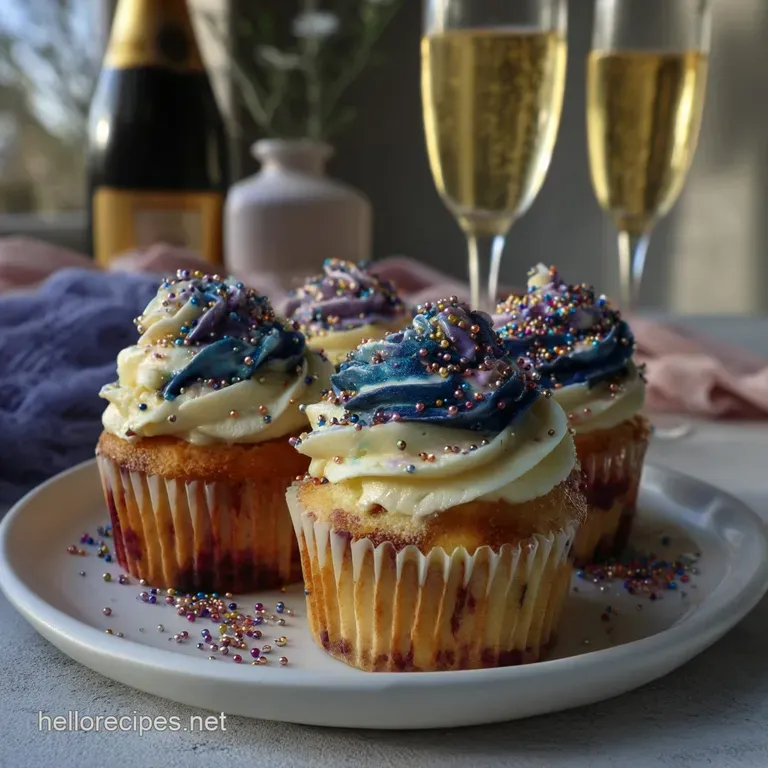
Phase 1: The Flavor Concentration
- Pour the 1.5 cups Brut Champagne into a saucepan.
- Simmer over medium heat for 12 minutes until liquid reduces to exactly 1/2 cup, appearing slightly syrupy.
- Cool the reduction to room temperature until it no longer releases steam when stirred.
Phase 2: Mixing the Festive Batter
- Whisk 1.5 cups flour, 1 cup sugar, 1.5 tsp baking powder, and 0.5 tsp salt in your KitchenAid bowl until fully aerated and no lumps remain.
- Add 0.5 cup cubed butter to the dry mix.
- Beat on low speed for 2 minutes until the texture resembles fine, sandy breadcrumbs. Note: This is the reverse creaming method coating the flour in fat.
- Incorporate the egg whites, sour cream, and vanilla bean paste.
- Stream in 1/4 cup of the cooled champagne reduction.
- Mix for 1 minute until the batter is pale, glossy, and smooth.
Phase 3: The Thermal Transformation
- Scoop batter into the muffin tin, filling each cavity 2/3 full.
- Bake at 350°F (175°C) for 18 20 minutes until the tops spring back when touched and a toothpick emerges clean.
- Cool in the pan for 5 minutes until the edges shrink slightly from the sides, then move to a wire rack.
Phase 4: Decorating the Cute New Year Desserts
- Cream 1 cup softened butter for 3 minutes until pale and voluminous.
- Sift in 3 cups powdered sugar gradually.
- Add 2 tbsp of the remaining champagne reduction.
- Whip on high for 2 minutes until the frosting is velvety and holds a stiff peak.
- Draw clock faces (hands at 12:00) on the fondant circles using the black edible ink pen.
- Pipe frosting onto cooled cakes, dust with gold sprinkles, and press a clock topper into the center.
Structural Integrity and Emulsion Failures: Baker Fixes
Why Your Cupcakes Sinking in the Middle
When the center of your Cute New Year Desserts collapses, it’s usually a failure of the protein scaffold. This happens if the champagne reduction was still too warm when added, causing the baking powder to react prematurely in the bowl rather than the oven.
| Problem | Root Cause | The Fix | Pro Protocol |
|---|---|---|---|
| Sunken Centers | Over beating after adding liquids | Stop mixing the moment streaks disappear | Check oven temp with a separate thermometer |
| Grainy Frosting | Powdered sugar wasn't sifted | Sift sugar twice through a fine mesh sieve | Use a paddle attachment, not a whisk, for the final 2 mins |
| Fondant Melting | Frosting was too "wet" from excess reduction | Add 1/4 cup more sugar to stiffen the base | Chill cupcakes for 10 mins before adding fondant |
Flavor Architecture: Creative Adaptations for New Year Celebrations
If you want to branch out from the traditional Brut profile, these variations maintain the festive spirit while shifting the flavor palette. If you’re hosting a whole spread, these Cute New Year Desserts pair beautifully with a savory balance like the one found in our How to Make recipe for a DIY charcuterie board.
Non-Alcoholic Festive Twist
- The Swap: Replace the champagne with a dry sparkling white grape juice.
- The Science: Sparkling juice has a higher sugar content than Brut. Reduce the granulated sugar in the batter by 2 tablespoons to prevent an over sweet, sticky crumb.
Pink Champagne & Raspberry
- The Swap: Use Rosé Champagne and add 1/4 tsp of raspberry extract.
- The Result: A soft blush hue in the crumb that looks stunning under the gold sprinkles.
gluten-free Variation
- The Swap: Use a 1:1 gluten-free Flour blend (like King Arthur).
- The Physics: GF flours require more hydration. Let the batter rest for 10 minutes before baking to allow the rice flours to fully hydrate, preventing a "gritty" texture in your Year Desserts.
⚗️ The Scaling Lab: The Physics of Quantity
When doubling this recipe to serve 24 guests, standard math doesn't always apply to the thermodynamics of your oven.
- The Evaporation Paradox: If you double the champagne to 3 cups, do not use the same small saucepan. The surface area must increase (use a wide skillet) or the reduction will take 25+ minutes, potentially scorching the sugars and creating a bitter "cooked wine" taste.
- Thermal Mass Recovery: Placing two muffin tins in the oven simultaneously drops the internal temperature by roughly 30°F. Pro Protocol: Rotate the pans halfway through the bake and extend the timer by 3 4 minutes to ensure the centers reach the required 205°F (96°C) internal temperature.
- Flavor Saturation: Scale the vanilla bean paste to 1.5x instead of 2x. Vanilla is an aromatic that can become cloying and "perfumey" when over concentrated in larger batches of Cute New Year Desserts.
Common Myths
- Myth: You must use expensive vintage champagne for baking.
Truth: The nuanced notes of a $200 bottle are lost during the 350°F baking process. A mid-tier $15 20 Brut provides the necessary acidity and "sparkling" flavor profile perfectly.
Myth: Sifting powdered sugar is optional.
- Truth: Powdered sugar is highly hygroscopic and clumps in the bag. Without sifting, you'll have tiny "sugar bombs" in your buttercream that ruin the velvety mouthfeel.
Preserving Textural Fidelity: Storage and Shelf Life Guidelines
- Fridge: Store decorated cupcakes in an airtight container for up to 3 days. Note: Fondant clocks may soften due to fridge humidity. For best results, add the toppers just before serving.
- Freeze: You can freeze the unfrosted cupcakes for up to 2 months. Wrap them individually in plastic wrap, then place in a heavy duty freezer bag.
- Reheat: Thaw at room temperature for 1 hour. Do not microwave, as this will destroy the delicate crumb structure and melt the buttercream.
💡 ZERO WASTE PHILOSOPHY Don't discard the leftover champagne from the bottle! Transform: Simmer the remaining wine with an equal part sugar to create a champagne simple syrup.
Science: The alcohol acts as a preservative, while the sugar creates a stable syrup perfect for glazing fruit or sweetening New Year's Day brunch cocktails.
Visual Presentation and Pairings for Your Midnight Table
To truly showcase your Cute New Year Desserts, stage them on a multi tiered gold stand to mimic the rising bubbles in a flute. For a classic contrast to these festive cakes, you might also consider serving a denser, creamier option like our Silky Smooth New recipe for guests who prefer a New York style finish.
Arrange the cupcakes in a circle around a central bottle of bubbly. The high contrast black and white of the "clocks" against the shimmering gold sprinkles creates a sophisticated visual that feels both modern and nostalgic.
These New Year Desserts: Fun and Festive Ideas are the ultimate way to ring in the calendar change with a bite that’s as light and hopeful as the year ahead. Use these fun and festive ideas to ensure your party is remembered long after the clock strikes twelve!
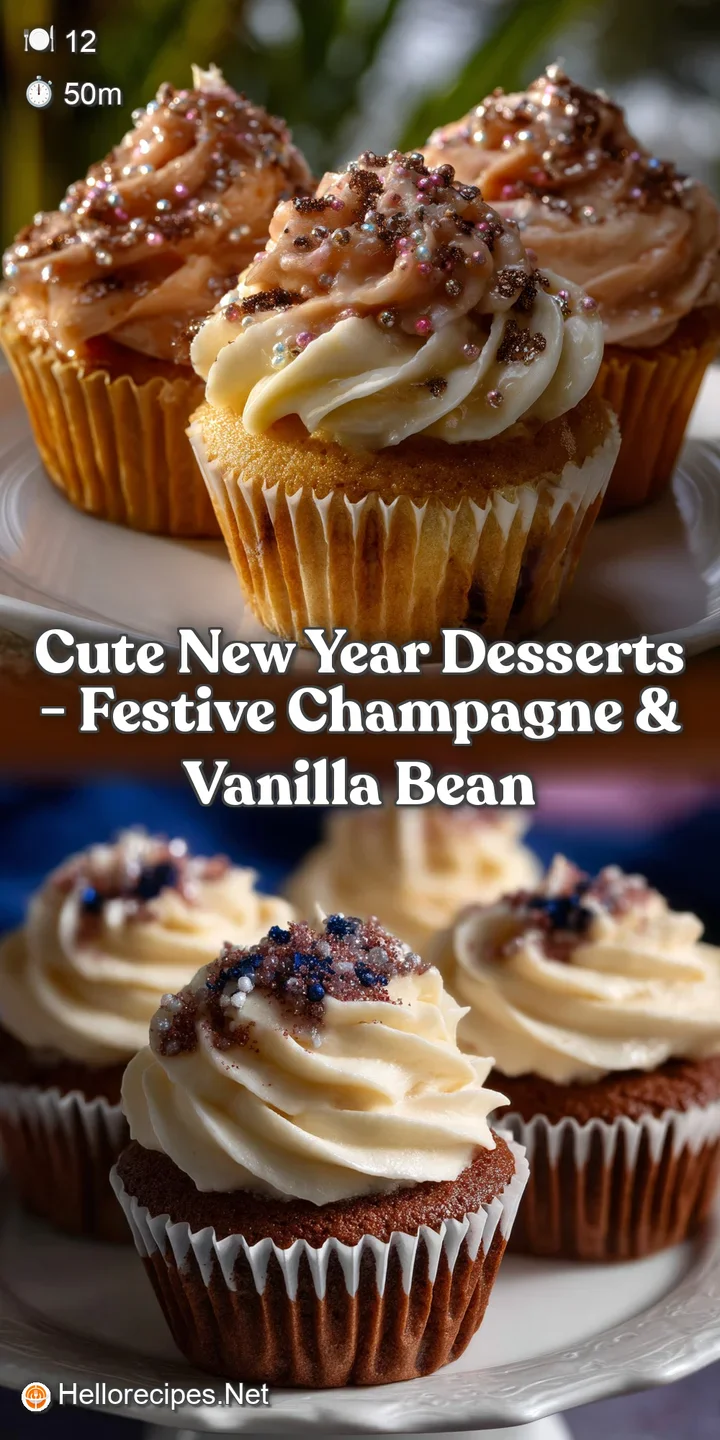
Recipe FAQs
Can I skip reducing the champagne and add it straight to the batter?
No. Excess liquid prevents proper crumb structure and causes gumminess. Alcohol adds significant moisture, and without evaporation, the starches become over hydrated leading to structural collapse upon cooling.
What is the critical temperature for the cubed butter in the Reverse Creaming Method?
Approximately 65°F (18°C) ensures optimal particle coating. If the butter is too cold, it won't coat the flour proteins effectively, leading to a tougher final texture. If the butter is too warm, it incorporates too quickly, defeating the purpose of the reverse creaming technique.
- Use the "finger dent" test
- Avoid microwaving cubes
- Let sit for 20 minutes on counter
Should I use salted or unsalted butter for the Champagne reduction buttercream?
Unsalted butter for precision control. Salted brands vary wildly in sodium content, making it impossible to standardize the sweetness balance against the tartness of the champagne reduction. Unsalted allows accurate measurement of added salt or reliance on the sugar content alone.
Is it better to use vanilla extract instead of the specified vanilla bean paste?
Vanilla bean paste for superior aesthetic and depth. Extract contains alcohol, which can slightly inhibit the necessary fat-protein coating during the reverse creaming phase. If you enjoyed mastering the delicate emulsion here, the same focus on ingredient integrity is vital when making our Festive Finger Food for New Years: Crispy Truffle Bites.
Why do my fondant clock toppers sometimes melt or bleed color?
Myth: High humidity is the only cause of fondant bleeding. Reality: The primary culprit is un-stabilized buttercream, often due to adding the champagne reduction while still warm, which softens the fat matrix.
How does using only egg whites affect the final texture of these Cute New Year Desserts?
Egg whites provide loft without density. Yolks introduce fat and lecithin, which create a denser, richer cake structure similar to a pound cake. By excluding yolks, we achieve a whiter, lighter crumb perfect for this champagne flavor profile.
What is the main benefit of using sour cream over regular milk in the batter?
Sour cream adds critical lactic acid for tenderness. The slight acidity in the sour cream acts as a tenderizer by gently weakening gluten strands as they form, resulting in a softer crumb than standard whole milk would provide.
Champagne Clock Cupcakes
Ingredients:
Instructions:
Nutrition Facts:
| Calories | 521 kcal |
|---|---|
| Protein | 2.3 g |
| Fat | 24 g |
| Carbs | 68 g |
| Fiber | 0.4 g |
| Sugar | 56 g |
| Sodium | 155 mg |
