Easy Broiled Lobster Tails for Quick | Ultra-Fast Steakhouse Finish

- Effort/Time: Low-effort prep / 23 minutes total
- Flavor Hook: Smoked-paprika-infused garlic butter with a citrus-bright finish
- Perfect for: High-stakes date nights, celebratory anniversaries, or a luxe-level weeknight reward
- Master the Ultimate Easy Broiled Lobster Tails for Quick
- Thermal Precision and The Science of Rapid Protein Denaturation
- Critical Time and Temperature Protocols for Crustacean Mastery
- The Alchemy of Umami: Selecting Elements for Peak Flavor
- Essential Culinary Arsenal for over High heat Precision Broiling
- The Systematic Butterfly Technique and over High heat Execution
- Why Your Shellfish Turns Rubbery: Pro Performance Fixes
- Flavor Architecture and Dairy-Free Modification Strategies
- ⚗️ The Scaling Lab
- Storage & Zero-Waste Shell Utilization
- Optimal Pairing Logic for This Quick Seafood Dinner
- Recipe FAQs
- 📝 Recipe Card
Master the Ultimate Easy Broiled Lobster Tails for Quick
There is nothing quite as soul crushing as dropping eighty dollars on premium cold water lobster only to pull a tray of shriveled, rubbery "ocean erasers" out of the oven. I’ve been there staring at a gray, tough mess that cost more than my weekly grocery budget because I didn’t understand the physics of over high heat protein denaturation.
If the heat is too low, the lobster steams in its own juices, losing that signature "snap"; if the heat is too high for too long, the delicate fibers tighten into a knot of disappointment.
Early in my cooking journey, I tried to bake lobster tails at a "safe" 350°F, thinking slow and steady would preserve the moisture. I ended up with a mushy, water logged texture that lacked any depth of flavor. It was a humble reminder that some proteins demand aggression.
High intensity broiling is the only way to achieve that mahogany charred edge while keeping the center velvety and translucent.
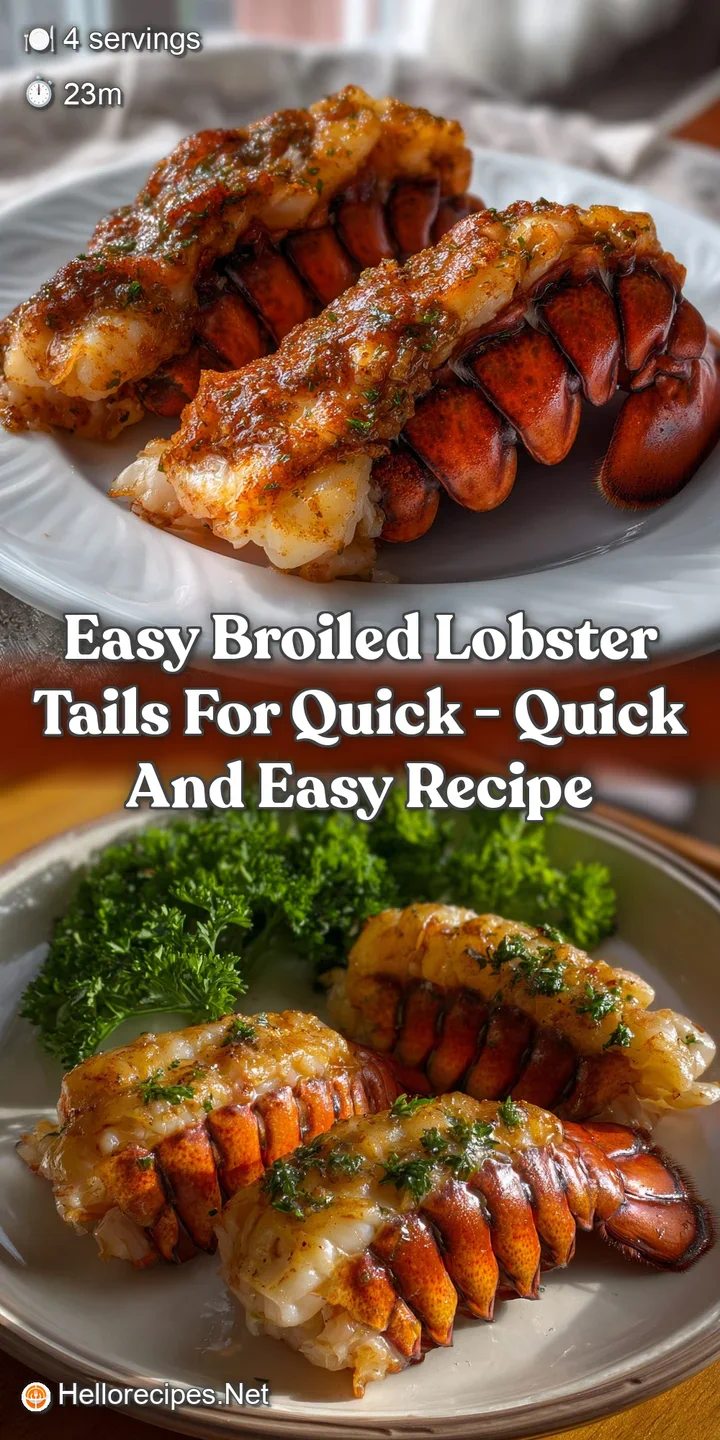
The secret to this Easy Broiled Lobster Tails for Quick success lies in the "Piggyback" technique. By elevating the meat onto the top of the shell, we create a literal heat shield. The bottom of the shell protects the underside from overcooking, while the top receives direct infrared radiation.
This creates a specific thermal gradient that ensures the meat reaches 140°F (60°C) just as the butter basted surface begins to sizzle and bronze.
Thermal Precision and The Science of Rapid Protein Denaturation
- Infrared Heat Transfer: Broiling uses electromagnetic waves to cook the surface instantly, triggering the Maillard reaction between the lobster proteins and the sugars in the lemon juice.
- Thermal Mass Protection: The chitinous shell acts as an insulator, slowing the conduction of heat to the bottom of the meat, which prevents the "rubber band" effect of over tightened muscle fibers.
- Capillary Action Basting: As the butter melts, it seeps into the crevices of the "butterflied" meat, creating a fat-based seal that prevents moisture evaporation during the 8 minute cook time.
- Acidic Surface Tenderization: The lemon juice in the baste slightly breaks down surface proteins before they hit the heat, ensuring the first bite has a "shattering" tenderness rather than a fibrous chew.
Critical Time and Temperature Protocols for Crustacean Mastery
The success of Easy Broiled Lobster Tails for Quick depends on your broiler’s ability to maintain a consistent 500°F+ output. Most home ovens fluctuate, so positioning is everything. You aren't just "cooking" the lobster; you are managing a high energy thermal event.
| Stage | Action | Duration | Target Outcome |
|---|---|---|---|
| Preparation | Butterfly & De-vein | 15 minutes | Meat elevated, shell cleaned, surface dry |
| Initial Sear | Direct Broil (Top Rack) | 5 minutes | Butter bubbling, meat turning opaque white |
| Final Glaze | Baste & Finish | 3 minutes | Edges mahogany, center reaching 140°F |
| Resting | Foil Tent | 2 minutes | Carryover heat finishes the core without drying |
The Alchemy of Umami: Selecting Elements for Peak Flavor
Selecting the right components for your Easy Broiled Lobster Tails for Quick is a lesson in chemical compatibility. Using unsalted butter allows you to control the osmotic pressure on the meat adding too much salt too early can actually draw moisture out of the lobster, leaving it dry.
We use Diamond Crystal Kosher Salt for its hollow flake structure, which adheres better to the curved surfaces of the meat.
Ingredient Chemistry Breakdown
| Ingredient | Chemical/Physical Role (Science) | The Pro Secret (Why This Matters) |
|---|---|---|
| Cold Water Lobster | High density collagen/protein ratio | Stays firm and sweet; warm water tails often turn mushy when broiled |
| Unsalted Butter | Lipophilic flavor carrier | Fat captures the volatile aromatics of garlic and paprika for longer tongue coating |
| Smoked Paprika | Phenolic compound contribution | Provides a "grilled" aroma without the need for an outdoor charcoal setup |
| Lemon Juice | Protease activation and pH balance | Cuts through the heavy butter fat to brighten the sweet lobster sugars |
- 4 cold water lobster tails (approx. 5.5 oz each): Why this? Cold water tails have slower growth, resulting in denser, sweeter, and cleaner tasting meat.
- 4 tbsp unsalted butter, melted: Why this? Provides the fat necessary for the Maillard reaction and prevents protein desiccation.
- 2 cloves garlic, minced finely: Why this? Releases sulfur compounds that create deep savory notes when hitting high heat.
- 1 tbsp fresh lemon juice: Why this? Acid balances the richness and assists in "shattering" the surface protein structure.
- 1 tsp smoked paprika: Why this? Adds color and a subtle wood fired depth that complements the sweetness.
- 1/2 tsp sea salt: Standard flavor enhancer.
- 1/4 tsp freshly cracked black pepper: Provides a sharp, floral heat.
- 1 tsp dried parsley: Concentrated herb notes for the butter base.
- Fresh parsley, chopped for garnish: For a final hit of chlorophyll and visual contrast.
Essential Culinary Arsenal for over High heat Precision Broiling
To execute Easy Broiled Lobster Tails for Quick, you need tools that can handle rapid temperature spikes. I always use my Wüsthof Kitchen Shears because they offer the leverage needed to cut through the calcified shell without crushing the delicate meat underneath.
For the cooking vessel, a Lodge Cast Iron Baking Pan or a heavy duty rimmed baking sheet is non-negotiable. Thin pans will warp under the broiler, causing the butter to pool in the corners rather than staying under your lobster.
The thermal mass of cast iron also helps cook the bottom of the shell, ensuring no raw spots remain at the base of the tail.
Chef's Tip: Grate your garlic using a Microplane Zester instead of chopping it. This creates a garlic paste that emulsifies perfectly into the butter, ensuring you don't get burnt, bitter chunks of garlic on your beautiful lobster.
The Systematic Butterfly Technique and over High heat Execution

Follow these steps with surgical precision to ensure your Easy Broiled Lobster Tails for Quick turn out perfectly. If you are serving this alongside a Bacon and Pea Pasta recipe, time your pasta to finish exactly as the lobster begins its 2 minute rest.
- Dry the shells. Use a paper towel to remove all surface moisture from the lobster to ensure the butter adheres rather than sliding off.
- Cut the upper shell. Using Wüsthof Kitchen Shears, snip down the center of the top shell toward the fin, stopping just before the tail fan. Note: This creates the "hinge" for the piggyback.
- Separate the meat. Use a spoon to gently pry the meat away from the sides of the shell, keeping the back end attached to the fin.
- Elevate the meat. Lift the meat through the slit and rest it on top of the closed shell halves. Note: This is the "Piggyback" position that protects the meat from the pan's direct heat.
- Remove the vein. Check for the dark intestinal tract and pull it out with tweezers or a knife tip.
- Whisk the baste. Combine melted butter, garlic, lemon juice, smoked paprika, salt, pepper, and dried parsley in a small bowl.
- Apply the first coat. Brush the meat generously for 1 minute until every crevice is filled with the orange tinted butter mixture.
- Position the oven rack. Move the rack to the top position, roughly 4 5 inches from the broiler element.
- Broil the tails. Slide the pan in for 8 minutes until the meat is opaque, the shell is bright red, and the butter is sizzling and slightly browned.
- Garnish and rest. Remove from heat, sprinkle with fresh parsley, and let sit for 2 minutes until the internal temperature reaches 140°F and the juices settle.
Why Your Shellfish Turns Rubbery: Pro Performance Fixes
One of the most common issues with this recipe is the "Tough Tail Syndrome." This usually happens because of a misunderstanding of carryover cooking. Lobster is highly sensitive to heat; the transition from "tender" to "eraser like" happens in a window of about 45 seconds.
Troubleshooting the Broil
| Problem | Root Cause | The Fix | Pro Protocol |
|---|---|---|---|
| Rubbery/Tough Meat | Internal temp exceeded 150°F | Pull at 135 140°F | Use an instant read thermometer for every tail |
| Meat Sticks to Shell | Membrane wasn't loosened | Use a spoon to fully detach | Slide a butter knife under the meat before broiling |
| Burnt Garlic/Bitter | Garlic pieces too large | Use a Microplane for a paste | Emulsify garlic into the butter thoroughly |
| Mushy Texture | Used warm water lobster | Switch to cold water tails | Always check the origin label at the fish counter |
Why Your Lobster is Opaque but Cold in the Center
This is a classic case of thermal lag. If you take the tails straight from a 35°F fridge to a 500°F broiler, the outside will overcook before the center loses its chill. The Science: Heat moves through protein via conduction.
The Fix: Let the tails sit at room temperature for 15 minutes before broiling. This narrows the temperature gap and ensures a uniform "snap" throughout the meat.
Flavor Architecture and dairy-free Modification Strategies
While the classic garlic butter profile is unbeatable for Easy Broiled Lobster Tails for Quick, you can adapt the aromatics to suit different menus. If you’re looking for a hearty side, this lobster pairs beautifully with a Cheesy Scalloped Potatoes recipe for a "surf and turf" vibe without the steak.
| Original Ingredient | Substitute | Why It Works |
|---|---|---|
| Unsalted Butter | Ghee (Clarified Butter) | Higher smoke point; eliminates milk solids that can burn under the broiler. |
| Smoked Paprika | Cayenne Pepper | Adds a sharp capsaicin kick for those who prefer heat over smoke. |
| Lemon Juice | Lime Juice | Provides a sharper, more tropical acidity; great for "Quick Seafood Dinner Recipes". |
| Dried Parsley | Dried Cilantro | Shifts the flavor profile toward a coastal Mexican style. |
Flavor Twists
- The Truffle Infusion: Swap half the butter for truffle butter and finish with a dusting of Parmigiano Reggiano.
- The Cajun Snap: Replace paprika and salt with a heavy dusting of Cajun seasoning for a New Orleans inspired for Quick Seafood Dinner.
⚗️ The Scaling Lab
When doubling this Easy Broiled Lobster Tails for Quick recipe for a dinner party, the thermodynamics of your oven change significantly.
- The Evaporation Paradox: If you double the butter/lemon sauce in the same small bowl, the garlic will not "cook" as evenly. Keep the sauce volume per batch consistent to ensure the garlic mellows.
- Pan Crowding (Maillard Killer): Putting 8 tails on one tray will drop the ambient temperature of your broiler zone. The tails will release steam, and instead of a sizzle, you’ll get a "poach." Mandatory instruction: Cook in batches of 4, or use two separate racks and swap them halfway through.
- Thermal Mass Recovery: After pulling the first batch, let the broiler reheat for 3 minutes before sliding the second batch in. This ensures the infrared element is back at peak intensity.
- Carry Over Cooking: When doubling the batch, the tails in the center of the pan will hold more heat than the ones on the edges. Pull the center tails 2°F earlier than the edge tails to account for the increased thermal mass in the middle of the tray.
Storage & Zero Waste Shell Utilization
Lobster is best enjoyed the second it leaves the broiler, but life happens. If you have leftovers, the key is preventing further protein denaturation during reheating.
- Fridge: Store in an airtight container for up to 2 days.
- Reheating: Avoid the microwave at all costs it will turn the meat into rubber. Instead, place tails in a pan with a splash of water and a knob of butter. Cover and steam on low heat for 3 4 minutes until just warm.
- Freezing: You can freeze cooked lobster meat for up to 1 month, though the texture will soften. Thaw overnight in the fridge.
💡 ZERO WASTE PHILOSOPHY
Don't discard the shells! Transform: Simmer the empty shells in 2 cups of water with a stalk of celery and half an onion for 30 minutes to create a concentrated lobster stock.
Science: The shells contain high levels of chitin and trapped proteins that release deep umami and "ocean" flavors when simmered, perfect for a future risotto or bisque.
Optimal Pairing Logic for This Quick Seafood Dinner
To round out your Easy Broiled Lobster Tails for Quick, focus on textures that contrast the "snap" of the meat. A crisp green salad with a champagne vinaigrette provides the necessary acid to cleanse the palate between butter rich bites.
If you want to keep the meal "for Quick" and efficient, a simple bed of jasmine rice or a quick pasta toss works wonders. The leftover garlic butter from the pan is essentially liquid gold; drizzle it over your side dish to tie the whole plate together. For a truly indulgent experience, serving these tails alongside a Baked Tortellini Tomato recipe creates a decadent, multi textural feast that feels like a five star Mediterranean retreat right in your dining room.
Myth: You must boil lobster before broiling to ensure it's cooked through. Truth: Boiling first often leads to overcooked, water logged meat. Direct broiling from raw is faster and preserves the natural sugars and briny juices within the muscle fibers.
Myth: Frozen lobster is always inferior to fresh. Truth: Most "fresh" lobster at the grocery store was previously frozen anyway. "Flash frozen at sea" (FAS) lobster often has better cell structure integrity than "fresh" tails that have been sitting in a display case for three days.
This Easy Broiled Lobster Tails for Quick recipe proves that luxury doesn't require hours of labor just a bit of scientific understanding and a very hot oven. Enjoy the sizzle!
Recipe FAQs
How long should I broil the lobster tails exactly?
8 minutes total under high heat. High intensity infrared heat requires precise timing to initiate surface caramelization without denaturing the interior proteins.
- Use the top rack position
- Baste thoroughly after 5 minutes
- Pull at 140°F internal
Can I use salted butter instead of unsalted?
Salted butter impacts sodium standardization. Salted brands vary widely in sodium content (often 80-200mg per tablespoon), making precise flavor control difficult when seasoning meat directly.
Unsalted butter provides a neutral fat base, allowing you to carefully control the final salinity based on the lobster's inherent sweetness.
Does the "Piggyback" method actually prevent the bottom from overcooking?
Yes, the shell acts as an insulator. Lifting the meat onto the shell uses the chitinous structure to block the direct conductive heat transfer from the hot metal pan, which would otherwise cause the lower fibers to seize prematurely.
- Use a heavy cast iron pan
- Elevate meat high on the shell hinge
- Ensure the pan is preheated under the broiler
What is the best way to ensure the garlic doesn't burn on top?
Mince garlic into a fine paste before mixing. Large pieces of garlic will char rapidly under the broiler element, imparting a harsh, bitter flavor to the otherwise sweet butter sauce. If you mastered controlling particle size in other recipes, see how the same principle of surface area-to-heat exposure applies when making our Homemade Stuffing: The Classic Stuffing Recipe for a Moist Interior.
Is it safe to let the raw tails sit out before cooking?
Let tails rest at room temp for 15 minutes. This practice minimizes thermal shock, allowing the interior muscle fibers to warm slightly before high heat is applied. This ensures more uniform heat penetration, preventing the exterior from overcooking while waiting for the core temperature to rise.
Myth: I should finish the lobster in the oven after broiling.
Myth: Finishing in a lower temp oven prevents toughness. Correction: The carryover heat after removal is sufficient for the final few degrees of cooking.
Transferring to a lower heat source interrupts the desired sear, causing steam release and resulting in a softer, less "snappy" final texture.
What acidic component pairs best with the rich butter base?
Fresh lemon juice provides optimal brightness. The mild acid in lemon cuts through the high fat content of the butter, balancing the richness on the palate while preventing the flavor from feeling too heavy. For a sweeter, tart counterpoint that uses a similar acid balancing technique, try serving this dish alongside our Vintage Fresh Cranberry Orange Relish: Easy 10-Minute No-Cook Classic.
Broiled Lobster Tails Fast
Ingredients:
Instructions:
Nutrition Facts:
| Calories | 244 calories |
|---|---|
| Protein | 29.8 g |
| Fat | 12.4 g |
| Carbs | 1.2 g |
| Fiber | 0.2 g |
| Sugar | 0.3 g |
| Sodium | 495 mg |
