Tuna Salad: Velvety and Crisp
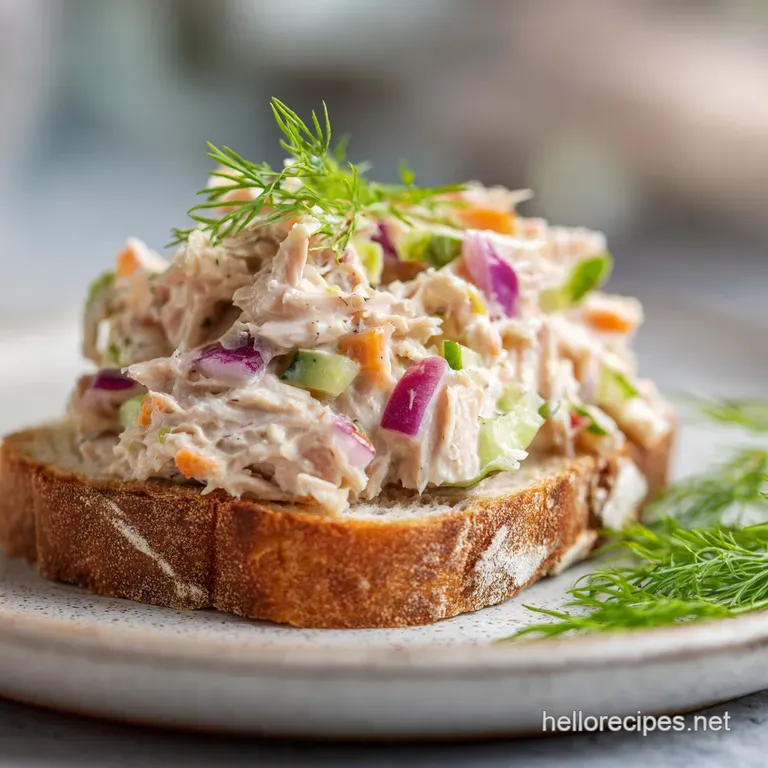
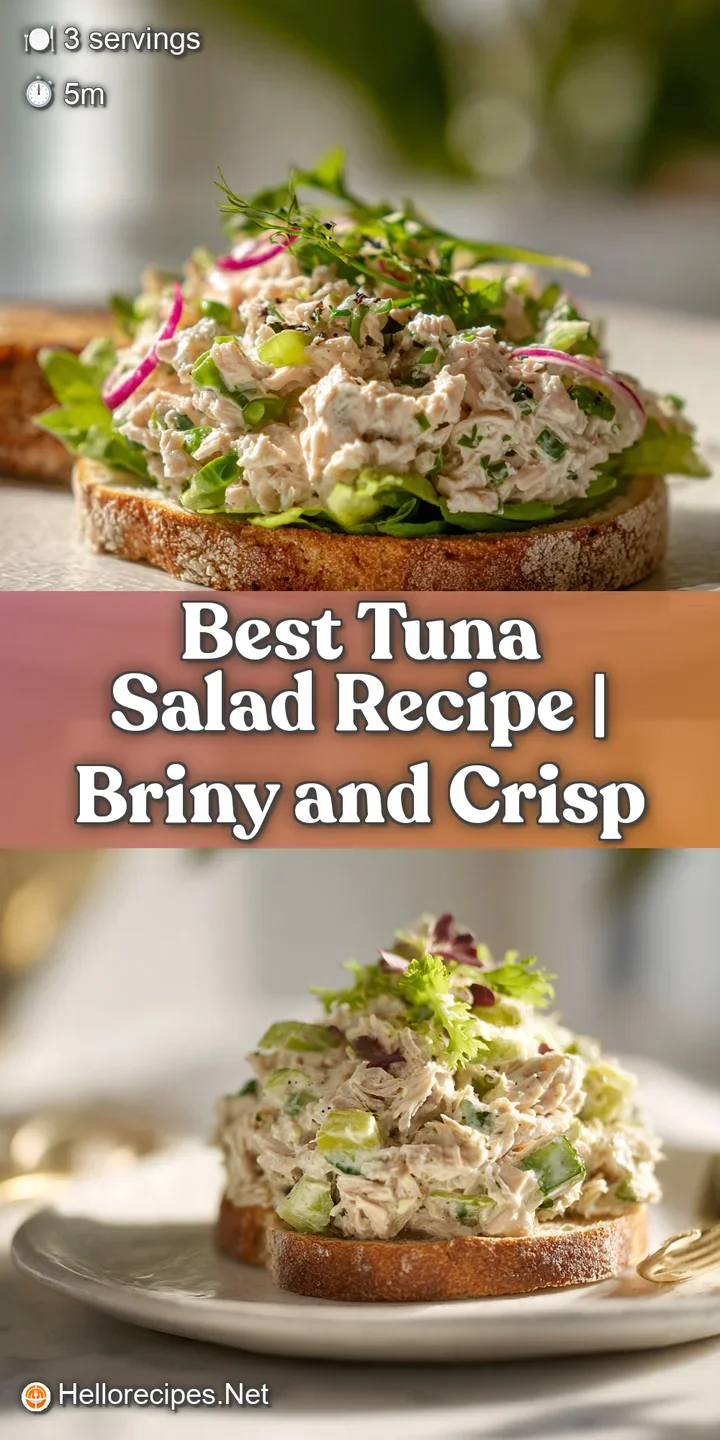
- Time: Active 5 minutes, Passive 0 minutes, Total 5 minutes
- Flavor/Texture Hook: Briny, velvety, and exceptionally crisp
- Perfect for: High efficiency meal prep or a sophisticated weekday lunch
- How to Build a Better Tuna Salad
- Reasons to Love This Tuna Salad
- Vital Metrics and Recipe Specs
- Elements for Building Better Flavor
- Tools for Precise Salad Texture
- Instructions for a Better Result
- Solving Texture and Flavor Problems
- Scaling This Recipe Up or Down
- Variations for Different Flavor Profiles
- Smart Storage and Prep Ideas
- Best Sides for This Dish
- Common Culinary Myths
- Tuna Salad FAQs
- 📝 Recipe Card
How to Build a Better Tuna Salad
The click hiss of the tin lid breaking is a sound every home cook knows, but it’s the briny, sharp aroma that follows which sets the stage. I used to think this dish was just a way to use up old cans in the back of the pantry until I realized the sheer potential of texturing.
Most versions suffer from being a one note, mushy pile of gray protein, but we’re changing the technology behind your lunch.
We've all been there: you open a plastic container at noon only to find a watery mess that’s soaked through your bread. It’s frustrating and honestly, quite uninspiring.
After experimenting with dozens of ratios and vegetable cuts, I found that the secret isn't just about what you add, but how you treat the protein before the dressing even touches it.
This isn't about hiding the fish; it’s about highlighting the sustainable quality of wild caught Albacore with innovative flavor pairings. We’re going to layer crunch against creaminess and sharp acidity against rich fats.
By the time you’re done, you’ll have a mix that feels intentional, structured, and vibrant. Let's get into the mechanics of why this works.
Reasons to Love This Tuna Salad
The Lipid Acid Equilibrium: high-quality mayonnaise provides a velvety fat base that is immediately cut by the sharp lemon juice and Dijon mustard, preventing the palate from feeling coated or heavy.
Structural Rigidity: By dicing the celery and red onion to a precise size, we create a consistent "shatter" in every bite that contrasts with the flaky, tender protein.
Osmotic Control: Mincing the pickles and adding them last ensures their juices don't weep into the dressing, maintaining the integrity of the emulsion.
| Method | Time | Texture | Best For |
|---|---|---|---|
| Hand Flaked | 5 minutes | Meaty, large chunks | Open faced tartines |
| Fork Mashed | 3 minutes | Flaky, consistent | Classic sandwiches |
| Food Processor | 1 minute | Smooth, spreadable | Dip for crudités |
Choosing the right method depends entirely on how you plan to serve it. For a sandwich, the fork mashed approach allows the tuna to bind better with the other elements, whereas a hand flaked version feels more like a gourmet salad you'd find in a coastal bistro.
Vital Metrics and Recipe Specs
To achieve the best results, we need to focus on a few precision checkpoints. First, the temperature of your ingredients matters; keeping everything chilled prevents the mayonnaise from breaking. Second, the weight of the tuna after draining is a critical metric.
Chef's Tip: Use a small fine mesh sieve to press the tuna. If you leave even a tablespoon of canning liquid behind, it will dilute the Dijon and lemon, turning your velvety dressing into a watery soup.
| Fresh vs. Shortcut | Preparation | Texture | Flavor Profile |
|---|---|---|---|
| Fresh Ahi/Albacore | Poached or Seared | Firm, steak like | Clean, mild, buttery |
| Canned (Water packed) | Drained and flaked | Soft, flaky | Briny, intense, salty |
- Drain Time
- 60 seconds of active pressing in a sieve.
- Dice Size
- 1/8 inch (brunoise) for onions to ensure even distribution.
- Service Temp
- Serve at 40°F (4°C) for maximum crispness.
Elements for Building Better Flavor
When selecting your elements, think about sustainability and gastronomy. I always opt for wild caught Skipjack or Albacore because the texture is superior and the environmental impact is lower. The 2 cans (5 oz / 142g each) of tuna are our blank canvas.
The 1/3 cup (75g) of mayonnaise isn't just a binder; it’s the carrier for the 1 tsp (5g) of Dijon mustard and the 1 tsp (5ml) of fresh lemon juice.
| Ingredient | Science Role | Pro Secret |
|---|---|---|
| Lemon Zest | Aromatic Volatility | Grate it directly over the tuna flakes before adding mayo to trap the citrus oils. |
| Red Onion | Sulfur Contrast | Soak minced bits in ice water for 5 minutes to remove the harsh "bite" while keeping the crunch. |
| Dijon Mustard | Emulsification | The mucilage in mustard seeds helps the lemon juice and mayo stay perfectly bonded. |
The 1/2 cup (60g) of celery provides the bulk of our texture, while the 2 tbsp (30g) of dill pickles adds a fermented depth. Don't skip the 1 tbsp of fresh dill or parsley; those green notes provide an innovative freshness that dried herbs simply cannot mimic. Finally, the 1/4 tsp cracked black pepper and 1/8 tsp sea salt act as the final regulators for all the other flavors. If you're looking for a different profile, you might enjoy this Mediterranean Tuna Salad recipe which swaps the mayo for olive oil.
Tools for Precise Salad Texture
You don't need a kitchen full of technology, but a few specific tools make a massive difference. A sharp chef's knife is non negotiable for getting that celery into uniform pieces. If the pieces are uneven, the mouthfeel becomes chaotic rather than cohesive.
A stainless steel mixing bowl is better than plastic because it stays colder, which is vital for keeping the mayonnaise stable. I also recommend a microplane for the 1/2 tsp of lemon zest. Using the large holes on a box grater will give you bitter white pith, but a microplane only catches the aromatic yellow skin.
Chef's Tip: Freeze your mixing bowl for 10 minutes before you start. This keeps the fats in the mayonnaise firm, resulting in a much glossier, more professional finish.
Instructions for a Better Result
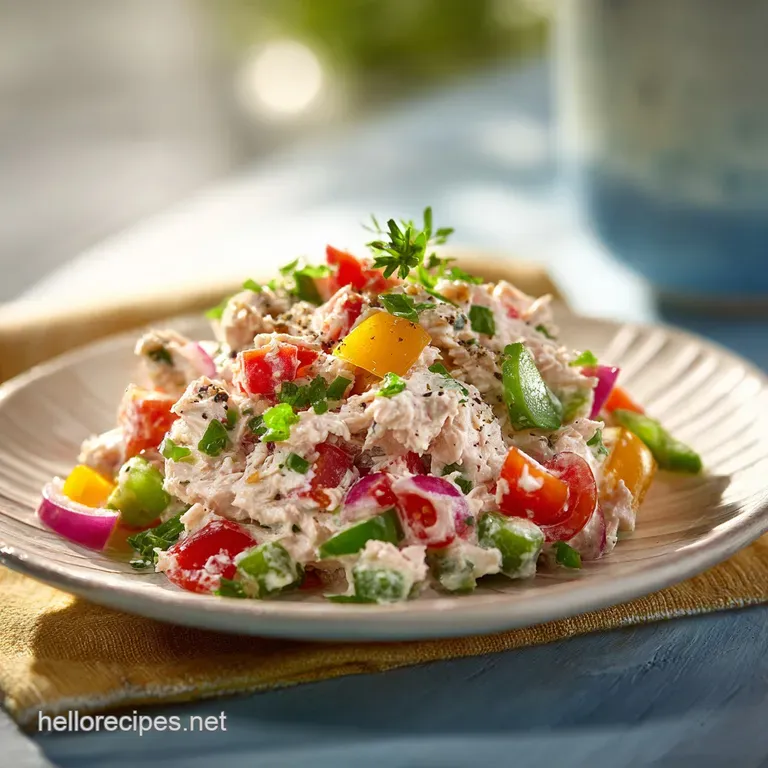
- Drain the tuna. Press the 2 cans of tuna into a sieve until no liquid drips. Note: This prevents a "weeping" salad.
- Prep the aromatics. Mince the 1/4 cup red onion and 1/2 cup celery until fine and uniform.
- Zest the lemon. Grate the 1/2 tsp zest directly over the flaked tuna until the scent is bright.
- Build the base. Add the 1/3 cup mayonnaise and 1 tsp Dijon mustard to the bowl.
- Add the acid. Pour in the 1 tsp lemon juice until the mixture looks creamy.
- Incorporate the crunch. Fold in the diced celery, onions, and 2 tbsp chopped pickles.
- Season the mix. Sprinkle the 1/4 tsp pepper, 1/8 tsp salt, and 1 tbsp fresh herbs.
- Gentle fold. Use a spatula to combine until the tuna is evenly coated. Note: Don't over mix or it becomes a paste.
- Chill the salad. Refrigerate for 15 minutes until the flavors meld.
Solving Texture and Flavor Problems
Even the simplest dishes can go sideways if the ratios are off. But what about the sogginess? That's usually a result of the vegetables releasing water after being salted. To avoid this, we keep our salt levels low and rely on the brine of the pickles for seasoning.
The Problem of Excess Moisture
If your salad looks like it's sitting in a puddle after an hour, you likely didn't drain the tuna well enough or your celery was too wet. This is common if you wash the vegetables and don't dry them thoroughly. You can also try a Green Goddess Avocado recipe if you want to avoid mayo based separation entirely.
The Issue of Harsh Flavors
Sometimes the red onion can overpower everything. If it tastes too sharp, it’s usually because the onion was "hot." Soaking the minced bits in cold water for a few minutes is a simple bit of kitchen technology that tames the sulfur without losing the texture.
| Problem | Root Cause | Solution |
|---|---|---|
| Watery base | Residual canning liquid | Press tuna against the sieve with a heavy spoon. |
| Bland profile | Muted acidity | Add an extra 1/2 tsp of lemon juice or zest. |
| Greasy mouthfeel | Too much mayonnaise | Fold in more diced celery or a third can of tuna. |
Common Mistakes Checklist:
- ✓ Skipping the lemon zest (it's the secret to the bright aroma).
- ✓ Using "salad dressing" instead of real mayonnaise (the sugar content ruins the balance).
- ✓ Forgetting to dry the celery after washing.
- ✓ Over mixing the tuna until it loses its flaky structure.
- ✓ Not chilling the salad before serving.
Scaling This Recipe Up or Down
When you're feeding a crowd, doubling this recipe is straightforward, but you shouldn't just double everything blindly. For a 2x batch, use the full 4 cans of tuna, but start with 1.5x the salt and pepper. You can always add more, but you can't take it away.
Liquids should also be added gradually; sometimes 2/3 cup of mayo feels like too much when combined in larger volumes.
For a single serving, use one 5 oz can. Beat a small amount of the lemon and Dijon together before adding them to the mayo to ensure they don't separate in such a small quantity. Use a smaller bowl to keep the surface area low, which helps prevent the mixture from drying out.
Variations for Different Flavor Profiles
If you want to move away from the "Classic Tuna Salad Recipe," there are plenty of innovative paths. You can lean into a "Mediterranean Tuna Salad Recipe" by swapping the mayo for a high-quality extra virgin olive oil and adding chopped Kalamata olives and sun dried tomatoes.
- If you want a Healthy Tuna Salad: Use Greek yogurt in place of half the mayonnaise. It adds a pleasant tang and boosts the protein content while reducing the fat.
- If you want a Spicy Kick: Mince half a jalapeño and add a dash of hot sauce into the Dijon mixture.
- If you want the Everything Version: Add a teaspoon of "everything bagel seasoning" and serve it on toasted sourdough.
Smart Storage and Prep Ideas
Store your tuna salad in an airtight glass container in the fridge for up to 3 days. I don't recommend freezing it; the mayonnaise and celery will lose their structural integrity, resulting in a grainy, watery mess once thawed.
For zero waste cooking, don't toss the liquid from the pickle jar. It’s a goldmine of flavor! You can use a tablespoon of it to thin out a heavy dressing or even use it to quick pickle some extra thinly sliced red onions for a garnish.
If you have leftover celery leaves, chop them up and throw them into the salad along with the parsley they have a surprisingly intense celery flavor that most people just throw away.
Best Sides for This Dish
This salad is versatile, but it shines brightest when paired with something that offers a stark contrast in texture. A crisp, buttery cracker or a slice of toasted rye bread provides that essential "shatter" that makes the velvety tuna feel even more luxurious.
If you’re keeping it light, serve a scoop inside a hollowed out tomato or a large leaf of Bibb lettuce. The natural sweetness of the tomato or the cool crunch of the lettuce complements the briny notes of the fish perfectly.
For a more substantial meal, a side of salt and vinegar potato chips provides a double hit of acidity and crunch that is hard to beat.
- For a picnic
- Pack the salad in a chilled jar and bring the crackers separately to keep them from getting soft.
- For a quick lunch
- Stuff the mix into a whole wheat pita with a handful of arugula for a peppery bite.
- For a fancy appetizer
- Serve small dollops on cucumber rounds topped with a sprig of fresh dill.
Common Culinary Myths
There is a persistent belief that you should never mix fish and dairy. While that’s a traditional rule in some cuisines, the gastronomy of a tuna salad relies on the creamy emulsion of mayonnaise (which is mostly oil and egg) to provide the necessary fat.
It’s not about the dairy; it’s about the balance of richness and salt.
Another myth is that "oil packed" tuna is always better. While it is more flavorful on its own, for a mayo based salad, water packed tuna is actually the innovative choice. It allows you to control the exact type and amount of fat you’re adding through the dressing, preventing the final dish from becoming an oily, heavy mess.
Trust me, once you start focusing on these small details, your lunch game will never be the same. Right then, let's get into the kitchen!
Tuna Salad FAQs
What ingredients go in a tuna salad?
The core includes drained canned tuna, mayonnaise, celery, onion, and seasonings. I always add Dijon mustard and fresh lemon juice to create a bright emulsion that cuts through the richness of the mayo.
What does Matthew McConaughey put in his tuna salad?
Specific celebrity recipes vary widely, but many favor simple, high-quality ingredients. For a savory base, the focus is often on good quality mayonnaise and minimal filler, letting the tuna flavor dominate.
What does Martha Stewart put in her tuna salad?
Martha Stewart generally recommends a classic base with fresh additions for brightness. Her versions often incorporate fine dicing of vegetables like celery and sometimes include capers or fresh dill for an elevated flavor profile.
What is the secret to the best tuna salad?
The secret is managing moisture and achieving textural contrast. You must thoroughly drain the tuna and then soak your diced onions in ice water to remove harshness while preserving crunch; mastering this acid fat balance is key, similar to emulsification in making a stable vinaigrette like the one in our Cranberry Walnut Salad recipe.
How do I prevent my tuna salad from becoming watery after a few hours?
Press the drained tuna aggressively to remove all residual canning liquid before mixing. Also, add high moisture ingredients like fresh tomatoes or pickles right before serving, never mixing them in hours ahead.
Is it true that oil-packed tuna makes for a worse salad than water packed tuna?
No, this is a common misconception if you control your binder. Oil-packed tuna provides superior flavor, but you must reduce the mayonnaise slightly and rely on the existing olive oil for richness.
What is the best way to dice celery for optimal texture in tuna salad?
Dice the celery uniformly to an 1/8 inch size using a very sharp knife. Uniformity ensures that every bite has a consistent "shatter" against the creamy binder, which is a technique also critical for even distribution in salads like our Rainbow Quinoa Salad recipe.
Best Tuna Salad Recipe
Ingredients:
Instructions:
Nutrition Facts:
| Calories | 312 kcal |
|---|---|
| Protein | 21.6 g |
| Fat | 23.4 g |
| Carbs | 3.2 g |
| Fiber | 0.8 g |
| Sugar | 1.4 g |
| Sodium | 615 mg |
