Wiener Schnitzel: the Golden, Classic Technique
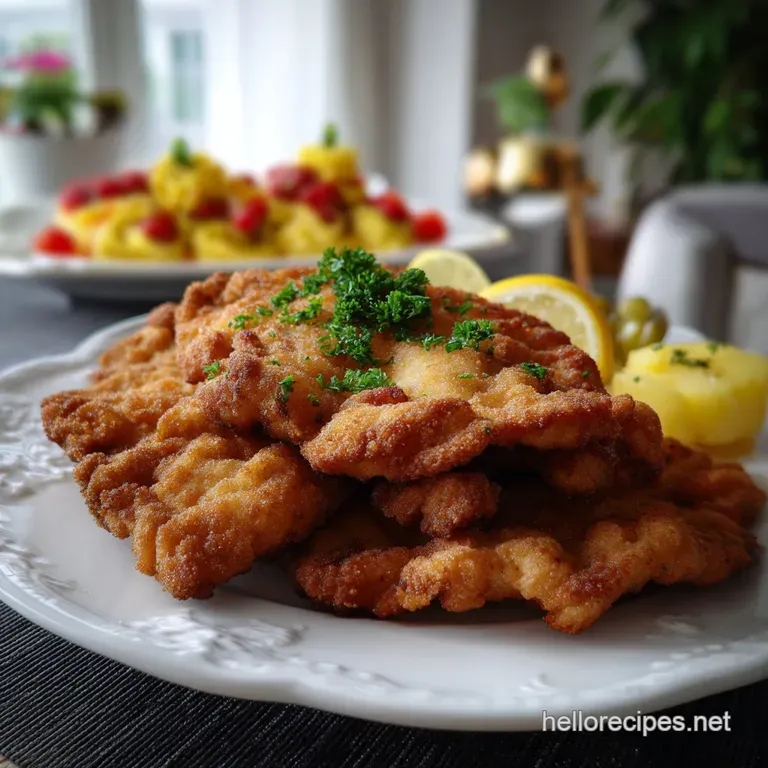
- Authentic Wiener Schnitzel: Golden, Airy, and Utterly Classic
- The True Definition of Wiener Schnitzel: Authenticity and History
- Sourcing and Preparing Your Essential Ingredients
- Master the Shallow Fry: Step-by-Step Method
- Troubleshooting Your Technique: Expert Frying and Finishing Tips
- Storing Leftovers and Reheating for Maximum Crispness
- Classic Austrian Pairings for Your Golden Cutlet
- Recipe FAQs
- 📝 Recipe Card
Authentic Wiener Schnitzel: Golden, Airy, and Utterly Classic
There is no smell on earth quite like hot, nutty clarified butter mixed with lightly seasoned veal, crackling violently in a cast iron pan. That sizzle, the sight of the crust puffing up, detaching slightly from the paper thin cutlet beneath that is the moment you realize you are about to eat the definitive, best-in-class Wiener Schnitzel .
It is crispy, savory, deeply flavourful, and utterly elegant.
Honestly, I used to think the authentic preparation was reserved for fancy European chefs. I was wrong. Once you nail the three core techniques pounding, breading, and temperature control making genuine Wiener Schnitzel is a weekend superpower.
It requires minimal active time and uses pantry staples, but the payoff is massive.
We are not making a heavy, dense, sad fried pork chop here. We are aiming for light, airy, golden perfection. If you've got 45 minutes and a decent mallet, let’s skip the mediocre version and cook the ultimate, truly authentic Wiener Schnitzel at home.
The True Definition of Wiener Schnitzel: Authenticity and History
The word Schnitzel simply means cutlet, but the name Wiener Schnitzel is legally protected in Austria and the EU. This isn't just a fancy label; it’s a commitment to tradition.
If you’re using chicken or pork, bless your heart, but you are not making authentic Wiener Schnitzel . You’re making Schnitzel Wiener Art , or "Schnitzel Viennese style," which is a fine dish, but it’s not the masterpiece we are after.
Defining "Wiener Schnitzel" vs. Generic Schnitzel
The rule is simple and absolute: Wiener Schnitzel must be made from veal. Period. This matters because veal has a unique, tender structure that allows it to be pounded incredibly thin without shredding, and it takes on the nutty flavor of the clarified butter beautifully.
The texture of the pounded veal is integral to achieving the desired tenderness once it's fried.
A Taste of Vienna: The Dish’s Royal Lineage
The history is debatable, but the elegance is not. The true Wiener Schnitzel tradition suggests the dish was popularized by Field Marshal Radetzky in the 19th century, bringing it back from Italy. Whether true or folklore, this dish quickly became the centerpiece of Viennese dining.
It’s light, simple, and the gold standard for fried comfort food globally.
Why Veal is the Only Choice for Purity
We use veal for its mild flavor and exceptional tenderness. Specifically, we target the Fricandeau , or Top Round. This cut is lean, has very little connective tissue, and stands up perfectly to aggressive pounding.
Trying to substitute a cheaper, tougher cut means you lose the necessary delicacy that defines this traditional dish.
The Critical Role of Clarified Butter (Ghee)
Don't skip the clarified butter. Yes, it’s slightly more work than pouring vegetable oil. But trust me, the slightly toasted, nutty aroma that clarified butter (or Ghee) imparts is non-negotiable for authentic flavor.
Clarified butter has a high smoke point, allowing you to get the crust beautifully golden brown without burning the delicate milk solids that plain butter contains. This is a game changer for the ultimate Wiener Schnitzel .
Why Pounding the Veal to Uniform Thickness Matters
If your cutlet is thick on one end and thin on the other, you’ll end up with a tough, undercooked interior and a burnt exterior. We are aiming for an even 3mm (1/8 inch) thickness across the entire piece.
This extreme thinness ensures the veal cooks in the 1.5– 2 minutes per side needed to achieve that golden crust. If the meat is too thick, the crust will be soggy before the veal is safe to eat.
The "Fluffy" Breadcrumb Coating Technique
This is the technique that separates the amateurs from the authentic Viennese cooks. The signature of a great Wiener Schnitzel is the soufflé effect that gorgeous, airy pocket where the breading separates from the meat.
This only happens if the breadcrumbs are applied gently . We do not press them firmly onto the veal; we simply shower them over the cutlet and give a light pat. This ensures enough air and steam can get between the breading and the meat during frying.
Sourcing and Preparing Your Essential Ingredients
The ingredients list is short, which means every element must be perfect. If you start with cheap, stale breadcrumbs or low-quality veal, your final Wiener Schnitzel will taste disappointing. We aim for quality and freshness here.
Selecting the Best Cut of Veal (The Fricandeau)
Ask your butcher for Veal Top Round, sometimes labeled as Eye of Round or Fricandeau . You need slices about 1/2 inch thick before pounding. If they offer pre-sliced veal scaloppine, that’s great, but you will still need to pound them thinner.
Remember, the quality of the veal is paramount since it is the star of the authentic Wiener Schnitzel recipe.
| Ingredient | My Recommendation | Viable Substitute |
|---|---|---|
| Veal Cutlets | Top Round (Fricandeau) | Thinly sliced, pounded Pork Loin |
| Frying Fat | Clarified Butter (Ghee) | over High heat oil (e.g., Sunflower or Canola) + 2 tbsp regular butter |
| Breadcrumbs | Fine, Plain, Fresh Crumbs | high-quality, finely milled dried crumbs (avoid Panko) |
Preparing Homemade Breadcrumbs for Optimal Texture
I know, I know. Making breadcrumbs sounds like a hassle, but it matters immensely. Toasting cheap breadcrumbs will yield a heavy, tough coating. Use stale white bread (like brioche or Vienna loaf), remove the crusts, and pulse it finely in a food processor. Crucially, sift them.
You need fine, fluffy crumbs, not large chunks, to promote that delicate crust separation in the Wiener Schnitzel .
The Essential Coating Station Setup (The 'Street')
We call this the breading street . Set up your three shallow trays in order: Flour, Eggs, Crumbs. Always use one hand (the wet hand) for the eggs, and the other hand (the dry hand) for the flour and crumbs.
This keeps you from turning into a human blob of fried dough and ensures efficient, clean breading, which is key for making a quick Wiener Schnitzel batch.
Master the Shallow Fry: step-by-step Method
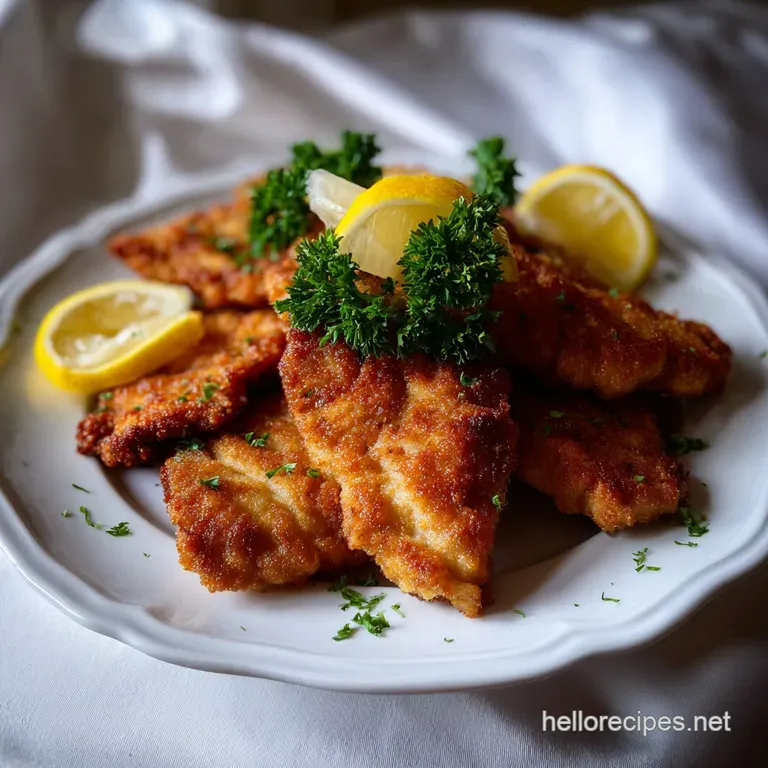
This is the main event. Frying the Wiener Schnitzel is a dance between high heat and continuous motion. Get ready to shake that pan.
Perfecting the Veal Cutlet Pounding Technique
Place one cutlet between plastic wrap. Using the smooth side of your meat mallet, begin gently pounding from the center outward. You want broad, even strokes. If you start to see tears, stop immediately. Your goal is a cutlet that covers a dinner plate and is nearly transparent, about 1/8 inch thick.
Season lightly with salt and pepper after pounding, never before.
The Three Stage Breading Process
- Flour: Dredge the pounded veal completely in flour. Shake off all excess; you just need a thin layer.
- Egg: Submerge the floured veal in the whisked egg wash. Let the excess drain back into the bowl for a moment.
- Crumbs: Place the cutlet in the fine breadcrumbs. Scoop crumbs over the top, then, using only your fingertips, gently pat them onto the surface. Do not press! This non-pressure application is mandatory for that famous puffed crust when cooking Wiener Schnitzel .
Monitoring the Fat Temperature for the Ideal Golden Hue
Pour your clarified butter and oil blend into a heavy bottomed skillet until it is deep enough to come halfway up the sides of the Schnitzel. Heat this over medium high heat until it hits 340°F (170° C) .
If you don't have a thermometer, drop a single crumb in; it should sizzle immediately and furiously, turning golden in about 30 seconds. If the fat is too cool, the crust will soak up the grease and become soggy. If it’s too hot, it will burn immediately.
Chef's Note: If you see any black residue or burning solids floating, skim them out immediately. Fresh, clean fat is essential for a beautiful golden brown color on the Wiener Schnitzel .
Troubleshooting Your Technique: Expert Frying and Finishing Tips
I once had a total crust disaster because I ignored the fat temperature. The oil wasn't hot enough, and the resulting cutlet was heavy, gray, and sad. Learn from my mistake! Making perfect Wiener Schnitzel is about fixing these small errors before they happen.
Preventing a Soggy Crust: The Drain and Rest Process
This is critical: Do not put your finished Schnitzel on paper towels. Paper towels trap steam directly under the hot crust, which instantly makes it soggy. Instead, transfer the fresh, golden brown Wiener Schnitzel immediately to a wire rack set over a baking sheet.
This allows air to circulate entirely around the cutlet, preserving that gorgeous, crunchy crust.
How to Tell if Your Frying Fat is Hot Enough
Beyond the thermometer check, if the Schnitzel sits in the oil for more than 45 seconds and you don't see vigorous bubbling and puffing, your oil is too cold. Take the cutlet out, let the temperature rise, and only start again when the fat is smoking lightly and sizzling intensely around the crumb test.
Remember, we are frying quickly to achieve a perfect, non-greasy Wiener Schnitzel .
The Importance of Immediate Serving
This is not a dish that holds well. Once the Wiener Schnitzel comes off the rack, it needs to be immediately hit with a final sprinkle of salt and plated. Serve it with that classic wedge of lemon.
The acidity of the lemon cuts through the richness of the fat perfectly and is non-negotiable for authenticity. Tell everyone they need to eat it right now while the crust is still shimmering.
Storing Leftovers and Reheating for Maximum Crispness
But does it freeze well? You bet, but we have strict rules about when and how to store this glorious Wiener Schnitzel . Ideally, you should cook and eat it all immediately, but life happens.
Short Term Storage (Refrigeration)
If you have leftover cooked Wiener Schnitzel , let it cool completely on the wire rack first. Then, place it in an airtight container layered between sheets of parchment paper. It will last safely for 2 3 days in the refrigerator.
Just accept that the crust won't be as puffy or light as when freshly made.
Best Practices for Freezing Uncooked Cutlets
If you want to freeze them, do it before cooking. Prepare the cutlets through the breading stage. Lay them flat on a baking sheet lined with parchment paper and freeze until solid (about 2 hours). Once frozen, you can stack them, separated by parchment, in a freezer bag.
They keep for up to 2 months. Cook them directly from frozen, adding a couple of minutes to the frying time for the best results on your future Wiener Schnitzel .
How to Reheat Schnitzel Without a Microwave
Never microwave a perfectly fried Wiener Schnitzel unless your goal is a sad, rubbery disaster. The best way to reheat is in an oven or air fryer. Place the cutlet on a wire rack over a baking sheet (again, avoiding steam!).
Heat the oven to 375°F (190°C) and bake for 8– 10 minutes until heated through and the crust is crisp again. This method preserves the structural integrity of the crust far better than pan-reheating, resulting in an acceptable leftover Wiener Schnitzel .
Classic Austrian Pairings for Your Golden Cutlet
The classic accompaniment is simple because the Wiener Schnitzel is the star. Don't try to overpower it with heavy sauces or rich sides.
- Austrian Potato Salad (Erdäpfelsalat): Forget mayo based potato salad. The Austrian version uses a dressing made of vinegar, oil, and warm beef broth, often mixed with finely sliced red onion. The tanginess provides a necessary contrast to the fried veal.
- Lingonberry Preserve (Preiselbeeren): This tart, slightly sweet jam is non-negotiable for many purists. The fruitiness cuts the richness of the clarified butter beautifully and complements the mild flavor of the veal.
- Simple Greens: A side salad dressed only with a light oil and vinegar vinaigrette ensures you get a clean, fresh bite between rich pieces of the delicious Wiener Schnitzel . Enjoy!
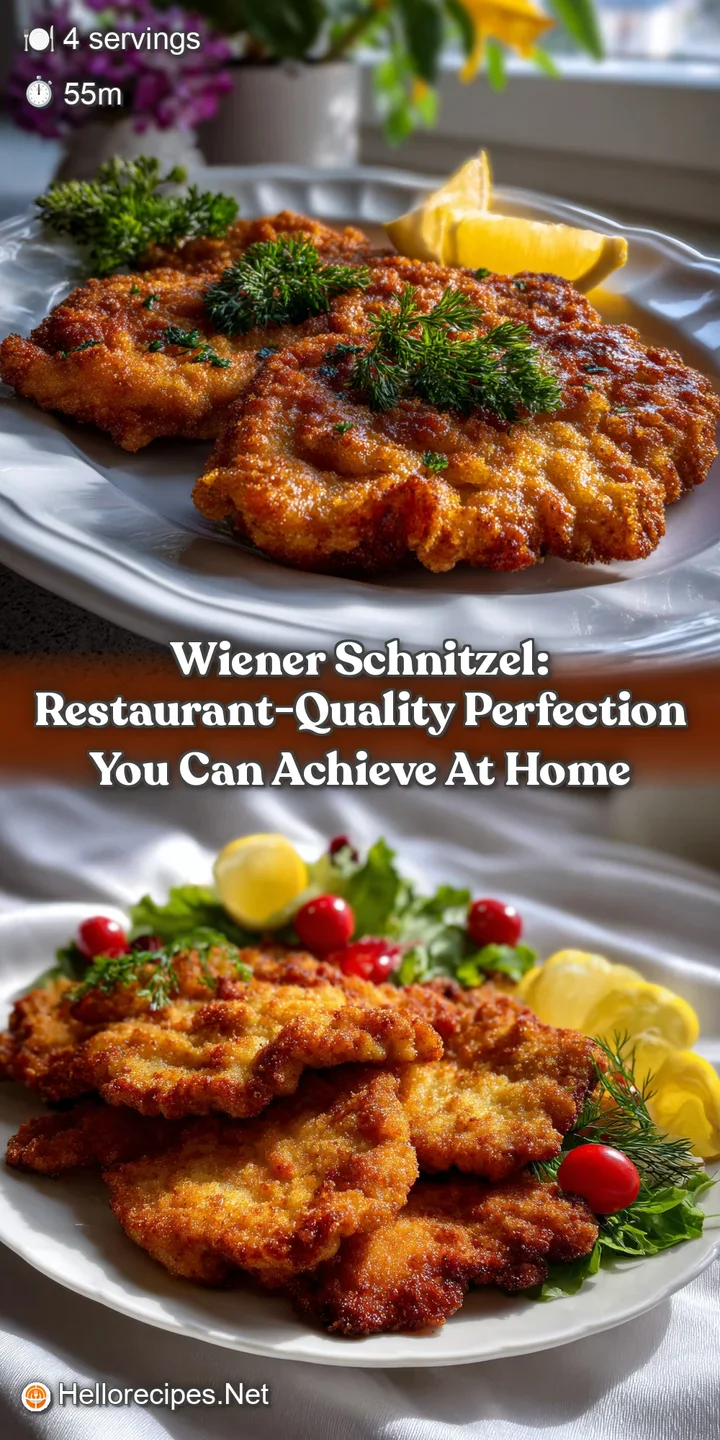
Recipe FAQs
What is the difference between Wiener Schnitzel and Schnitzel "Viennese Style?"
Authentic Wiener Schnitzel must strictly be made using thinly pounded veal cutlets, typically sourced from the leg. Schnitzel "Viennese Style" (Schnitzel Wiener Art) is the German classification for versions using pork, chicken, or turkey, which are equally delicious but cannot legally be marketed as the original Austrian dish.
Why doesn't my crust puff up and separate from the meat (the 'souffléed' effect)?
The souffléed effect usually fails because the oil is not hot enough, or you are overcrowding the pan, which drops the temperature rapidly. Ensure your fat is shimmering (around 340-360°F or 170-180°C) and continually “basting” the top of the schnitzel with hot fat during cooking to encourage the crust to puff.
Can I substitute clarified butter (Butterschmalz) for regular oil?
While you can use neutral oils like canola or sunflower, clarified butter is traditional and provides unparalleled flavor depth and authentic browning characteristics. If using regular butter, its low smoke point means it will burn quickly, so it should ideally be mixed 50/50 with a high heat oil to prevent scorching.
My schnitzel turned out soggy and oily. What went wrong?
Soggy schnitzel is generally a result of the oil temperature being too low, which causes the breading to absorb the fat rather than flash fry it quickly. Additionally, ensure you place the cooked schnitzel on a cooling rack or kitchen paper towels immediately after frying to allow excess oil to drain away, maintaining crispness.
How thin should I pound the veal cutlets for the best result?
The traditional goal is to pound the veal very thin, typically about 1/8 inch (3 mm) thick, or roughly the thickness of a credit card. Pound evenly between two sheets of plastic wrap using the smooth side of a meat tenderizer to prevent tearing the delicate veal fibers.
Can I prepare the schnitzel ahead of time and freeze it?
You should only freeze the cutlets after they have been fully breaded but before frying. Place parchment paper between each breaded piece and freeze them solid in an airtight container; they will keep well for about three months.
For best results, fry them directly from the freezer, adding a couple of minutes to the cooking time.
Are there any successful variations for gluten-free breading?
Yes, you can successfully replace standard breadcrumbs with certified gluten-free panko or finely crushed cornflakes for a very similar light and crisp texture. Ensure you use a separate dredging station to prevent cross contamination if serving someone with celiac disease.
Authentic Wiener Schnitzel Recipe
Ingredients:
Instructions:
Nutrition Facts:
| Calories | 858 kcal |
|---|---|
| Protein | 41.1 g |
| Fat | 29.6 g |
| Carbs | 107.0 g |
