Al Fresco Fall Candlelight Dinner: the Autumn Dusk Duck Supper

- An Ode to Autumn: Crafting the Perfect Al Fresco Fall Candlelight Dinner
- Culinary Chemistry: Why Duck and Butternut Create the Ultimate Comfort
- Preparing the Mise en Place: Essential Ingredients for the Duck Supper
- Mastering the Method: Step-by-Step for Pan-Seared Perfection
- Scoring Secrets and Searing Science: Expert Duck Tips
- Planning Ahead: Storage and Reheating the Autumn Dusk Supper
- Recipe FAQs
- 📝 Recipe Card
An Ode to Autumn: Crafting the Perfect Al Fresco Fall Candlelight Dinner
There is nothing quite like the smell of a crisp, early autumn evening: the faint trace of woodsmoke mixed with the bright aroma of frying sage and caramelized sweet squash. This Autumn Dusk Supper is built entirely on that sensory experience.
The sound of that duck skin crackling when you cut into it is pure poetry.
I know what you’re thinking: duck? Risotto? Too much hassle for a weeknight, or even a casual outdoor dinner party. But trust me, this Al Fresco Fall Candlelight Dinner main course is deceptively simple and wildly impressive.
It’s perfect for those evenings when you want to feel fancy without spending three hours slaving over a complicated sauce.
We are diving into the best kind of cozy sophistication the kind that makes your guests think you hired a chef. We’ll cover the single most crucial trick for perfectly crispy duck skin and how to get that risotto gorgeously, unbelievably creamy.
Let's crack on with this absolute showstopper of a recipe.
Culinary Chemistry: Why Duck and Butternut Create the Ultimate Comfort
The Enchantment of Crisp Air Dining
Dining outside in the fall is the best. You need a dish that stands up to the cool air without immediately turning stone cold, and this duck and risotto pairing is ideal. The rich fat of the duck and the hot, creamy rice hold heat beautifully.
Setting up the perfect Candlelight Dinner Setting outside just amplifies the whole cozy vibe.
The Symphony of Skin and Squash: Recipe Snapshot
We are pairing the savoury intensity of pan-seared duck breast with the comforting sweetness of butternut squash risotto. The richness of the duck fat renders down and adds massive depth to the entire dish, far beyond what butter alone can do.
Our secret weapon here is the acidity from the dry apple cider, which cuts through the richness and keeps everything feeling light.
Expected Prep and Cook Time Breakdown
| Stage | Estimate | Notes |
|---|---|---|
| Prep Time | 25 minutes | Scoring the duck is key. |
| Cook Time | 40 minutes | The risotto requires constant love. |
| Rest Time | 10 minutes | Mandatory rest for maximum juiciness. |
| Total Time | 1 hour 15 minutes | A manageable time for a stunning dish. |
The Maillard Reaction and Perfecting the Crispy Skin
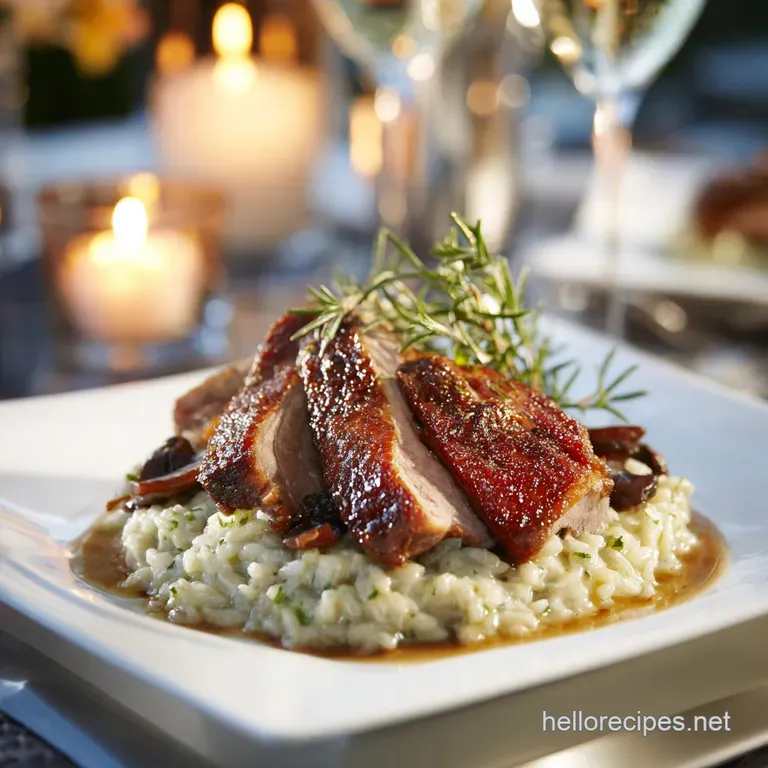
This is the whole secret to spectacular duck: fat rendering, not searing. We start the duck breasts in a cold pan to slowly encourage the fat to melt away, leaving the skin paper thin and deeply caramelized.
This low, slow cook allows the Maillard reaction to occur perfectly, giving us that intense, savoury flavour we crave. A good render takes 10 to 12 minutes do not rush it!
Achieving Creaminess: The Starch Science of Arborio Rice
Risotto is creamy because of the starch in the rice, not just the butter and cheese we add at the end. By stirring the rice constantly with warm stock, you encourage that starch to release slowly and create a stable, velvety emulsion.
If you add cold stock, or if you stop stirring for too long, the starch seals back up and the rice goes gluey.
Balancing Richness with Sweet Cider Acidity
Duck is incredibly rich, and butternut squash is naturally sweet, so we need a balance. The dry white wine used for deglazing and the apple cider stirred in at the end provide crucial acidity. This little splash of cider makes the whole dish sing, preventing it from tasting heavy or cloying.
Preparing the Mise en Place: Essential Ingredients for the Duck Supper
Selecting and Preparing Quality Duck Breast
Look for duck breasts (Magret or Moulard) that have a very thick layer of fat. Fat equals flavour, and more fat means better rendering and crispier skin. I always make sure the silver skin (the thin white membrane on the meat side) is totally trimmed off before I start.
The Role of Dry Cider vs. Broth in Flavor Depth
We use a two-pronged liquid approach for maximum flavour: stock provides the volume and core savoury background, while the dry cider and wine deliver necessary complexity and aroma. The cider brings that perfect slightly autumnal sweetness without being overly sugary.
Alternative Fats and Herb Swaps (Thyme, Rosemary, or Sage)
| Ingredient | Role | Viable Substitute |
|---|---|---|
| Duck Breasts | Protein/Richness | Chicken Suprêmes (skin-on, bone-in) or Pork Chop (thick cut) |
| Arborio Rice | Starch/Texture | Carnaroli Rice (higher starch content, even creamier!) |
| Dry Apple Cider | Acidity/Sweetness | Good quality Apple Juice mixed with 1 tsp of Apple Cider Vinegar |
| Dry White Wine | Deglazing/Acid | Low-sodium Chicken Stock plus 1 tsp of Lemon Juice |
| Sage | Aromatic | Fresh Rosemary or a mix of Marjoram and Thyme |
| Butternut Squash | Earthy Sweetness | Acorn Squash or canned solid pack Pumpkin puree (added at the end) |
Chef's Note: If you are trying to minimize the amount of fat used, you can absolutely use olive oil for sautéing the shallots, but save at least one tablespoon of that glorious rendered duck fat for the rice toasting phase.
Mastering the Method: step-by-step for Pan-Seared Perfection
This whole recipe runs on a timeline, so prep everything first. Once the duck is resting, the risotto takes center stage.
Scoring the Duck Skin for Maximum Fat Rendering
This step is make-or-break. Use a razor sharp knife to score the fat in a neat cross hatch pattern, spacing the cuts about half an inch apart. You must pierce the fat layer completely, but do not slice into the actual meat. This creates little fat channels.
Pat the breasts super dry again, then season heavily with sea salt.
Building the Risotto Base: Toasting the Rice and Deglazing with Cider
After you sauté your shallots and the fragrant sage, add the dry Arborio rice. Stir it around for two minutes until it becomes slightly translucent around the edges this is called tostatura . This crucial toasting step seals the starch and prevents the rice from getting mushy later.
Then, pour in the white wine and stand back for a moment while the wine boils off and the glorious steam lifts the browned bits from the pan.
Timing and Temperature: The Reverse Sear Technique for Duck
- Start Cold: Place the seasoned, scored duck breasts skin side down in a cold, heavy bottomed skillet.
- Turn Heat Low: Start the heat on medium low and listen for the slow sizzle of rendering. Keep pouring off the fat into a jar (seriously, it’s liquid gold for roasting potatoes later!).
- Flip: After 10- 12 minutes, when the skin is deeply golden and crisp, flip the duck. Cook the meat side for 3- 4 minutes to achieve a perfect medium rare (internal temp of 135°F / 57°C).
Why Resting the Duck is Non-Negotiable
If you slice the duck immediately, all those beautiful juices which have been pushed to the center by the heat will spill out all over your cutting board. A minimum 10 minute rest , loosely tented with foil, allows those juices to redistribute throughout the meat.
This guarantees a succulent result every single time.
Scoring Secrets and Searing Science: Expert Duck Tips
Preventing a Rubbery Duck Skin Disaster
The most common mistake is cooking the duck too hot, too fast. If the heat is high, the fat layer tightens up, the skin burns, and the fat doesn't get a chance to melt out. You’re left with tough, chewy, burned skin and grey meat. Slow and steady wins the crispiness race.
Using a Thermometer for Flawlessly Medium Rare Results
I know, I know, sometimes we eyeball it, but for duck breast, a meat thermometer is your friend. Pull the duck off the heat at 135°F (57°C) for medium rare. It will continue cooking while it rests. Pulling it at 140°F (60°C) is fine if you prefer medium.
Avoiding Overworking the Risotto and Losing Creaminess
You need to stir the risotto frequently to release the starch, but don't beat it into submission. Overworking it breaks the rice grains down too much, leading to a pasty texture instead of a velvety one.
Also, remember to add that crucial finishing butter and Parmesan off the heat during the mantecatura stage.
Planning Ahead: Storage and Reheating the Autumn Dusk Supper
Best Practices for Refrigerating Cooked Duck
Cooked duck breast, sliced or whole, stores beautifully in an airtight container in the fridge for up to 3 days. However, the skin will lose its crispness upon cooling.
Revitalizing the Risotto Texture
Risotto is notorious for stiffening up in the fridge because the starch continues to set. To reheat, place it in a saucepan with a splash of extra stock or a tablespoon of water, and warm gently over low heat, stirring constantly. It will loosen right back up to creamy perfection.
Do not microwave it unless you want a dry, sad block of rice.
Wine and Beverage Recommendations for the Al Fresco Fall Candlelight Dinner
- Roasted Butternut Squash Soup
- The Velvet Texture Fall Recipe
- Garlic Butter Bread Rolls
- Properly Fluffy Homemade Dinner Buns
- Apple Crisp Mini Cheesecakes
- Easy Fall Dessert Recipe

Recipe FAQs
How do I ensure the duck skin is crispy and the meat is not overcooked?
Score the skin deeply in a cross hatch pattern, ensuring you do not cut into the muscle meat below. Start the duck breast skin side down in a cold pan over low heat; this slow rendering is critical for melting the fat and achieving maximum crispiness before the final high heat sear.
Why is my Cider Butternut Risotto too sticky or gluey?
Risotto becomes gluey when it is stirred too aggressively or when the stock is added too quickly, causing the rice starch to break down improperly. Ensure your stock is hot and add it gradually, stirring just enough to release the starch until it reaches a creamy consistency with rice that is still al dente.
Can I use a protein other than duck breast for this meal?
Yes, you can substitute pan-seared chicken breast or pork tenderloin medallions if preferred. However, both proteins require significantly less cooking time and have no thick layer of fat to render, so adjust the heat and duration accordingly.
I don't have hard cider. What is a good substitute for the risotto liquid?
A good quality dry white wine, such as Sauvignon Blanc, is an excellent substitute for the cider and offers a similar tang. Alternatively, use apple juice mixed with a teaspoon of sherry or apple cider vinegar to achieve the necessary acidity and depth.
Can I make the risotto ahead of time or freeze leftovers?
Risotto is best served immediately, as the rice continues to absorb liquid and loses its ideal creamy texture quickly. It does not freeze well, but leftovers can be stored in the fridge for up to three days and are often repurposed into delicious Arancini (fried rice balls).
What if I cannot find Arborio rice? Can I use long grain rice?
Arborio rice is crucial because its high starch content (amylopectin) is what creates the signature creamy texture of risotto. While you could use Carnaroli or Vialone Nano, standard long grain rice will not release the necessary starch and will result in a dry, loose dish rather than a true risotto.
I am having trouble getting the butternut squash soft quickly. Any tips?
To speed up the cooking process, ensure the squash is cut into small, uniform 1/2 inch cubes so they cook evenly and rapidly. You can also lightly steam the squash cubes for 5 minutes before adding them to the risotto, which guarantees tender results without overcooking the final dish.
Al Fresco Fall Dinner Duck Risotto
Ingredients:
Instructions:
Nutrition Facts:
| Calories | 382 kcal |
|---|---|
| Protein | 33.5 g |
| Fat | 14.0 g |
| Carbs | 30.4 g |
