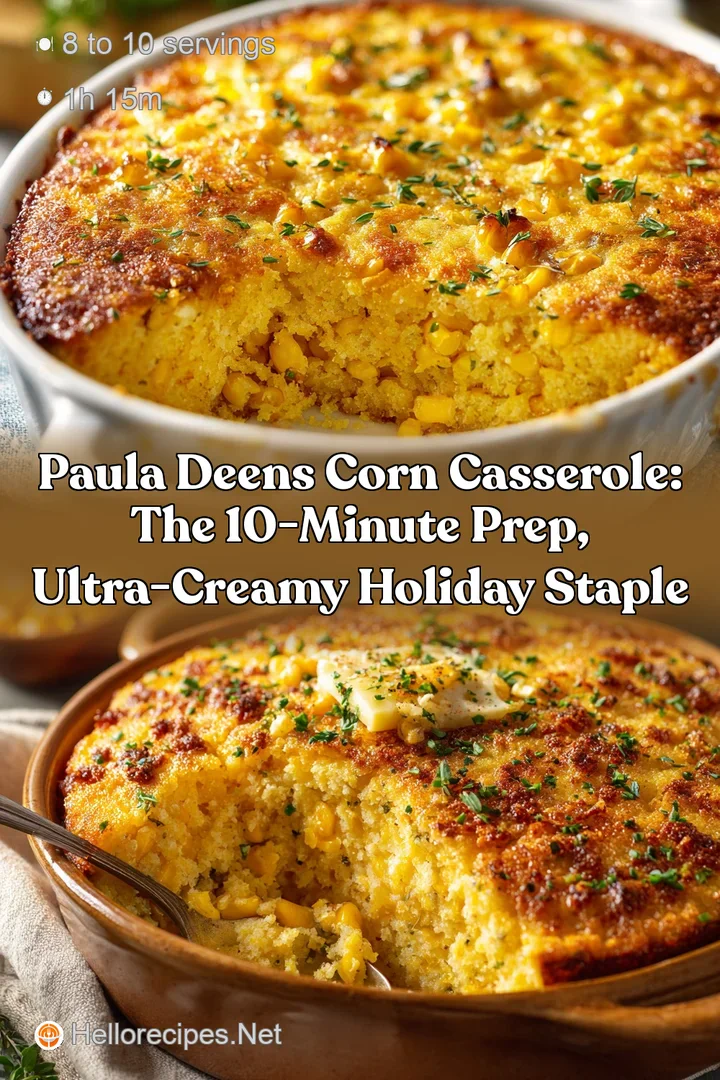
Paula Deens Corn Casserole: the Creamy Dreamy Southern Classic

- The Essential Southern Side: Unpacking Paula Deen’s Corn Casserole
- Mastering the Texture: Why This Casserole Stays So Creamy
- Gather Your Southern Pantry: Ingredients for Paula Deens Corn Casserole
- From Mixing Bowl to Oven: Step and by-Step Guide for the Perfect Bake
- Achieving Casserole Perfection: Expert Tips and Troubleshooting Common Errors
- Make and Ahead Magic: Storing, Freezing, and Reheating Your Corn Casserole
- What to Serve With Paula Deen’s Corn Casserole (Complete Southern Meal Pairings)
- Recipe FAQs
- 📝 Recipe Card
The Essential Southern Side: Unpacking Paula Deen’s Corn Casserole
Imagine walking into a kitchen where the air is thick with the scent of melting butter, sweet corn, and that comforting hint of cornbread. That, my friends, is the sensory signal that Paula Deens Corn Casserole is baking.
This isn't just a side dish; it’s a warm, custard and like hug that belongs on every single holiday table.
This recipe is an absolute lifesaver because it requires almost zero technique and maybe ten minutes of active effort. It’s cheap, incredibly filling, and travels like a dream which is why it’s the undisputed champion of church potlucks and Thanksgiving spreads.
If you need a gorgeous, creamy side that takes the stress out of entertaining, this is your jam.
We are diving deep into the Paula Deen Corn Casserole Recipe today, not just listing ingredients, but breaking down exactly why it turns out so fudgy and moist every single time. Get your mixing bowl ready; we're about to make the easiest, creamiest sweet corn casserole you’ve ever tasted.
Mastering the Texture: Why This Casserole Stays So Creamy
Why This Comfort Food Staple Endures
People call this dish by a thousand names corn pudding, corn bake, creamed corn casserole but the core appeal is always the same: it’s buttery, slightly sweet, and unbelievably tender.
It endures because it’s a simple, comforting recipe that uses pantry staples, making it perfect for last and minute menu panic. It’s also wildly adaptable, but we are sticking to the classic Paula Deen's Corn Casserole with Jiffy Mix today, because it’s the easiest path to perfection.
The Key Differences: Casserole vs. Spoon Bread
The reason this dish is often called "corn pudding" is the texture. Traditional southern cornbread is dense and crumbly. This casserole, however, is a wet bake, closer to a spoon bread or a savoury custard.
You mix the wet ingredients sour cream and eggs with the corn and the Jiffy binder, which results in a rich, velvety interior that must be scooped out with a spoon (or at least, a large spatula). If you find yours turning out too dry, you’re likely overbaking it!
History on a Plate: Savannah's Best Corn Dish
Paula Deen, being the Queen of Savannah cooking, perfected this version by leaning heavily into dairy and fat, which is the secret sauce of Southern hospitality. This style of rich, easy corn casserole is a hallmark of holiday side dishes, designed to pair with heavy meats and smoky hams.
It’s history on a plate, drenched in butter, naturally.
The Chemistry of Custard: Achieving the Velvety Interior
The real magic happens because this dish is essentially a very simple baked custard. The eggs and the sour cream, when heated, coagulate and trap the moisture and corn kernels, preventing the Jiffy mix from becoming a dry brick. Using full and fat sour cream is mandatory here.
The high and fat content ensures that the texture remains smooth and velvety, not grainy.
Balancing Sweetness and Savory Notes
The debate always rages: how sweet should corn casserole be? The Jiffy Corn Muffin Mix already contains sugar, lending a pleasant baseline sweetness. I like to add just one optional tablespoon of granulated sugar to enhance the natural sweetness of the corn itself it moves the dish from purely savoury side to a true comfort food.
If you’re pairing this with barbecue, keep the sugar; if it’s going with a highly seasoned roast, skip it.
The Secret Role of Cornmeal Mix
The genius of this specific recipe the Paula Deen Cornbread Casserole version is the use of the pre and mixed Jiffy. It acts as the perfect, light binder.
Because it’s a mix, the ratio of flour to cornmeal to leavening agents is already calibrated to puff up slightly, creating that light sponge structure without becoming heavy. It’s brilliant.
CRITICAL CHEF'S NOTE: If you use a denser, pure cornbread mix instead of Jiffy, your end product will be heavier and require more sour cream or milk to achieve the classic creamy texture. Jiffy is your best friend here.
Gather Your Southern Pantry: Ingredients for Paula Deens Corn Casserole
This is a simple list, but nailing the specifics of the ingredients (like which corn to drain and which to leave wet) makes all the difference in achieving the ultimate texture.
Detailed Ingredient Breakdown (Canned, Frozen, and Fresh)
I am obsessed with the combination of textures: the whole kernels give you a satisfying chew, while the creamed corn melts into the creamy base. You must drain the whole kernel corn, but you absolutely must NOT drain the cream and style corn.
The liquid in the creamed corn is part of the recipe's structure. If you only have frozen corn, thaw and drain it well before using.
Smart Swaps: Dairy and Fat Alternatives
Don't panic if you are missing one or two items. We are home cooks; we adapt!
| Ingredient | Viable Substitute | Notes on Texture |
|---|---|---|
| Sour Cream | Plain Full and Fat Greek Yogurt | Slightly tangier, but performs identically. |
| Unsalted Butter | Melted Bacon Grease or Vegetable Oil | Bacon grease adds amazing flavour, but stick to 1/3 cup to avoid oiliness. |
| Jiffy Mix | Homemade Muffin Mix | Combine 1 cup cornmeal, 1/2 cup AP flour, 1 tbsp sugar, 1 tbsp baking powder, 1/2 tsp salt. |
Adjusting Sweetness: Sugar vs. Natural Corn Sugars
If you are using very fresh, sweet summer corn (lucky you!), you might be able to skip the added sugar entirely. Canned corn sometimes benefits from that tablespoon of sugar, especially when it’s going to be a Christmas Side Dish where everyone expects a touch of sweetness.
Understanding the Importance of Creamed Corn
Creamed corn is more than just corn; it's a stabilizer. The starchy liquid it comes packed in is what prevents this casserole from drying out in the oven. It binds the Jiffy mix together without making it stiff, ensuring every spoonful is moist and rich.
From Mixing Bowl to Oven: Step and by-Step Guide for the Perfect Bake

This process is straightforward, but accuracy in mixing will ensure that perfect creamy texture we are aiming for.
Prep Work: Combining Your Corn and Dairy Components
First things first: Preheat that oven to 350°F (175°C) and grease your 9x13 pan generously. Next, melt your butter (1 stick, or 1/2 cup) and let it cool down a little. If you add scorching hot butter to eggs, you will scramble them, and nobody wants buttery egg bits in their casserole.
Whisk the cooled butter with the eggs and sour cream until it’s smooth and uniform. Trust me on this.
The Gentle Mix: Preventing a Dense or Dry Casserole
Now, stir in the drained whole corn and the undrained creamed corn. Finally, gently fold in the Jiffy mix, salt, and pepper. This is the moment where people fail. You must mix until just combined.
If you beat it fiercely like a cake batter, the gluten in the flour component of the Jiffy mix will activate. This results in a tough, chewy, dense casserole, which is exactly the opposite of the velvet we seek. Stop stirring the second you can’t see dry streaks of flour.
Bake Time Management and Achieving the Golden Top
Pour the batter into your prepared pan. Bake for 45 to 55 minutes. You want the edges to be beautifully golden brown and set, but the center should still look slightly soft like a firm jiggle.
If you love a cheesy top layer (and who doesn't?), sprinkle about 1/2 cup of shredded cheddar over the top during the last 15 minutes of baking.
Resting Period: Why You Must Wait Before Serving
I know you want to dig in the second it leaves the oven, but don't! Remove the Easy Corn Casserole Holiday Side Dish and let it rest on a cooling rack for at least 10 minutes. This allows the internal custard structure to finish setting.
If you cut into it too soon, it will collapse and spill out. Resting ensures clean, beautiful servings.
Achieving Casserole Perfection: Expert Tips and Troubleshooting Common Errors
The Doneness Test: How to Avoid a Gooey Center
If you stick a knife or a toothpick into the dead center of the casserole, it will likely still come out gooey (that’s the creamed corn). Instead, insert a knife about an inch or two away from the edge. If the knife inserted near the edge comes out clean, you are done.
The middle will set during the mandatory resting period.
Temperature Matters: Room Temperature vs. Cold Ingredients
One mistake I once made was adding cold sour cream and eggs straight from the fridge to the slightly warm melted butter. It shocked the fat, leading to tiny, slightly curdled bits in the batter. Always let your dairy and eggs come close to room temperature.
They mix into a much smoother emulsion, which guarantees a silkier final product.
Why Did My Casserole Sink? (Density Issues)
A sunken casserole often means one of two things: either you overmixed the batter, developing too much gluten and making it heavy, or the oven temperature was too low, preventing a proper initial rise. Make sure your oven is calibrated and stick to the "gentle mix" rule!
Make and Ahead Magic: Storing, Freezing, and Reheating Your Corn Casserole
Overnight Prep: Assembling the Casserole Ahead of Time
This is a fantastic dish for overnight prep. You can mix the ingredients and pour the batter into the greased dish, cover it tightly, and refrigerate it for up to 24 hours.
Here is the caveat: the Jiffy mix will absorb moisture overnight, potentially thickening the batter significantly. When you take it out, you might need to stir in 1 2 tablespoons of milk or sour cream to loosen it up again before baking.
Freezing Baked vs. Unbaked Casserole
Baked is better for freezing. Bake it completely, let it cool entirely, then wrap it tightly in foil, followed by plastic wrap. It keeps well in the freezer for up to three months. Freezing unbaked batter can sometimes compromise the leavening agents in the Jiffy mix, leading to a denser result.
Best Methods for Reheating Without Drying Out
If reheating a whole frozen casserole, remove the plastic wrap and cover the dish tightly with foil. Bake at 300°F (150°C) for about 30– 40 minutes, until heated through.
If you are only heating up a small portion, the microwave is fine, but always cover the plate with a damp paper towel to trap steam and prevent the casserole from turning into a dry brick.
What to Serve With Paula Deen’s Corn Casserole (Complete Southern Meal Pairings)
This delicious, rich casserole pairs beautifully with heavy, savory main courses, especially those that benefit from a slight contrast in sweetness. It's truly the perfect accompaniment to holiday poultry or a massive smoked brisket.
- Green Bean Casserole
- The Proper, From and Scratch Recipe with Fresh Beans
- Sweet Potato Casserole
- The Best Creamy Spiced Pecan Streusel Recipe
- Pioneer Woman Mac and Cheese
- Ultra and Creamy Baked Casserole
Recipe FAQs
Why is my corn casserole dry or crumbly instead of creamy?
A dry result usually stems from either a precise measurement error (too much cornbread mix) or overbaking. Ensure the corn mixture is well incorporated with the wet ingredients, especially the sour cream and melted butter, as these are the main moisture agents.
Bake only until the center is mostly set and the edges are golden brown; the casserole will continue to firm up as it cools.
Can I use fresh or frozen corn instead of canned, and do I need to adjust anything?
Absolutely. If using fresh or frozen corn, ensure the kernels are thawed and well drained to avoid introducing excessive liquid that could make the batter watery. Using fresh kernels cut directly from the cob often results in a better, more pronounced corn flavor in the finished casserole.
I don't have cornbread mix (like Jiffy). Can I substitute it?
You can create a close substitute by combining 3/4 cup of fine cornmeal, 1/4 cup of all-purpose flour, 1 tablespoon of baking powder, and 2 tablespoons of sugar. This custom mix will provide the necessary structure and leavening required for the casserole to bake correctly.
Be sure to mix the dry ingredients thoroughly before adding them to the wet mixture.
How can I make this casserole spicier or add more savory flavor?
For a Southern kick, stir in half a cup of drained, diced jalapeños, a small can of diced green chilies, or a pinch of cayenne pepper into the batter. For an enhanced savory profile, top the casserole with 1/2 cup of shredded cheddar cheese and crispy bacon bits during the last 10 minutes of baking time.
What is the best way to store leftovers, and can I freeze this casserole?
Store leftovers tightly covered in the refrigerator for up to 4 days; reheat individual servings in the microwave or oven. While you can freeze the cooked casserole, the high dairy content (sour cream) may alter the texture slightly upon thawing, making it a bit grainy.
If freezing, bake first, cool completely, wrap tightly in foil, and consume within two months.
Can I mix the ingredients ahead of time and bake the casserole later?
While convenient, it is best to mix the casserole no more than two hours before baking. The leavening agents in the cornbread mix activate immediately upon contact with the wet, acidic ingredients. If left to sit too long, the casserole will rise less in the oven, potentially resulting in a denser final product.
Is there a way to make this dish lighter or less rich without sacrificing moisture?
Yes, you can substitute the regular sour cream with a high-quality, low-fat Greek yogurt, which provides excellent moisture and tang while significantly reducing the fat content. You can also use unsweetened applesauce in place of half of the melted butter, though this may slightly alter the rich, buttery flavor profile.
Paula Deens Easy Corn Casserole

Ingredients:
Instructions:
Nutrition Facts:
| Calories | 526 kcal |
|---|---|
| Protein | 42.8 g |
| Fat | 16.1 g |
| Carbs | 49.4 g |
