Coconut Poke Cake: Moist and Tropical
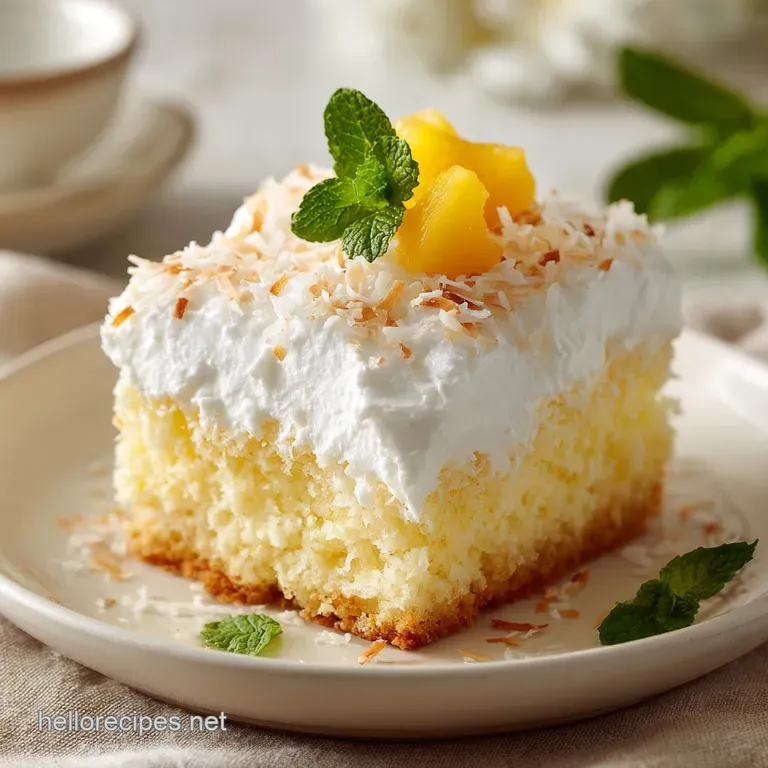
- Time: Active 15 minutes, Passive 30 minutes, Total 45 minutes
- Flavor/Texture Hook: A silky, melt in-your mouth crumb topped with a cloud of airy cream and toasted coconut shatter.
- Perfect for: Summer potlucks, easy weeknight celebrations, or anyone craving a tropical escape.
- The Secret to a Perfect Coconut Poke Cake
- Why This Works
- Analyzing the Essential Flavor Components
- Selecting Your Elements
- Gathering the Necessary Kitchen Tools
- Mastering the Tropical Baking Steps
- Solving Common Dessert Baking Issues
- Scaling Your Dessert
- Myth Busting the Bakery
- Preserving Freshness and Reducing Waste
- Serving Suggestions and Flavor Pairings
- Recipe FAQs
- 📝 Recipe Card
The Secret to a Perfect Coconut Poke Cake
Forget everything you think you know about poke cakes being nothing more than soggy, sugar heavy sponges. Most people assume that dumping liquid over a cake just makes it wet, but that is a massive myth I used to believe myself.
The truth is, a truly vibrant coconut poke cake relies on the contrast between a light, airy crumb and a rich, fatty soak that emulsifies into the cake fibers rather than just sitting on top.
When you pull that pan out of the oven, the aroma of toasted coconut and warm vanilla hits you instantly, promising something much more sophisticated than a box mix shortcut.
I remember the first time I made this for a backyard gathering. I was terrified the middle would be mushy, but once I cut into it, the layers were distinct yet harmoniously joined. The bottom was moist but held its shape, while the top had this incredible shatter from the toasted coconut flakes.
It’s all about the temperature and the tools. If you wait until the cake is cold to poke those holes, you’ve already lost. We want those pores open and ready to drink up the sweetened condensed milk and cream of coconut.
This isn't just a dessert; it's a texture play. You have the velvety softness of the cake, the silky richness of the coconut soak, and the crisp, nutty bite of the toasted garnish. It feels like a fusion of a classic American sheet cake and a tropical Tres Leches.
Trust me, once you see how the heavy cream stabilizes against the coconut extract, you’ll never go back to store-bought frosting.
Why This Works
- Capillary Action: Poking holes while the cake is at exactly 10 minutes of cooling allows the warm starch molecules to pull the liquid deep into the center through microscopic channels.
- Fat Saturation: Using refined coconut oil in the batter instead of butter provides a higher fat content that stays liquid at room temperature, ensuring a softer bite.
- Protein Stability: Using only egg whites keeps the cake crumb incredibly white and light, preventing the yellow richness of yolks from clashing with the clean coconut profile.
- Sugar Suspension: The combination of condensed milk and cream of coconut creates a high viscosity liquid that coats the cake fibers without dissolving the structure of the crumb.
| Premium Option | Budget Alternative | Flavor Impact | Savings |
|---|---|---|---|
| Fresh Young Coconut | Canned Cream of Coconut | Fresh is less sweet; canned is richer | Save $5-7 |
| Vanilla Bean Paste | Imitation Vanilla | Paste adds beautiful black specks | Save $4 |
| Organic Refined Oil | Vegetable Oil | Coconut oil adds subtle aroma | Save $2 |
The contrast between the chilled, creamy soak and the light as-air whipped topping is what makes this dish so addictive. If you are looking for another way to use these flavors, my Cloud Nine Coconut Cake offers a similar profile but with a different structural approach that is equally satisfying.
Analyzing the Essential Flavor Components
| Component | Science Role | Pro Secret |
|---|---|---|
| Cream of Coconut | Adds high fat and emulsified sugar for a silky mouthfeel. | Shake the can vigorously before opening to incorporate the fat. |
| Egg Whites | Provides structure without adding the heavy fat or color of yolks. | Ensure whites are room temp for 20% more volume during mixing. |
| Coconut Extract | Bridges the gap between the natural milk and the baked crumb. | Add a tiny pinch of salt to the extract to make the flavor pop. |
Selecting Your Elements
For the base, you will need 1 box (15.25 oz / 432g) white cake mix. I usually go with a standard brand like Betty Crocker or Duncan Hines because they are engineered for consistent rise.
For the moisture, use 1 cup (240ml) water and 1/3 cup (75g) refined coconut oil, melted and cooled. The refined part is important it has a neutral scent but adds that essential tropical fat.
You’ll also need 3 large egg whites and 1/2 tsp coconut extract. Don't skip the extract; it's the "loud" version of the flavor that the milk can't provide on its own.
For that legendary soak, grab 1 can (14 oz / 396g) sweetened condensed milk and 1 can (15 oz / 425g) cream of coconut. Note: Cream of coconut is the thick, sweetened stuff used for cocktails (like Coco Lopez), not the thin milk in a carton.
The topping requires 2 cups (480ml) cold heavy whipping cream, 1/2 cup (60g) powdered sugar, and 1 tsp vanilla paste. The paste gives you those gorgeous little black flecks that look so professional.
Finally, finish with 1.5 cups (135g) sweetened shredded coconut, toasted. This provides the necessary crunch to offset the soft cake.
| Original Ingredient | Substitute | Why It Works |
|---|---|---|
| Refined Coconut Oil | Melted Unsalted Butter | Butter adds a dairy richness but will make the cake firmer when chilled. |
| White Cake Mix | Yellow Cake Mix | Adds a custard like flavor. Note: The cake will be golden rather than snowy white. |
| Vanilla Paste | Pure Vanilla Extract | Same flavor profile, though you'll miss the aesthetic of the vanilla beans. |
Gathering the Necessary Kitchen Tools
You don't need a professional bakery setup for this, but a few specific items make it much easier. A 9x13 inch baking pan is the standard. I prefer glass or ceramic for this recipe because they hold the cold better once the cake is in the fridge.
You'll also need a handheld electric mixer or a stand mixer to get those egg whites and the whipped cream to the right consistency.
The most important "tool" is actually the handle of a wooden spoon. The diameter is perfect for creating holes that are large enough to let the thick milk seep in but small enough that the cake doesn't fall apart.
A silicone spatula is also vital for folding the whipped topping so you don't lose all that air you worked so hard to beat in.
Mastering the Tropical Baking Steps
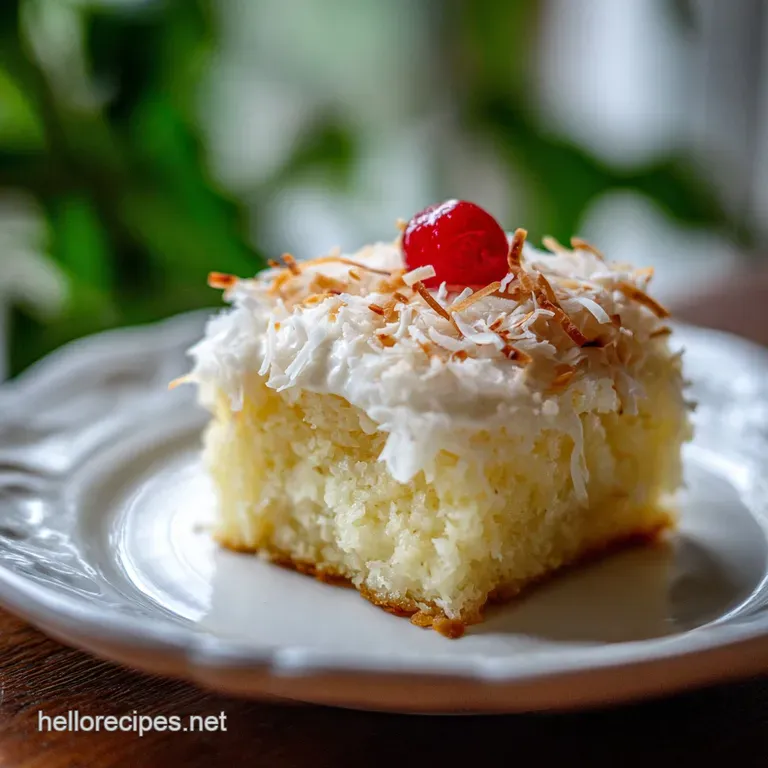
- Preheat your oven to 350°F (175°C). Grease your 9x13 inch pan thoroughly with a bit of coconut oil to ensure no sticking.
- Combine the white cake mix, water, melted coconut oil, 3 egg whites, and 1/2 tsp coconut extract in your large bowl.
- Beat on medium speed for 2 minutes until the batter is smooth and no dry lumps remain.
- Pour the batter into your pan and bake for 28-32 minutes until a toothpick comes out with just a few moist crumbs.
- Remove from the oven and let it sit on a wire rack for exactly 10 minutes. Note: This allows the structure to set so it doesn't collapse when poked.
- Use your wooden spoon handle to poke holes across the surface, about 1 inch apart, going about 3/4 of the way down.
- Whisk the condensed milk and cream of coconut together in a jug until they form a uniform, pourable liquid.
- Slowly pour the mixture over the warm cake, aiming for the holes. Use the back of a spoon to spread any excess liquid.
- Cover the pan tightly with plastic wrap and refrigerate for at least 4 hours. Note: This is where the magic happens and the flavors meld.
- Beat the cold heavy cream, powdered sugar, and vanilla paste in a chilled bowl until stiff, cloud like peaks form.
- Spread the cream over the cold cake and shower it with the 1.5 cups of toasted coconut until the surface is completely covered in gold.
Chef's Tip: If you want an even deeper flavor, try mixing a little bit of the coconut delight into your whipped cream base. You can learn about different textures with my Ube Mochi recipe which also uses coconut to create a unique mouthfeel.
Solving Common Dessert Baking Issues
Preventing the Infamous Center Sink
One of the biggest frustrations is having the center of your cake collapse. This usually happens because the oven door was opened too early or the egg whites weren't fully incorporated. When you open the door to check for doneness, the sudden drop in temperature can shock the rising cake.
Wait until at least the 25 minute mark before peeking. Also, ensure your water is room temperature; cold water can slow down the leavening agents in the mix.
Managing the Liquid Soak
If you find that the liquid is just sitting on top of the cake and not sinking in, your holes might be too small or your cake might have cooled down too much. The heat from the cake helps thin the thick condensed milk, allowing it to move.
If it's stuck on top, simply take your spoon handle and "re poke" through the liquid to give it a path down into the crumb.
| Problem | Root Cause | Solution |
|---|---|---|
| Soggy Bottom | Poking holes all the way to the base of the pan. | Only poke 3/4 of the way down to leave a "floor" for the liquid. |
| Flat Whipped Cream | Cream or bowl was too warm during whipping. | Freeze your whisk and bowl for 10 mins before starting. |
| Dry Cake Edges | Overbaking or uneven liquid distribution. | Pour extra soak around the perimeter where the cake is naturally drier. |
Common Mistakes Checklist:
- ✓ Never use "Cream of Coconut" and "Coconut Milk" interchangeably; the milk lacks the necessary sugar and fat.
- ✓ Ensure the cake is still warm when poking; a cold cake will not absorb the soak effectively.
- ✓ Always toast your shredded coconut; raw coconut is chewy and lacks the nutty depth needed for contrast.
- ✓ Don't over beat the batter after adding egg whites, or the cake will become tough instead of tender.
Scaling Your Dessert
If you need to feed a smaller crowd, you can easily halve this recipe. Use an 8x8 inch square pan and reduce the bake time by about 5-8 minutes. For the eggs, since the original calls for three whites, use two small egg whites or about 1/4 cup of carton egg whites to maintain the moisture balance.
When doubling the recipe for a massive party, I recommend using two separate 9x13 pans rather than one giant one. This ensures the center of the cake cooks at the same rate as the edges.
You can whisk the soak in one large batch, but keep the cakes separate to avoid the "soggy middle" syndrome that happens in oversized pans. For the whipped topping, work in batches if your mixer bowl is small, as overcrowding the cream will prevent it from aerating properly.
Myth Busting the Bakery
One common misconception is that you need to use a fork to poke the holes. Using a fork creates tiny, jagged tears that actually make the cake feel mushy. By using a rounded spoon handle, you create clean "wells" that hold the liquid like little reservoirs, preserving the integrity of the surrounding cake.
Another myth is that "full fat" coconut milk is a good substitute for cream of coconut. It’s not. Coconut milk is mostly water and fat without the emulsified sugars found in the cream.
If you use regular milk, your cake will be watery and lose that signature velvety richness that makes this specific coconut poke cake so famous.
Preserving Freshness and Reducing Waste
This cake is actually better on day two! Because of the high moisture content, it stays fresh in the fridge for up to 4 days. Always keep it covered with plastic wrap or a lid to prevent it from picking up other "fridge smells." If you have leftovers that are starting to look a bit sad, you can scoop them into glasses, add a splash of rum, and call it a "Deconstructed Piña Colada Trifle."
For zero waste tips, save any leftover egg yolks for a rich custard or a lemon curd. The coconut "water" left at the bottom of the cream of coconut can can be tossed into your morning smoothie or used to boil rice for a subtle tropical side dish.
If you toasted too much coconut, store it in a glass jar in the pantry; it stays crunchy for weeks and is brilliant on oatmeal.
Serving Suggestions and Flavor Pairings
While this cake is a star on its own, it plays very well with others. I love serving it alongside a bowl of fresh, tart pineapple or mango to cut through the richness of the coconut. The acidity of tropical fruits balances the heavy cream beautifully.
If you want to go full "island mode," a small glass of dark rum on the side is the ultimate pairing for an adult dessert.
For a different flavor profile, you could even try serving a slice of this next to a Rich Coca Cola Sheet Cake for a "sweet and dark" dessert bar at your next party. The contrast between the fudge like chocolate and the light, snowy coconut is always a hit with guests who can't decide which side of the flavor spectrum they prefer.
- 1. 350°F
- The essential oven temp for a level rise.
- 2. 10 Minutes
- The exact rest time before poking holes.
- 3. 4 Hours
- The minimum chill time for the soak to set.
Enjoy your tropical creation it's truly a slice of paradise!
Frequently Asked Questions
Can I use frozen whipped topping instead of heavy cream?
Yes, you can substitute a 12 ounce tub of thawed whipped topping for the homemade heavy cream mixture. Note that this will be much sweeter than the original recipe, so you may want to reduce the powdered sugar in other components if possible.
Is there a way to make this cake dairy-free?
While the base can be made with coconut oil, the soak requires sweetened condensed milk and the topping uses heavy cream. You can find dairy-free sweetened condensed coconut milk and use a chilled can of full fat coconut cream (beaten until stiff) for the topping to achieve a similar result.
Why did my coconut extract make the batter look curdled?
Extracts contain alcohol, which can sometimes cause a slight separation when mixed with the fats in the cake mix. This is normal and will disappear once you beat the batter for the full 2 minutes as instructed in the steps.
Do I have to use white cake mix, or can I use yellow?
You can use yellow cake mix, but it will change the flavor to be more buttery and "custard like." The visual will also be less "tropical snowy white," appearing more golden through the white cream topping.
How do I toast the coconut without burning it?
Place the shredded coconut in a dry skillet over medium low heat. Stir constantly for 3-5 minutes until it turns a light golden brown. Remove it from the pan immediately once toasted, as the residual heat from the pan can cause it to burn quickly.
Recipe FAQs
What kind of coconut milk is best for poke cake?
Use cream of coconut. This specific ingredient is richer and sweeter than standard canned coconut milk, providing the necessary density to create a velvety, emulsified texture within the cake crumb.
What is the famous Tom Cruise coconut cake?
No, this is a common misconception. The famous cake often associated with him is a white chocolate coconut bundt cake, which differs significantly in preparation and texture from a traditional poke style sheet cake.
How do you prevent a poke cake from being soggy?
Chill the cake for at least 4 hours after soaking. Allowing the liquid to fully emulsify with the crumb prevents the texture from feeling wet or mushy, ensuring a cohesive bite that holds its shape. If you enjoyed the emulsification technique used to bind these liquids, you will find similar principles useful in other baking projects.
What type of frosting is best for a poke cake?
Use a stabilized whipped cream. A mixture of cold heavy whipping cream, powdered sugar, and vanilla paste creates an airy, light topping that balances the density of the soaked cake perfectly.
How to ensure the coconut flavor is consistent throughout?
Poke holes while the cake is still warm. Using the handle of a wooden spoon to create holes spaced 1 inch apart ensures the cream of coconut mixture penetrates deep into the center instead of just coating the surface.
Is it necessary to toast the shredded coconut?
Yes, it provides a crucial texture contrast. Toasting the sweetened shredded coconut adds a nutty depth and a crisp, shatter like finish that cuts through the creaminess of the topping.
How to tell when the cake is finished baking?
Insert a toothpick into the center until it comes out with a few moist crumbs. Baking for 28-32 minutes at 350°F is the target window to ensure the structure is set enough to hold the soak without becoming dry.
Moist Coconut Poke Cake
Ingredients:
Instructions:
Nutrition Facts:
| Calories | 498 kcal |
|---|---|
| Protein | 4.6g |
| Fat | 27.8g |
| Carbs | 60.9g |
| Fiber | 1.2g |
| Sugar | 44.5g |
| Sodium | 342mg |
