The Best Million Dollar Spaghetti: Creamy and Baked
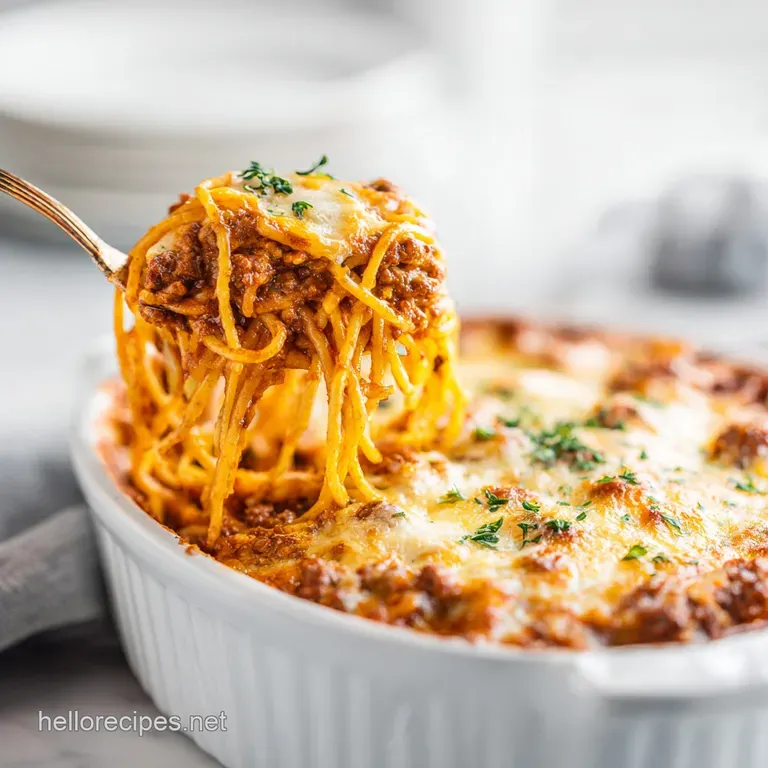
- Time: Active 25 minutes, Passive 45 minutes, Total 70 minutes
- Flavor/Texture Hook: Silky cream cheese center with a golden, bubbly mozzarella crust.
- Perfect for: Sunday family feasts, potlucks, or when you need some serious comfort food.
- Make-Ahead: Assemble completely, cover, and refrigerate up to 24 hours before baking.
- Creating the Best Million Dollar Spaghetti Recipe
- Why This Creamy Bake Works
- Essential Ingredient Deep Dive
- Components for Success
- Necessary Kitchen Tools
- The Master Execution
- Pro Tips & Pitfalls
- Comparing Fresh vs Shortcut
- Scaling the Recipe
- Flavor Variations to Try
- Kitchen Myths Debunked
- Make-Ahead and Leftover Tips
- Presentation Tips
- CRITICAL Sodium Level
- Recipe FAQs
- 📝 Recipe Card
Creating the Best Million Dollar Spaghetti Recipe
We've all been there, right? You pull a beautiful looking pasta bake out of the oven, only to find a sad, watery "spaghetti soup" lurking at the bottom of the dish. It's heartbreaking.
That liquid pool usually happens because the noodles release too much starch or the sauce is too thin, turning what should be a "million dollar" experience into a soggy mess. I spent years trying to figure out how to keep the layers distinct and the noodles "snappy" even after they’ve been smothered in cheese and baked.
This version is the definitive fix for those soggy bottom woes. By coating the noodles in a quick butter and Parmesan mixture, we create a literal shield that keeps the sauce from soaking into the pasta and turning it to mush.
It’s a trick I learned while experimenting with different fusion styles, and honestly, it’s a total game changer for any baked pasta. You get that vibrant, rich flavor of a slow simmered meat sauce paired with a filling so creamy it almost feels like a savory cheesecake layer.
What you can expect here is a dish that actually holds its shape when you slice into it. It’s hearty, it’s bold, and it has that beautiful "shatter" of toasted mozzarella on top. Whether you are a seasoned pro or just starting your journey into home cooking, this recipe is designed to be foolproof.
We aren't just making dinner; we are building layers of texture and aroma that will have your kitchen smelling like a high end Italian bistro in minutes.
Why This Creamy Bake Works
- The Hydrophobic Shield: Coating the spaghetti in melted butter and Parmesan creates a fat based barrier. This prevents the marinara from penetrating the noodle during the 45 minutes of baking, keeping the pasta al dente instead of mushy.
- Triple Fat Emulsification: Combining cream cheese, ricotta, and sour cream creates a stable, thick filling. The sour cream adds a necessary hit of acidity that cuts through the richness of the beef and pork.
- Starch Management: By boiling the pasta for exactly 2 minutes less than the package directions, we leave room for the noodles to absorb just a tiny bit of the savory meat juices without losing their structural integrity.
- The Maillard Depth: Browning the beef and pork together until they reach a deep mahogany color creates complex flavor compounds. This "fond" at the bottom of the pan is what gives the sauce its professional, long simmered taste.
| Method | Time | Texture | Best For |
|---|---|---|---|
| Traditional Oven | 70 minutes | Crispy edges, distinct layers | Weekend family dinners |
| Slow Cooker | 4 hours | Soft, cohesive, and tender | Busy weekdays |
| Stovetop Only | 30 minutes | Loose, saucy, and quick | Instant cravings |
Choosing the right method depends on how much you value that golden crust. While the slow cooker is convenient, you lose the "shatter" of the baked mozzarella that makes this the best million dollar spaghetti recipe in my book.
The oven method allows the heat to circulate, creating those sought after crispy bits around the corners of the 9x13 dish.
Essential Ingredient Deep Dive
| Ingredient | Science Role | Pro Secret |
|---|---|---|
| Cream Cheese | Acts as a structural binder for the creamy layer. | Use full fat, brick style for the thickest, most velvety results. |
| Italian Sausage | Provides fat and aromatic spices (fennel/sage). | Brown it until it's almost "crispy" to maximize savory notes. |
| Sour Cream | Introduces lactic acid to balance heavy fats. | Don't skip this; it prevents the cheese layer from feeling "cloying." |
The magic of this specific spaghetti recipe lies in the interplay between these components. If you've ever used Nans secret meat sauce for a regular dinner, you know how much a good sauce matters, but here, it’s the cheese filling that really takes center stage.
Components for Success
- 16 oz dry spaghetti: The backbone of the dish. Why this? Holds its shape better than thinner angel hair.
- Substitute: Penne or Rigatoni for a different "bite" and sauce holding capacity.
- 4 tbsp unsalted butter, melted: For the pasta coating. Why this? Creates the essential moisture barrier.
- Substitute: Extra virgin olive oil for a lighter, more peppery finish.
- 0.5 cup freshly grated Parmesan cheese: Adds salt and structure. Why this? Melts into the butter to coat every strand.
- Substitute: Pecorino Romano for a sharper, saltier kick.
- 1 lb lean ground beef (85/15 ratio): For meaty bulk. Why this? High enough fat for flavor, but won't be overly greasy.
- Substitute: Ground turkey or plant based crumbles for a lighter version.
- 0.5 lb Italian pork sausage: For spice and depth. Why this? The fennel notes provide a vibrant, multicultural flavor profile.
- Substitute: Ground pork with 1 tsp fennel seeds and a pinch of red pepper.
- 1 medium yellow onion, finely diced: Aromatics. Why this? Sweats down to provide a subtle sweetness.
- Substitute: Shallots for a more delicate, garlicky flavor.
- 4 cloves garlic, minced: The soul of the sauce. Why this? Provides that unmistakable, pungent aroma.
- Substitute: 1 tsp garlic powder in a pinch (but fresh is far superior).
- 28 oz marinara sauce: The liquid base. Why this? A good quality store brand or homemade sauce works perfectly.
- Substitute: Crushed tomatoes with a pinch of sugar and dried basil.
- 1 tsp dried oregano: Earthy notes. Why this? Provides that classic "pizza parlor" aromatic profile.
- Substitute: Fresh oregano, but use triple the amount (3 tsp).
- 0.5 tsp red pepper flakes: For a tiny bit of heat. Why this? Cuts through the creamy cheese layers.
- Substitute: A dash of cayenne or Calabrian chili paste.
- 8 oz full fat cream cheese, softened: The creamy "glue." Why this? Offers a rich, tangy foundation.
- Substitute: Neufchâtel for a slightly lower fat content.
- 1 cup whole milk ricotta cheese: For texture. Why this? Adds a pleasant graininess and lightness.
- Substitute: Cottage cheese (small curd) for a higher protein, tangier filling.
- 0.25 cup sour cream: The secret balancer. Why this? Softens the cream cheese for easier spreading.
- Substitute: Plain Greek yogurt for a similar tang and texture.
- 0.5 cup scallions, thinly sliced: For a fresh pop. Why this? Breaks up the heaviness with a vibrant, oniony crunch.
- Substitute: Fresh chives or finely chopped leeks.
- 0.5 tsp kosher salt: Seasoning. Why this? Enhances every other ingredient without being overbearing.
- Substitute: Sea salt (use slightly less if the grains are fine).
- 2 cups low moisture mozzarella cheese, shredded: The topper. Why this? Best melt and "pull" factor for baking.
- Substitute: Provolone or a Monterey Jack blend.
- Fresh parsley: Garnish. Why this? Adds a clean, herbal finish to the plate.
- Substitute: Fresh basil leaves, torn by hand.
Necessary Kitchen Tools
To really get this spaghetti recipe right, you’ll need a large skillet (at least 12 inches) to brown the meats without crowding them. If you use a pan that's too small, the meat will steam instead of sear, and you’ll miss out on that deep, savory flavor.
I also highly recommend a high-quality 9x13 inch baking dish ceramic or glass works best for even heat distribution.
You will also need a large pot for boiling the pasta. Remember to salt your water heavily; it should taste like the sea. This is your only chance to season the pasta itself! A good whisk or even a stand mixer can make short work of the cream cheese filling, ensuring it is absolutely silky and free of lumps before you start the layering process.
The Master Execution
1. Searing The Meats
Set your large skillet over medium high heat. Add the ground beef and the Italian pork sausage. Use a sturdy spatula to break the meat into small crumbles. You want to cook this until the moisture evaporates and the meat starts to sizzle in its own fat.
Look for a deep mahogany color this is where the flavor lives. Once browned, drain the fat but keep about a tablespoon in the pan. Toss in the onions and garlic. Sauté them until the onions turn translucent and the garlic releases that intoxicating, mouth watering aroma.
2. Simmering The Robust Sauce
Pour the marinara sauce directly into the skillet with the meat. Add your oregano and red pepper flakes. Lower the heat and let it simmer for 10 minutes. This isn't just about heating it up; it's about the sauce reducing and thickening. A thicker sauce is your best defense against a watery casserole.
As it simmers, the fat from the sausage will emulsify into the tomato sauce, creating a rich, vibrant orange red hue that smells like a dream.
3. Par Boiling The Pasta
While the sauce is doing its thing, boil your spaghetti. This is a precision checkpoint: cook it for exactly 2 minutes less than the "al dente" instructions on the box. If the box says 9 minutes, cook it for 7. Drain the water, and while the pasta is still steaming hot, toss it with the melted butter and Parmesan. You’ll see the cheese melt into a glossy, velvety coating. If you've ever tried to make homemade pasta, you know the texture is everything this step preserves that "bite."
4. Whisking The Silky Cheese Filling
In a separate bowl, combine your softened cream cheese, ricotta, and sour cream. Add the scallions and salt. Whisk this vigorously until it is smooth. The scallions are key here they add a fresh, vibrant green color and a subtle "zing" that keeps the dish from feeling too heavy.
It should look like a thick, spreadable frosting. If it’s too cold, it will be hard to layer, so make sure that cream cheese is truly room temperature.
5. Executing The Structural Layering
Preheat your oven to 350°F (180°C). Lightly grease your 9x13 dish. Now, the build: place half of your buttered spaghetti in the bottom, pressing it down slightly. Spread the entire cream cheese mixture over the top in an even layer. This acts as a soft, pillowy cushion.
Top with the remaining spaghetti, then pour your thickened meat sauce over the whole thing. The layers should be visible from the side of the dish if it’s glass.
6. Finishing with a Golden Crust
Sprinkle the shredded mozzarella evenly over the top. Make sure to get it all the way to the edges, as those corner bits of burnt cheese are everyone's favorite part. Place it in the oven for 30 to 35 minutes.
You are looking for the cheese to be fully melted, bubbly in the center, and beginning to brown at the edges. The aroma of toasted cheese and garlic will fill your entire home. Let it sit for 5 minutes before slicing this is crucial for the layers to set up!
Pro Tips & Pitfalls
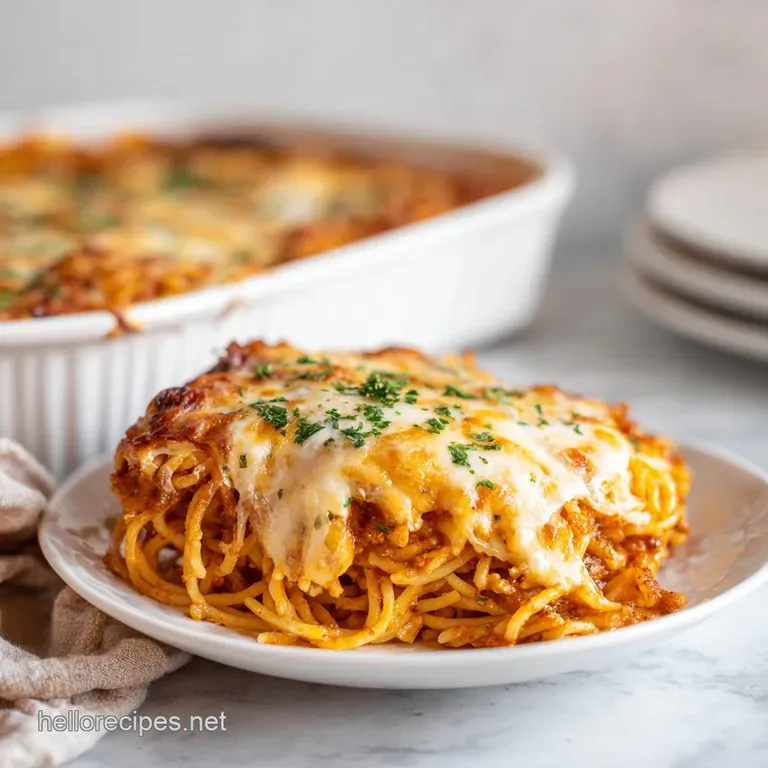
One of the biggest mistakes people make with this dollar spaghetti recipe is using "pre shredded" cheese from a bag. Those bags are coated in potato starch to keep the shreds from sticking together, which also prevents them from melting into that beautiful, stretchy blanket of goodness we want.
If you have the time, grate your own mozzarella from a block. It makes a world of difference in the final texture.
Another common pitfall is not draining the meat well enough. If you leave too much grease in the pan, it will separate during the baking process and rise to the top, making the cheese layer look oily. Stick to that 1 tablespoon rule.
If you find your sauce is still looking a bit thin after simmering, let it go for another 5 minutes uncovered. We want a thick, chunky consistency that stays put when layered.
Avoiding the Liquid "Pool" at the Bottom
If you find liquid at the bottom of your dish, it's usually because the onions or the sauce released too much water. To fix this, ensure your onions are fully cooked and "sweated" before adding the sauce. Also, using a high-quality, thick marinara is essential.
If your sauce is naturally watery, stir in a tablespoon of tomato paste during the simmering stage to tighten everything up.
| Problem | Root Cause | Solution |
|---|---|---|
| Soggy Noodles | Pasta was overcooked before baking. | Boil 2 mins less than al dente; use the butter/parm coating. |
| Separating Layers | Filling was too cold or too thin. | Ensure cream cheese is softened; use full fat ricotta. |
| Oily Top Layer | Meat wasn't drained properly. | Drain meat thoroughly; use low moisture mozzarella. |
Preventing a Dry Top Layer
On the flip side, nobody wants dry spaghetti. If your oven runs hot, the top layer of noodles might get crunchy if they aren't fully covered by sauce and cheese. Make sure every inch of the top spaghetti layer is submerged in the meat sauce before you add the mozzarella.
This keeps the moisture trapped inside the "pasta sandwich" and ensures every bite is tender.
Common Mistakes Checklist:
- ✓ Did you salt the pasta water? (If not, the dish will taste flat.)
- ✓ Is the cream cheese fully softened? (Cold cheese results in a lumpy filling.)
- ✓ Did you drain the meat? (Excess grease leads to a messy bake.)
- ✓ Did you par boil the noodles? (Fully cooked noodles will turn to mush.)
- ✓ Did you let it rest for 5 minutes? (Slicing too early causes the layers to slide.)
Comparing Fresh vs Shortcut
| Feature | Fresh From Scratch | Shortcut Version |
|---|---|---|
| Meat Sauce | Slow simmered beef & sausage | Jarred marinara + browned beef |
| Cheese Filling | Ricotta, sour cream, & cream cheese | Just cream cheese & jarred alfredo |
| Texture Impact | Vibrant, layered, and complex | Monochromatic and very soft |
While shortcuts exist, the "million dollar" name comes from the richness provided by that specific three cheese blend. Using a jar of alfredo as a shortcut for the middle layer will result in a much saltier, thinner dish that lacks the structural integrity of the ricotta cream cheese mix.
Scaling the Recipe
If you are cooking for a smaller crowd, you can easily halve this spaghetti recipe. Use an 8x8 inch square baking dish instead of the 9x13. You’ll want to reduce the baking time by about 5 to 10 minutes, but keep an eye on the cheese once it's golden and bubbly, it's ready.
For a single person, you can even assemble these in individual ramekins for "mini" million dollar bakes.
To double the recipe for a big party, I suggest making two separate 9x13 dishes rather than one giant deep pan version. When the dish is too deep, the middle takes forever to heat through, and the edges will burn before the center is bubbly.
If you must use a larger pan, lower the oven temperature to 325°F (160°C) and increase the baking time by 15 to 20 minutes, covering the top with foil for the first half of the bake to prevent the cheese from over browning.
Flavor Variations to Try
Enhancing with Roasted Vegetables
For a vibrant, multicultural twist, I love adding roasted red peppers or sautéed mushrooms to the meat sauce. It adds an extra layer of umami that makes the dish feel even more "expensive." You can also stir in some chopped spinach into the cream cheese layer just make sure to squeeze all the water out of the spinach first, or you'll be right back in "spaghetti soup" territory!
Swapping the Protein
While the beef and pork combo is traditional, you can make this more fusion friendly by using spicy chorizo for a Mexican inspired kick, or ground lamb and a touch of cinnamon for a Greek "Pastitsio" vibe.
If you want to go plant based, use a high-quality meat substitute and swap the ricotta for a firm tofu based "ricotta." The "best million" part of the name is all about the richness, so don't skimp on the fat content of your swaps.
If you want X, do Y: If you want a spicier kick, add 1 tbsp of Calabrian chili paste to the sauce. If you want a crunchier top, mix 1/2 cup of Panko breadcrumbs with the mozzarella.
If you want a lighter feel, use ground turkey and 2% Greek yogurt instead of sour cream.
Kitchen Myths Debunked
Many people believe you should rinse your pasta after boiling to "stop the cooking." Please, don't do this! Rinsing washes away the surface starch that helps the butter and Parmesan stick to the noodles. Instead, just drain it well and move immediately to the tossing stage.
The residual heat is actually your friend here it helps create that hydrophobic barrier we talked about earlier.
Another myth is that you need to cook the meat sauce for hours. While a long simmer is great for a Sunday gravy, this specific recipe relies on the oven time to meld the flavors together.
A 10 minute simmer on the stove is plenty because the sauce will continue to develop and "marry" with the cheese layers for another 35 minutes in the oven.
make-ahead and Leftover Tips
This is one of those rare dishes that might actually taste better the next day. The flavors have time to truly settle, and the cheese filling firms up perfectly. You can store leftovers in an airtight container in the fridge for up to 4 days.
When reheating, I recommend the oven or an air fryer to get some of that "crisp" back on the cheese. If using a microwave, add a tiny splash of water to the plate to keep the noodles from drying out.
- Fridge
- 4 days in a sealed container.
- Freezer
- 3 months. Wrap tightly in plastic wrap and then foil to prevent freezer burn.
- Zero Waste Tip
- If you have leftover meat sauce but no noodles, it makes an incredible topping for baked potatoes or a filling for "Sloppy Joe" style sliders the next day!
Presentation Tips
To make this look like the best million dollar pasta recipe it claims to be, garnish is everything. Don't just slap it on a plate! Use a sharp knife or a bench scraper to cut clean, square portions. Use a wide spatula to lift the squares out, ensuring you get all the layers intact.
A heavy sprinkle of fresh, vibrant green parsley and a few extra shavings of Parmesan on top will make the colors pop.
For a true "fusion" presentation, serve it alongside a crisp arugula salad with a lemon truffle vinaigrette. The bitterness of the arugula and the acidity of the lemon act as the perfect palate cleanser between bites of the rich, cheesy spaghetti.
Serving it in shallow white bowls also helps highlight the distinct red and white layers of the bake.
This spaghetti recipe isn't just about the food; it's about the feeling of luxury you get from simple ingredients used correctly. When you pull that bubbling, aromatic dish out of the oven, you’ll see exactly why it's worth every bit of the effort. Enjoy every cheesy, saucy bite!
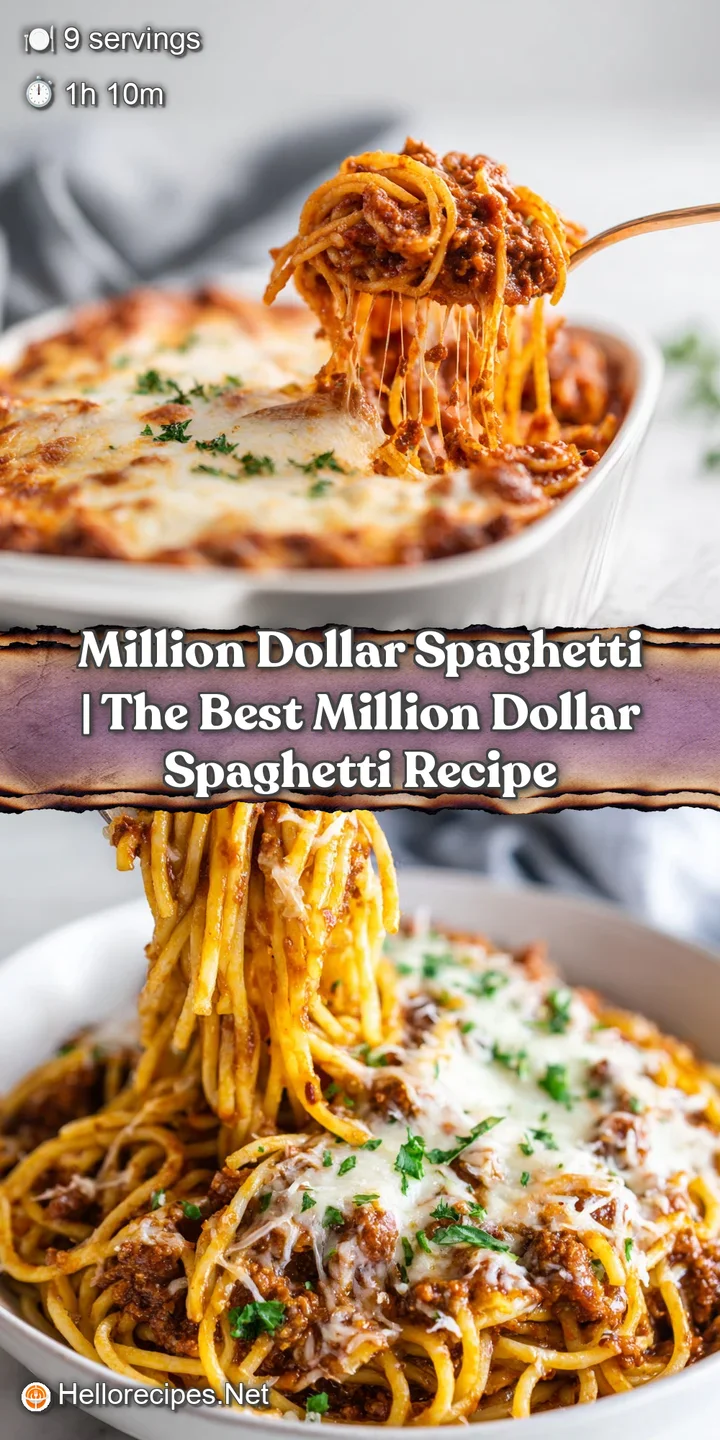
CRITICAL Sodium Level
1185 mg 1185 mg of sodium per serving (52% 52% of daily value)
The American Heart Association recommends a limit of 2,300mg per day for most adults, aiming for an ideal limit of 1,500mg per day.
Tips to Reduce Sodium
-
Choose Lower Sodium Cheeses-25%
Opt for low-sodium Parmesan cheese and use half the amount of mozzarella and ricotta. The flavor will still be present, significantly reducing sodium.
-
Select Low-Sodium Marinara-20%
Switch to a low-sodium or no-salt added marinara sauce. This single change can drastically lower the overall sodium content of the dish.
-
Leaner, Unseasoned Meats-20%
Use uncured, unseasoned lean ground beef and Italian pork sausage. If uncured is unavailable, rinse the sausage well before cooking to remove excess sodium.
-
Reduce Added Salt-15%
Eliminate the 0.5 tsp of kosher salt entirely. You can always add a tiny pinch at the end if absolutely necessary, but the cheeses and sauce provide a lot of saltiness.
-
Boost Flavor with Herbs
Increase the use of fresh garlic, onions, oregano, and red pepper flakes. Consider adding other herbs like basil or a bay leaf to the sauce for extra depth of flavor.
-
Lighten Up the Creamy Components-10%
Replace the full fat cream cheese and sour cream with light cream cheese or a lower sodium cream cheese alternative. Consider using part skim ricotta as well.
Recipe FAQs
How to prevent the spaghetti from becoming a soggy, watery mess?
Boil the pasta for 2 minutes less than the package al dente instructions. Immediately toss the drained noodles with melted butter and grated Parmesan to create a protective hydrophobic barrier that keeps them firm during the bake.
Can I prepare this dish in advance for a dinner party?
Yes, assemble the entire dish up to 24 hours ahead of time. Keep it covered in the refrigerator and simply add the final bake time to your schedule once you are ready to serve.
Is it true that I should use a high heat oven to get the cheese bubbly?
No, this is a common misconception. You must maintain a steady 350°F (175°C) oven temperature to ensure the interior layers heat through thoroughly without drying out the edges or burning the mozzarella topping.
How to achieve the perfect texture for the meat sauce?
Brown the beef and sausage until they reach a deep mahogany color, then simmer for at least 10 minutes. If you enjoyed mastering the velvety texture here, you will notice that this simmering technique is essential for intensifying the savory depth of the sauce.
What should I do if my cream cheese layer feels too thick to spread?
Whisk the cream cheese, ricotta, and sour cream vigorously until the consistency is smooth and silky. Ensuring the cream cheese is fully softened to room temperature before mixing is the most effective way to guarantee an even, spreadable layer.
How long should I bake the spaghetti to ensure the cheese is perfectly golden?
Bake the dish for 30 35 minutes at 350°F (175°C). This timeframe is specifically calibrated to melt the mozzarella into a bubbly, golden crust while heating the creamy center to a luxurious temperature.
How to effectively drain the meat mixture before assembling?
Drain the excess fat using a slotted spoon or by tilting the skillet carefully, but leave exactly 1 tablespoon in the pan. This small amount of fat is vital for sautéing the onions and garlic to build the foundation of your flavor profile.
Million Dollar Spaghetti 2
Ingredients:
Instructions:
Nutrition Facts:
| Calories | 692 kcal |
|---|---|
| Protein | 29g |
| Fat | 43g |
| Carbs | 46g |
| Fiber | 3.5g |
| Sugar | 7g |
| Sodium | 1185mg |
