Classic Italian Zeppole Light Puffy Donut Holes
- Beyond the Doughnut: Understanding the Magic of Zeppole
- A Taste of Tradition: The History Behind St. Joseph’s Pastry
- Essential Pantry & Equipment Checklist
- The Technique: Step-by-Step Guide to Zeppole Mastery
- Frying Fundamentals: Getting That Perfect Golden Crust
- Troubleshooting and Expert Tips for Guaranteed Success
- Storage, Reheating, and Delicious Variation Ideas
- Recipe FAQs
- 📝 Recipe Card
Beyond the Doughnut: Understanding the Magic of Zeppole
When many think of fried dough, they picture heavy, yeast leavened American doughnuts. But the beloved Italian Zeppole offer an entirely different, far lighter experience.
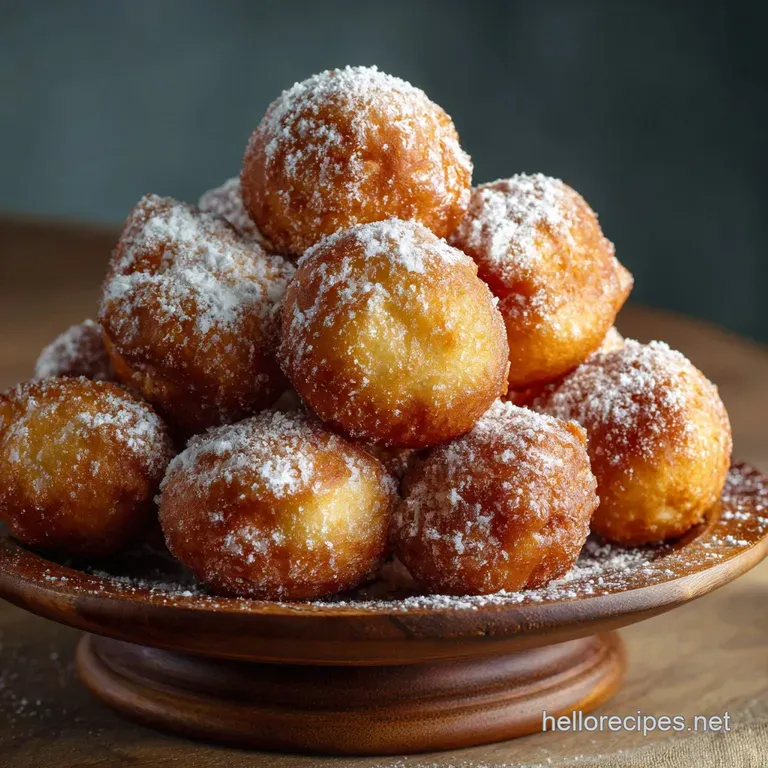
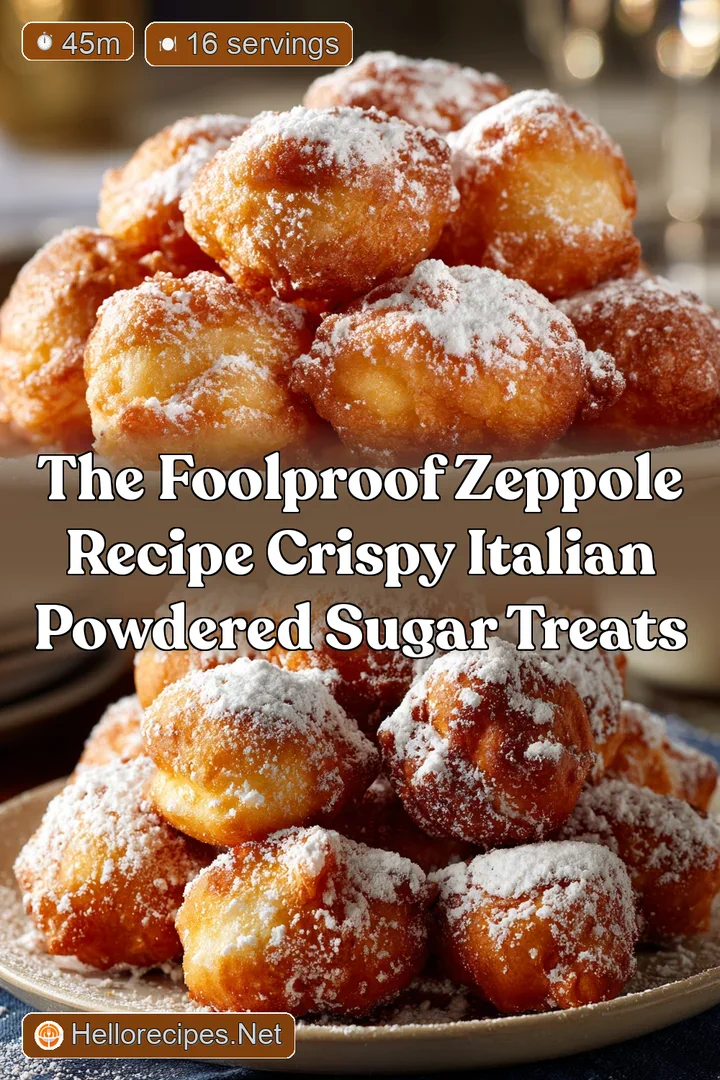
These are the quintessential Italian Sweet Powdered Sugar Treats , characterized by their airy, almost hollow centres and delightfully crispy shells. Our goal with this zeppole recipe is to bypass the sticky, heavy texture often associated with deep fried dough and instead create a delicate puff structure.
The secret lies in using pâte à choux , the same versatile batter used for eclairs and profiteroles. This ingenious French derived technique involves cooking the dough twice once on the stovetop to dry it out, and again in the hot oil which allows the internal moisture to instantly turn to steam, forcing the dough to balloon into the perfect sphere.
This Homemade Donut Holes Recipe is guaranteed to elevate your dessert repertoire.
A Taste of Tradition: The History Behind St. Joseph’s Pastry
While Zeppole are enjoyed year round across Italy, they hold particular cultural significance as St. Joseph's Pastry, traditionally prepared and consumed on Festa di San Giuseppe (St. Joseph’s Day) on March 19th.
This religious holiday coincides beautifully with the arrival of spring, and the sweet, light puffs symbolize abundance and celebration. Depending on the region, the name and exact preparation may shift, but the core essence remains: a celebration of simple, perfected fried dough.
These classic treats make wonderful, festive Party Dessert Ideas for any occasion, carrying centuries of culinary history in every bite.
Why Choux Pastry Makes Superior Puffs
The use of pâte à choux is the fundamental difference that sets Zeppole apart from standard yeast donuts. Choux, which translates literally to "cabbage paste," relies on mechanical lift rather than biological leavening.
By cooking butter, water, and flour together on the stovetop, we create a stable, starchy paste called the panada. This process gelatinizes the starches and, critically, evaporates excess moisture.
When this relatively dry dough is then plunged into hot oil, the remaining water turns instantly to high pressure steam, stretching and puffing the dough walls thin. This results in the characteristic light, almost hollow interior the ideal texture for a perfect zeppole dessert .
The Difference Between Roman and Neapolitan Styles
The term Zeppole can refer to several regional pastries. The Neapolitan style, perhaps the most famous variation, typically involves piping the choux dough into larger rings, frying them, and then filling them lavishly with a rich custard ( crema pasticcera ) and topping them with candied cherries.
Our current method, emphasizing small, perfectly spherical puffs tossed in sugar, leans more toward the lighter Roman and Southern Italian traditions. These are simple, rustic Powdered Sugar Donut Holes , designed to be eaten quickly and enjoyed for the purity of their texture and finish.
What to Expect: Texture, Flavor, and Finish
A truly successful batch of Zeppole boasts an unbelievably delicate texture. Expect a paper thin, golden crust that yields instantly to reveal a soft, airy, and occasionally completely hollow centre.
The flavour profile is subtly rich, driven by the butter in the choux dough, which is beautifully offset by the vibrant lift provided by the finish. We enhance the traditional dusting of confectioners’ sugar with a whisper of lemon zest, adding a bright, acidic counterpoint that prevents the finished Sweet Powdered Sugar Treats from tasting heavy or overly sweet.
Essential Pantry & Equipment Checklist
Achieving bakery quality Zeppole demands precision, but the ingredients are remarkably straightforward. Success is less about expensive items and more about careful measuring and temperature control.
The Simple Ingredients Required
The heart of this zeppole recipe relies on four core elements: water, unsalted butter, all-purpose flour, and eggs. We use just one cup of water, half a cup of butter (cubed for rapid melting), and one cup of sifted flour.
A small amount of granulated sugar and sea salt are added to the initial liquid for balance. The single most important ingredient variable is the egg count: while 3 to 4 large eggs are specified, the exact amount depends entirely on how much moisture was evaporated during the stovetop cooking.
Using room temperature eggs is vital to ensure they emulsify smoothly into the warm dough without splitting or scrambling.
Precision Tools for Choux Success (Scales and Piping Bags)
While some recipes allow for estimation, choux pastry thrives on accuracy. A heavy bottomed saucepan is necessary for even heat distribution during the cooking of the panada. An electric stand mixer with a paddle attachment is highly recommended for incorporating the eggs, as this requires sustained, powerful mixing.
Finally, to create those uniform, beautiful shapes, a piping bag fitted with a large round or star tip is the expert way to execute this Homemade Donut Holes Recipe . If you lack a piping bag, two small spoons dampened with water are a perfectly serviceable substitute for dropping the dough.
Choosing the Best Oil for Frying Zeppole
Frying temperature is non-negotiable, requiring a high-quality, high smoke point oil. Canola, peanut, or grapeseed oil are ideal choices, as they can safely handle the required temperature of 360° F ( 180° C) without breaking down or imparting undesirable flavours.
You will need approximately four cups of oil to achieve the necessary two-inch depth for the puffs to float and cook evenly. Crucially, a reliable deep fry thermometer is essential; guessing the oil temperature leads to greasy, poorly structured results.
The Technique: step-by-step Guide to Zeppole Mastery

Mastering the zeppole recipe is a medium difficulty culinary endeavor, but with focused attention on the crucial cooking stages, success is guaranteed. The process is divided into three distinct phases: cooking the panada, building the structure with eggs, and careful frying.
Frying Fundamentals: Getting That Perfect Golden Crust
Creating the Foundation: Cooking the Panade
The process begins by combining the water, butter, salt, and sugar in your saucepan and bringing it quickly to a rolling boil over medium high heat. Once boiling, remove the pan from the heat immediately and dump all the sifted flour in at once. Stir vigorously until the dough comes together.
Return the pan to medium heat and continue stirring and working the dough aggressively for 1– 2 minutes. This crucial step, known as drying out the panada, is complete when the dough forms a smooth ball that cleanly pulls away from the sides, and a thin film of cooked starch adheres to the bottom of the pan.
Incorporating Eggs: Building the Right Consistency
Transfer the hot panada to your mixer bowl and beat it on medium speed for two minutes to release excess steam and cool it down. This prevents the eggs from scrambling. Add the room temperature eggs one at a time, allowing each to be fully incorporated before adding the next.
The dough is ready when it is glossy, smooth, and pliable. The ultimate test is the "ribbon" test: when the paddle attachment is lifted, the dough should fall slowly and hold a soft 'V' shape for a moment before dropping back. This ideal consistency ensures the dough will hold its shape in the fryer and puff correctly.
If the batter is too thin, it will immediately collapse. This attention to detail is key in How To Make Donut Holes that are perfectly airy.
Piping Precision: Preparing the Shapes for Frying
Once the choux dough is ready, transfer it immediately into the piping bag. Carefully pipe 1 2 inch rounds or strips directly into the pre-heated oil (maintained at 360° F or 180° C).
Use clean scissors or a sharp knife to snip the dough cleanly from the tip of the piping bag. Alternatively, use the two-dampened spoon technique to drop small rounds. Uniform sizing is important to ensure all the Homemade Donut Holes Recipe puffs cook at the same rate.
Monitoring Temperature: The Key to Even Cooking
Oil temperature is the single most significant factor in achieving a non-greasy, perfectly puffed zeppole dessert . Fry the dough in small batches (4 6 pieces maximum) to avoid dropping the oil temperature below 350° F ( 175° C).
Cook the Zeppole for 3– 5 minutes per batch, turning occasionally, until they are deep golden brown and sound hollow when gently tapped. A cooler temperature results in oil absorption and heavy dough; a hotter temperature burns the exterior before the interior is fully cooked and puffed.
The Final Dusting: Serving and Presentation
Immediately upon removing the cooked Zeppole from the oil, place them on a wire rack lined with paper towels to drain excess fat. While still warm, gently toss them in a generous coating of confectioners' sugar. For an authentic Italian touch, incorporate finely grated lemon zest into the sugar blend before dusting.
Serve the resulting Powdered Sugar Donut Holes promptly to capture that perfect marriage of crispy crust and warm, airy interior.
Troubleshooting and Expert Tips for Guaranteed Success
Success with this zeppole recipe relies on anticipating the common pitfalls of choux pastry. First, always prioritize drying the panada thoroughly on the stove; if you skip the 1– 2 minutes of cooking and stirring, the dough will be too wet and collapse in the fryer.
Second, trust the egg consistency test , not the measurement; use only enough egg to achieve that perfect ribbon consistency, even if it means discarding half an egg.
Third, invest in the deep fry thermometer and maintain the 360° F ( 180° C) target without fail oil that is too cool is the primary cause of greasy, heavy Sweet Powdered Sugar Treats .
Storage, Reheating, and Delicious Variation Ideas
The Cold Choux Rule: Why Temperature Matters Before Frying
While choux dough can be prepared ahead of time, it is highly sensitive to rapid temperature drops during frying. If preparing the dough in advance, store it in the refrigerator. However, for optimum results, allow the dough to sit at room temperature for 15 minutes before piping and frying.
Piping cold dough into the oil will instantly lower the oil temperature, leading to slow cooking and grease absorption.
Handling Leftovers: Keeping Zeppole Crispy
Zeppole are always best consumed immediately after the final dusting. However, if you have leftovers, store them at room temperature in a loosely covered container. Never refrigerate them, as this encourages moisture absorption and a soggy texture.
To restore their crispness, place them on a baking sheet and reheat them in a preheated oven at 350° F ( 175° C) for five minutes before re-dusting with fresh confectioners' sugar.
Sweet Sauces and Fillings to Elevate Your Zeppole
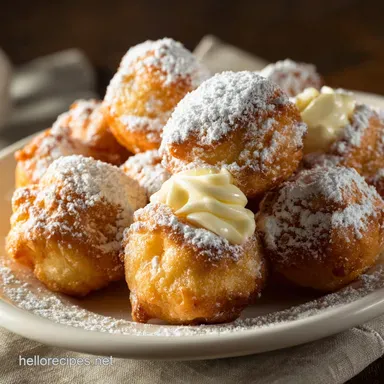
While delicious simply dusted, Zeppole offer a fantastic base for creativity. For beautiful Party Dessert Ideas , consider filling the cooled puffs. Use a piping bag fitted with a thin tip to inject the puffs with classic vanilla or chocolate pastry cream, or serve them alongside a warm dark chocolate ganache or a tart raspberry coulis for dipping.
These additions transform the simple fried dough into an elegant zeppole dessert .
Can I Bake Zeppole Instead of Frying? (Healthier Options)
Yes, you can absolutely bake Zeppole for a healthier alternative. While they won't achieve the exact buttery crust depth that frying provides, the choux pastry principle still works.
Pipe the dough onto a parchment lined baking sheet and bake at a high temperature, typically 400° F ( 200° C), for 20 to 25 minutes.
The puffs will still swell beautifully and gain a lovely golden crust, providing a guilt free way to enjoy this classic Homemade Donut Holes Recipe .
Recipe FAQs
Why are my Zeppole sinking faster than the Titanic? They look great when I pull them out, but then they collapse.
This is a classic choux tragedy, but it’s completely fixable! It usually means the inside is still a bit raw, which happens if the frying oil is too cool or if you didn't cook the panada (the dough mass) long enough on the stovetop initially.
Ensure your frying oil stays precisely at 360°F (180°C) if it's too cool, the steam won't fully inflate and set the interior structure before the outside browns. Give them a minute longer than you think they need; they should sound hollow when tapped.
This recipe looks brilliant, but can I prep the Zeppole dough the night before?
That’s a grand plan for saving time! Unfortunately, choux pastry isn't a fan of sitting around, particularly once the eggs are incorporated. If you try to chill it overnight, it loses its essential elasticity and moisture balance, leading to heavy, dense, and potentially greasy results when fried.
Your best bet is to make the dough just before frying, but you can certainly measure all your dry ingredients and cube the butter ahead of time to streamline the morning prep.
Crikey, deep frying feels a bit much. Can I bake these instead of frying?
Absolutely! While the traditional fried method delivers maximum puffiness and a crispy shell, the choux dough is robust enough for baking. Pipe them onto a baking tray lined with parchment paper and bake them at 400°F (200°C) for 20-25 minutes until golden and well puffed.
They won't absorb oil, making them a slightly lighter option a decent trade off, like swapping your roasties for mash!
What’s the real difference between these Zeppole and a standard British or American doughnut?
The difference is down to the base dough. Standard doughnuts rely on yeast and kneading, making them bready and chewy. Zeppole, however, rely on pâte à choux (cooked dough), which uses steam for lift.
This technique creates a pastry that is incredibly light, often hollow inside, and achieves that signature crisp exterior it’s much more delicate and refined than its yeast raised cousins.
I’ve run out of icing sugar. Are there any other classic Italian ways to serve Zeppole?
Don’t fret, plenty of fantastic finishing touches exist! If you're going the classic Neapolitan route, split them open and fill them with silky crema pasticcera (pastry cream) and top with a candied cherry or a dusting of cinnamon.
For a speedy alternative, a generous drizzle of good quality honey or a simple dusting of granulated sugar mixed with fine lemon zest works wonders no need to panic!
Crispy Italian Zeppole Recipe
Ingredients:
Instructions:
Nutrition Facts:
| Calories | 236 kcal |
|---|---|
| Protein | 2.1 g |
| Fat | 8.9 g |
| Carbs | 19.6 g |
| Fiber | 0.2 g |
| Sodium | 2529 mg |
