The Ultimate Weeknight Warrior Homemade Pizza Crispy Crust Classic Flavour

- Ditch the Delivery: Why This Homemade Pizza Recipe Reigns Supreme
- The Secret to a Weeknight Win: Perfecting Your Dough Game
- Gathering the Building Blocks for Artisan Flavor
- Precise Proportions: What You Need for the Dough and Sauce
- Mastering the Method: A Seamless Step-by-Step Journey to Baking
- Shaping, Saucing, and Setting the Stage for High Heat
- Taking Your Homemade Pizza to the Next Level: Expert Tweaks and Twists
- Troubleshooting Common Kitchen Mishaps
- Recipe FAQs
- 📝 Recipe Card
Ditch the Delivery: Why This Homemade Pizza Recipe Reigns Supreme
There’s an undeniable magic that happens when you take simple ingredients flour, water, yeast and transform them into something spectacular. Forget the lukewarm, cardboard bases you get from the local takeaway; this Homemade Pizza Recipe is your ticket to authentic, blistered, chewy crusted heaven, all achievable in your standard home oven.
Mastering pizza is often seen as a culinary Everest, but I promise you, once you understand the fundamentals of a truly great Homemade Pizza Dough Recipe , the rest is pure joy.
This guide focuses on simplicity without sacrificing flavor, ensuring you achieve that perfect balance of crispy base and vibrant toppings every single time.
The Secret to a Weeknight Win: Perfecting Your Dough Game
The foundation of any superior pizza lies entirely in the dough. If the base isn't right, no amount of premium cheese can save it. Our goal here is the Best Homemade Pizza Dough —one that’s easy enough for a dedicated weeknight cook yet robust enough to handle generous Homemade Pizza Toppings .
Unlocking Chewy Perfection: The Core Philosophy
Chewiness in a crust comes from two things: sufficient gluten development and slow, cool proofing (though we are optimizing for a quicker rise here). We aim to develop strength in the dough through careful kneading, allowing the yeast time to create the necessary gases that puff up the edges into airy pockets, or cornicione, once they hit the extreme heat of the oven.
This structure is what differentiates an acceptable pizza from an unforgettable one.
What Makes This Approach So Dependable?
This specific formula utilizes a standard amount of yeast activated with a touch of sugar to ensure a fast, reliable rise, making this a practical Italian Pizza Dough Tutorial for home cooks pressed for time.
By employing a high baking temperature and a preheated cooking surface, we mimic the intense heat of a wood fired oven, shocking the dough into immediate, beautiful expansion, giving us the ideal Homemade Pizza Crust .
Setting the Stage: Essential Gear for Pizza Success
While you can make pizza on a regular sheet pan, the results are exponentially better when you use a dedicated surface. The critical piece of equipment here is a baking stone or steel .
These dense materials absorb and retain immense heat, transferring that energy directly into the bottom of your dough the moment it makes contact, which is the secret to avoiding a soggy middle.
If you don’t have one, simply invert a heavy duty baking sheet and let it preheat for the full duration it’s a fantastic substitute for achieving that necessary crispness.
Gathering the Building Blocks for Artisan Flavor
To build a pizza that sings, we must source ingredients that respect simplicity. Great pizza does not rely on complexity; it relies on the quality of its components, especially when crafting a Fresh Tomato Pizza Sauce Recipe .
Precise Proportions: What You Need for the Dough and Sauce
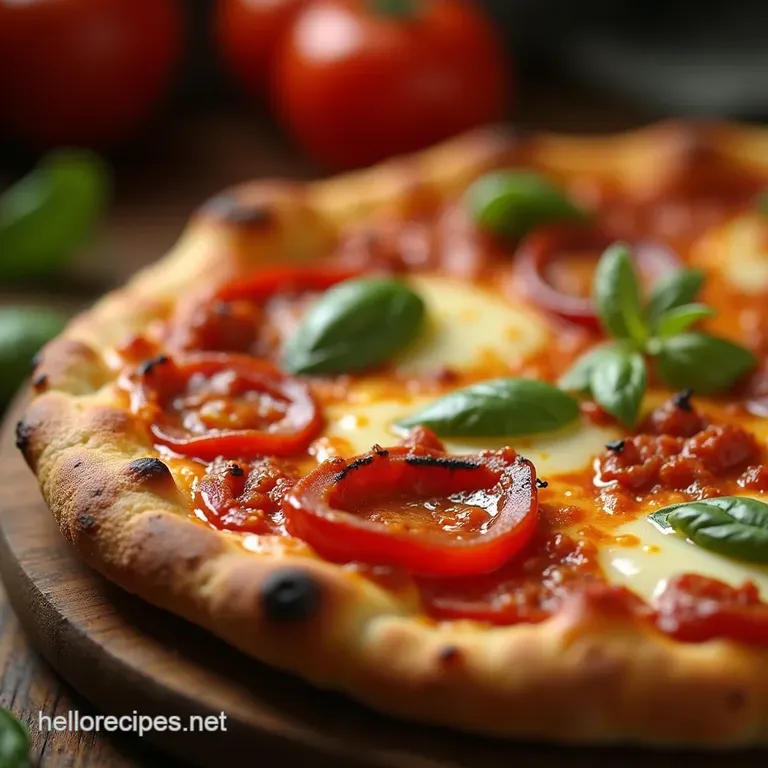
Every great Homemade Pizza starts with measured excellence. For this recipe, yielding two satisfying 12 inch pizzas, we need attention to detail in both the structure and the spread.
Flour Power: Choosing the Right Base Ingredients
While all-purpose flour works admirably, if you can source Strong Bread Flour , use it. Its higher protein content (typically 12-14%) directly translates to better gluten formation, leading to that desirable, stretchy texture.
For the base liquid, ensure your water is just lukewarm around 105° F to 115° F warm enough to wake up the yeast but cool enough not to scald it.
The Freshness Factor: Selecting Vibrant Toppings and Cheeses
For a classic Margherita style, the cheese choice is paramount. Opt for Low-Moisture Mozzarella . Fresh mozzarella packed in brine is delicious, but it releases too much water during baking, guaranteeing a wet pizza center.
Low-moisture, ideally bought as a block and shredded or torn yourself, melts beautifully without excessive pooling. For the sauce, quality canned tomatoes specifically San Marzano style provide a naturally sweeter, less acidic base for our Fresh Tomato Pizza Sauce Recipe .
Activating the Rise: Yeast and Liquid Specifications
The lifeblood of the dough is the yeast. We use standard active dry yeast, bloomed in warm water with a pinch of sugar (which acts as immediate food). This initial foaming step confirms the yeast is viable, guaranteeing a robust rise during the proving stage.
After mixing, 2 tablespoons of good quality extra virgin olive oil are incorporated, adding flavor, flexibility, and tenderness to the final Homemade Pizza Crust .
Related Recipes Worth Trying
- The Only Pizza Dough Recipe Youll Ever Need — Master the best basic pizza dough recipe for a chewy blistered Neapolitan crust Forget storeboughtthis is truly homemade pizza perfection
- The Best Homemade Apple Pie Recipe with Flaky Crust — Achieve that perfect flaky double crust with this stepbystep Apple Pie recipe Filled with tart apples and warm spicethe ultimate comfort bake
- The Real Deal Creamy Tangy Homemade Buttermilk Ranch Dressing — Forget the bottled stuff This homemade buttermilk ranch dressing recipe delivers authentic restaurantstyle flavour using fresh herbs and real buttermilk...
Mastering the Method: A Seamless step-by-step Journey to Baking
With ingredients prepared, we transition to the active crafting phase. Remember, this process is about gentle encouragement, not aggressive handling, once the dough is fully developed.
Shaping, Saucing, and Setting the Stage for High Heat
This final assembly stage requires swiftness, as the dough is now perfectly proofed and ready to bake immediately upon stretching.
First Rise Protocol: Allowing Your Dough to Develop Character
After kneading the dough until smooth and elastic (about 8- 10 minutes by hand), it needs its initial rest. Place it in an oiled bowl, cover it tightly, and let it proof in a warm location for 1 to 1. 5 hours until doubled.
Once doubled, gently deflate it and divide it into two portions. A crucial secondary, short rest of 30 minutes after dividing allows the gluten to relax, making the dough significantly easier to stretch without snapping back.
Crafting the Unforgettable, Simple Tomato Layer
For our quick sauce, we skip the long simmer. Open the can of whole peeled tomatoes and use your hands to crush them directly in a bowl this texture is superior. Stir in finely minced garlic, dried oregano, salt, pepper, and a tablespoon of olive oil.
This raw preparation ensures the tomato flavor remains bright and fresh after its short blast in the high heat oven, creating a fantastic Fresh Tomato Pizza Sauce .
The Stretching Technique: Avoiding Tears and Maximizing Air Pockets
Take one relaxed dough ball and begin working it gently from the center outward using your fingertips. Work slowly, pressing the air towards the edges to create that desired rim. If you prefer a rolling pin, use it lightly but remember, pressing too hard forces all the internal gas out, resulting in a flat base.
Aim for a 12 inch circle, keeping the outer inch slightly thicker. Transfer this base onto a piece of parchment paper dusted with semolina or cornmeal; this acts as a non-stick sling for the transfer to the hot stone.
The Crucial Final Warm-Up: Oven Preheating for Maximum Crisp
This step cannot be overstated: crank your oven as high as it will safely go ideally 500° F ( 260° C) or higher. Place your baking stone or steel inside during this preheating phase and let it sit for at least 30 minutes.
The intense, radiant heat from below is the only way to achieve a fast cooked, non-soggy base that characterizes the Best Homemade Pizza Dough .
Taking Your Homemade Pizza to the Next Level: Expert Tweaks and Twists
Once you’ve mastered the classic, you can start experimenting. The beauty of a reliable base recipe like this Homemade Pizza Recipe is its adaptability.
Beyond the Margherita: Inspiring Topping Combinations
While Margherita is king, consider regional flair. For a sweet and savory balance, try thinly sliced prosciutto added after baking, paired with figs and goat cheese. Alternatively, for a bold flavor profile, top with caramelized onions, sautéed wild mushrooms, and smoked provolone.
These diverse options prove that your Homemade Pizza Toppings arsenal should be wide ranging.
Storage Solutions: Keeping Leftover Slices Sublime
If you have leftovers (unlikely!), let them cool completely before storing in an airtight container. The key to reheating is restoring the crispness: place the slices directly on a metal rack set over a baking sheet in a 350° F ( 175° C) oven for about 8 minutes.
Avoid the microwave, which ruins the crust texture entirely.
Temperature Control: Adjusting for Different Baking Surfaces
If you are forced to use a standard metal baking tray without a stone, reduce your bake time slightly (perhaps down to 8- 10 minutes) and ensure you oil the pan lightly.
However, remember that a stone or steel provides vastly superior heat transfer for a truly professional Homemade Pizza Crust .
Enhancing Warmth: Post Bake Flavor Boosters
Never stop seasoning once it leaves the oven. A final drizzle of high-quality, fruity Extra Virgin Olive Oil over the finished pizza brightens every flavor. A grating of salty Parmesan or Pecorino Romano right before slicing adds an essential umami punch that complements the simple Fresh Tomato Pizza Sauce .
Troubleshooting Common Kitchen Mishaps
Even experts face challenges. Understanding why something went wrong is crucial for refining your next attempt at this Homemade Pizza Dough Recipe .
Why is my dough too sticky to handle?
If the dough is overwhelmingly sticky during kneading, resist the urge to add copious amounts of extra flour; this will result in a tough crust. Instead, dust your hands and work surface very lightly, and continue kneading. Stickiness often means the dough hasn't fully absorbed the liquid yet.
If it’s sticky after the initial 10-minute knead, cover it and let it rest for 10 minutes; this brief break allows the flour to hydrate fully before you try handling it again.

Recipe FAQs
My Homemade Pizza dough won't rise! What have I done wrong?
Nine times out of ten, this is down to the water temperature being too hot, which kills the yeast a bit like boiling the life out of a lovely cuppa. Ensure your water is just lukewarm (around 105 115°F or 40 46°C) before mixing.
If you used instant yeast, try kneading for a little longer to introduce more air, but patience is key!
How do I get that lovely bubbly, crispy crust instead of a floppy base?
The secret here, my friend, is heat we need the oven to be absolutely raging hot! You must preheat your stone or heavy baking sheet for at least 30 minutes at the highest setting your oven allows (ideally 500°F/260°C or above).
This intense heat hitting the dough immediately creates that brilliant ‘oven spring’ for a crispy bottom.
Can I make the dough ahead of time? I’m short on time tonight.
Absolutely, that’s the beauty of good dough! Once it’s done its first rise, you can gently punch it down, shape it into balls, lightly oil them, and pop them into the fridge for up to 3 days. This slow, cold fermentation actually deepens the flavour.
Just remember to let them sit at room temperature for at least an hour before stretching them out.
My cheese always turns oily or watery; what’s the trick?
This usually happens when the cheese holds too much moisture. If you use fresh mozzarella in brine, you must slice it well in advance and press it thoroughly between paper towels to drain the liquid out.
For the best melt without greasiness, low-moisture mozzarella is your best bet it melts beautifully without turning the pizza into a swimming pool!
I don't have a pizza stone; what's the next best thing for my Homemade Pizza?
Don't fret, we can work around it! The best alternative is to use a heavy, sturdy baking sheet the thicker the better placed upside down in the oven while preheating. This creates a solid, hot surface similar to a stone.
Just make sure you dust it well with semolina or flour before sliding your assembled pizza onto it.
How should I store leftover pizza so it doesn't taste like cardboard tomorrow?
To reheat, the microwave is a definite no-no; it just turns things rubbery. The best method is to put slices in a dry, non-stick frying pan over medium heat for a few minutes until the bottom crisps up, then cover for one minute to re-melt the cheese.
Alternatively, a quick blast in a hot oven (400°F/200°C) on a tray works a treat!
Best Homemade Pizza Recipe

Ingredients:
Instructions:
Nutrition Facts:
| Calories | 3951 kcal |
|---|---|
| Protein | 54.6 g |
| Fat | 125.9 g |
| Carbs | 252.9 g |
| Fiber | 65.5 g |
| Sodium | 20803 mg |
