The Ultimate Homestyle Pozole Rojo Hearty Mexican Red Hominy Stew

- Why This Rojo Pozole Recipe Deserves A Spot On Your Table
- The Soulful Heart of Mexican Comfort Cooking
- Assembling Your Powerhouse Pozole Components
- Step-by-Step Guide to Crafting the Perfect Red Broth
- Bringing the Stew Together: Simmering and Serving Protocol
- Elevating Your Bowl: The Art of Toppings and Garnishes
- Making Extra: Storage, Freezing, and Effortless Meal Prep
- Recipe FAQs
- 📝 Recipe Card
Why This Rojo Pozole Recipe Deserves A Spot On Your Table
There are comfort foods, and then there is Pozole . If you've ever sought the pinnacle of authentic, soul satisfying Mexican cuisine, you've likely encountered this magnificent stew.
This Pozole Rojo Recipe is designed to bring that authentic flavour that deep, smoky embrace right into your kitchen. It’s not just a meal; it’s an event, often reserved for celebrations, holidays, or, in our case, a deeply satisfying Weekend Dinner .
We are tackling the iconic Rojo version, leveraging rich Red Chile depth to colour and flavour a beautiful, slow simmered Mexican Soup base. Prepare to create something truly memorable.
The Soulful Heart of Mexican Comfort Cooking
Pozole stands apart from everyday soups due to its core ingredient: hominy. This treated corn provides a unique texture a delightful pop that anchors the entire dish.
Preparing this Pozole Soup correctly means respecting the slow process; rushing the simmer sacrifices the tenderness of the pork and the full integration of the spices. This commitment to time is precisely what elevates this dish from simple stew to culinary heritage.
Demystifying the Deep Flavor of Traditional Pozole Rojo
The vibrant red colour and deep, earthy flavour of our Authentic Pozole Rojo Recipe come entirely from the dried chiles. We utilize a blend of Ancho and Guajillo the Ancho for its fruity sweetness and darkness, and the Guajillo for its vibrant red hue and mild heat.
These are toasted, soaked, blended, and meticulously strained. This multi step process extracts maximum flavour compounds without introducing any unwanted grit, ensuring a luxurious mouthfeel for your Pozole Rojo .
Is This Stew Truly Easier Than You Think? (Spoiler: Yes)
While the ingredient list might look substantial, the active work in making this Pozole Recipe is minimal. Most of the 3 to 3.5-hour cook time is hands off simmering.
Once you master toasting the chiles, the remainder is simply layering flavours: boiling the pork until tender, creating the smooth chile paste, and then allowing the trinity of pork, Hominy Soup base, and chile sauce to meld together beautifully.
Patience is the primary tool required here, not complex knife skills.
What Makes This Hominy So Essential?
Hominy is nixtamalized corn maize treated with an alkaline solution (like limewater) which bursts the kernels open, making them tender and plump, yet retaining a characteristic "toothsome" chew. This specific texture is non-negotiable in excellent Pozole .
While many recipes opt for canned for speed, we use it here because its neutral flavour acts as the perfect sponge for the robust flavours of the red chile broth.
Assembling Your Powerhouse Pozole Components
To build a truly impactful bowl of Pozole Rojo , you need three primary building blocks: the foundation (pork and aromatics), the vibrant colour and spice (the chile adobo), and the necessary starch (the hominy). Ensuring each component is perfectly prepared sets the stage for success.
Sourcing the Best Foundation: Meat, Maíz, and Chilies
For the meat, Pork Shoulder (Boston Butt) is non-negotiable for its fat marbling, which melts down during the long simmer to enrich the broth. When selecting your dried chiles, look for those that are pliable and deep in colour, avoiding any that look dull or brittle.
Finally, ensure your hominy is rinsed thoroughly if using canned, or soaked appropriately if using dried cacahuazintle corn for a more traditional result.
Choosing and Prepping Your Pork Shoulder for Maximum Tenderness
We need about 3 lbs of pork shoulder, preferably bone-in as the bone adds an extra layer of gelatinous richness to the final broth. The key preparation step here is simple: cut the pork into large chunks (about 2 inch cubes) so they can be easily submerged in the stockpot alongside the quartered onion, garlic cloves, bay leaves, and Mexican oregano.
This initial simmer builds the pure, savoury backbone of the stew before the chiles even enter the picture.
Equipment Required for a Seamless Stew Experience
While you don’t need specialized machinery, a few tools make this process smooth. The most important piece is a large stockpot or Dutch oven —you need volume to accommodate the meat, liquid, and subsequent addition of hominy without it boiling over.
Next,, a high speed blender is crucial for turning toasted, soaked chiles into a velvety smooth paste, and a fine mesh sieve is essential for straining that paste later.
step-by-step Guide to Crafting the Perfect Red Broth
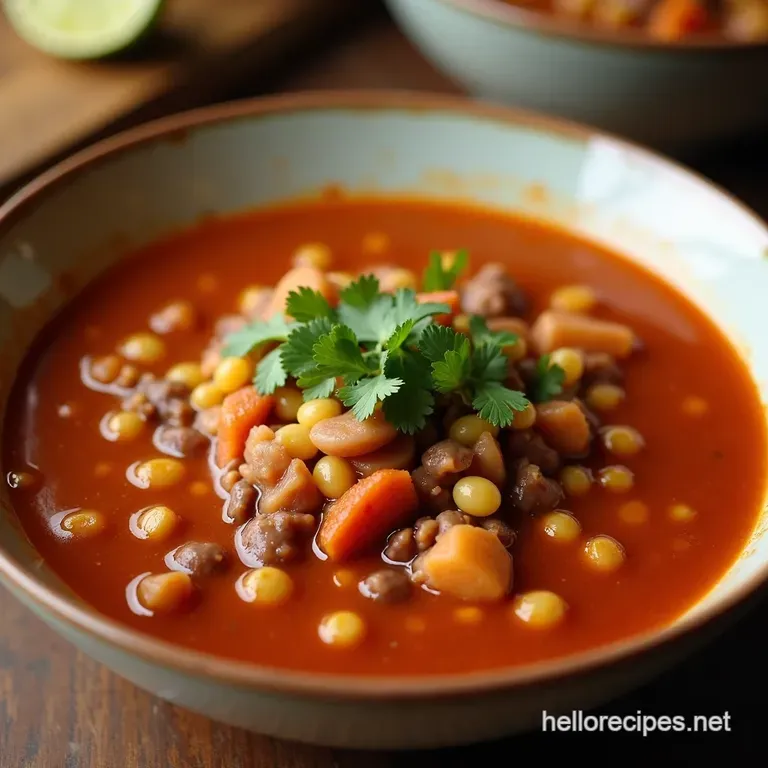
The broth is where the magic happens, transforming simple ingredients into the signature deep flavour of Pozole Rojo . We begin by extracting the inherent flavour from the pork and then layer in the complexity of the dried peppers.
Bringing the Stew Together: Simmering and Serving Protocol
The journey from raw ingredients to finished Mexican Soup requires a phased approach. We build flavour sequentially rather than all at once.
Phase One: Preparing the Chile Paste and Pork
First, we tackle the pork. We simmer the 3 lbs of pork shoulder chunks with water, a quartered onion, 6 cloves of garlic, bay leaves, and Mexican oregano for about 2 to 2. 5 hours.
Once fork tender, we remove the pork, shred it, and critically strain the resulting broth, discarding the boiled aromatics. Next, we address the Red Chile component: toast your Guajillo and Ancho chiles briefly on a dry skillet until fragrant, soak them in hot water until soft (about 30 minutes), and then blend them with fresh garlic, cumin, peppercorns, and vinegar until utterly smooth.
The Low-and-Slow Simmer: Unlocking Deep Savory Notes
This smooth chile paste must be incorporated correctly. Pour the strained chile liquid through a fine mesh sieve directly into your cleared pork broth, pushing hard on the solids remaining in the sieve to extract every drop of flavour and colour. Discard the leftover chile pulp.
Bring this vibrant red liquid back to a simmer. This slow, gentle heat allows the pepper oils and ground spices to fully infuse the broth without boiling away the delicate nuances.
Incorporating the Hominy: Achieving the Ideal Popping Texture
Once the broth is beautifully flavoured and coloured, it's time for the hominy . Add the two cans (drained and rinsed) of white hominy and the previously shredded pork back into the pot. This is where the stew thickens slightly as the corn releases starch.
Allow this mixture to gently simmer for another 30 to 45 minutes. This final stage ensures the kernels are plump and fully saturated with the rich red chile flavour.
Finishing Touches: Shredding the Meat and Adjusting the Broth
After the final simmer, taste the Pozole Soup critically. It will almost certainly need a generous addition of salt now that all the flavour agents are present. Stir well, ensuring the meat is perfectly distributed. The final product should be substantial a hearty stew, not a thin broth.
Elevating Your Bowl: The Art of Toppings and Garnishes
No bowl of Pozole Rojo is complete without its supporting cast of garnishes. The beauty of this dish lies in its customizability. Serve it steaming hot alongside small bowls filled with thinly sliced radishes, crisp shredded cabbage or lettuce, diced white onion, and plenty of fresh lime wedges.
A sprinkle of dried Mexican oregano rubbed between your palms before adding it on top releases essential oils that provide a final aromatic lift. Don’t forget the crunch of a crisp tostada!
Making Extra: Storage, Freezing, and Effortless Meal Prep
Pozole is one of the rare dishes that tastes exponentially better the day after. It’s an ideal Weekend Dinner because leftovers provide fantastic, effortless weekday meals.
The Crucial Side Dishes That Complete The Pozole Experience
While the toppings dress the soup, you need side elements to complete the textural symphony. Serve with warm, crisp tostadas perhaps spread lightly with mashed avocado and always have salsa on hand for personalized heat adjustments.
Troubleshooting Common Stew Issues (Too Thin? Too Spicy?)
If your stew seems too thin, let it simmer uncovered for 15 more minutes; the evaporation will thicken the broth slightly. If it’s too spicy, stir in a dollop of sour cream, Mexican crema, or a spoonful of the reserved cooked onion/garlic base (if you saved any before straining) to mellow the heat.
Making This Recipe Chicken Friendly: A Quick Adaptation
Should you prefer poultry, swapping the pork is straightforward. Use 3 lbs of bone-in chicken thighs and breasts. The initial simmering time will reduce significantly the chicken only needs about 1. 5 hours to become thoroughly tender before shredding.
Optimal Storage Times for Leftover Stew
Store leftover Pozole Rojo in an airtight container in the refrigerator for up to four days. For longer storage, this stew freezes exceptionally well for up to three months.
Thaw overnight in the fridge and reheat gently on the stovetop, adding a splash of water or stock if it seems too thick upon reheating.

Recipe FAQs
I’ve never made Pozole before; is this recipe too complicated for a beginner?
Not a bit of it! While the recipe does require a good chunk of time (mostly simmering unattended), the active steps are quite straightforward mostly chopping and blending. The trick is patience; treat it like a Sunday roast effort, and you’ll nail it.
Just remember to watch those chiles carefully when toasting!
My Pozole broth looks a bit grainy; what did I do wrong with the chile paste?
Ah, that's a classic rookie error we’ve all been there! The most likely culprit is skipping the fine mesh sieve step. You absolutely must strain that blended chile paste to remove the tough skins and seeds left over, even after soaking.
A thorough strain is the secret to achieving that velvety texture, so don’t rush it.
Can I make this Pozole ahead of time, and if so, how should I store leftovers?
Yes, making it ahead is highly recommended; it tastes even better the next day, much like a good casserole! Cool the stew completely, then store it covered in the fridge for up to four days.
When reheating, bring it slowly back to a gentle simmer on the hob, as boiling too vigorously can sometimes make the hominy tough.
I can only find dried hominy, not the canned stuff how long does that take to cook?
Using dried cacahuazintle corn (the traditional hominy) requires soaking overnight, and potentially even several hours of boiling on its own before you even start the pork, depending on the corn’s age.
For a first timer, sticking to the canned hominy, as noted in the recipe, saves about four hours of cooking time and complexity.
My family prefers chicken; can I easily swap the pork shoulder out in this Pozole Rojo recipe?
Absolutely, chicken makes a brilliant, slightly lighter alternative! Simply substitute the pork shoulder with about 3 lbs of bone-in chicken pieces (thighs are best for flavour retention).
You'll need to significantly reduce the simmer time in step 2 to about 1.5 hours, or until the chicken is cooked through before you add the chile paste.
Authentic Pork Pozole Rojo
Instructions:
Nutrition Facts:
| Calories | 600kcal |
|---|---|
| Fat | 30g |
| Fiber | 35g |
